
Diablo IV has entered a transformative era with the release of the Lord of Hatred expansion, signaling a major shift from merely maintaining the live service to fundamentally evolving the core gameplay loop. Following three years of iterative updates and the successful Vessel of Hatred release, Blizzard is now doubling down on depth by introducing the Skovos region and two highly anticipated character classes. The development team, led by Associate Game Director Zaven Haroutunian, is moving away from the “breadth over depth” philosophy of early seasons to deliver a more focused, hardcore-friendly experience.
▲ Official Cover Art (Source: IGDB)
| Feature | Details |
|---|---|
| Game Title | Diablo IV: Lord of Hatred |
| Developer | Blizzard Entertainment |
| New Classes | Paladin, Warlock |
| Key Systems | Horadric Cube, Talisman System, War Plans |
| New Region | Skovos (Isles of the Amazons) |
Redefining the Diablo IV Endgame with War Plans
One of the most innovative additions in Lord of Hatred is the War Plans system, which functions as a strategic war table for the endgame. For the longest time, players felt that the various activities—Nightmare Dungeons, Helltides, and The Pitt—felt disconnected and lacked a cohesive narrative tissue. War Plans solve this by allowing players to map out a “playlist” of activities, providing narrative context to the grind as survivors rally to purge the remnants of Mephisto’s influence. This isn’t just a UI change; it introduces specific modifiers that significantly alter gameplay, such as nodes that affect Treasure Goblins across the entire world map rather than just within instances.
The design of the new player hub, Temis, also reflects this focus on efficiency. Located on a mountaintop in the Skovos region, Temis was built with a split philosophy: instanced spaces for the cinematic campaign and a tightly optimized layout for endgame “blasters.” By separating the atmospheric needs of the story from the functional needs of the itemization loop, Blizzard has finally created a town that doesn’t feel like a chore to navigate between rifts.
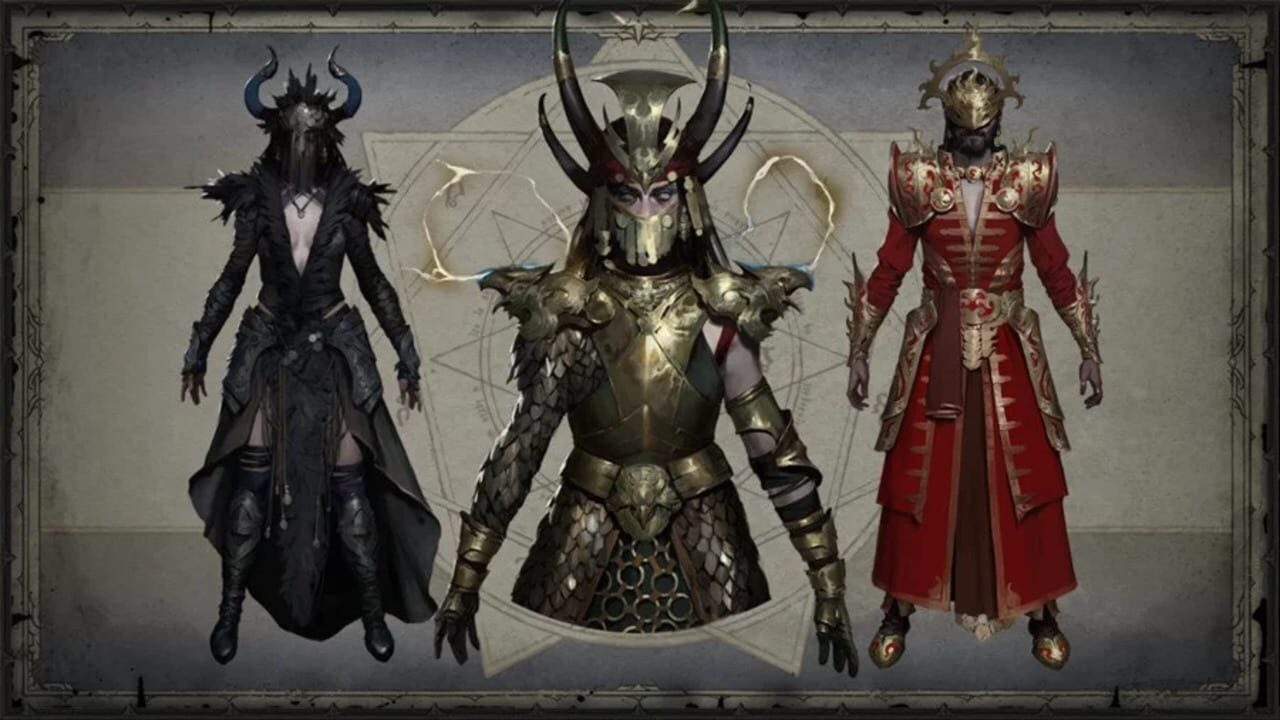
▲ Official Artwork (Source: IGDB)
The Return of the Paladin and the Rise of the Warlock
The character roster in Diablo IV expands significantly with the return of the fan-favorite Paladin and the debut of the fire-obsessed Warlock. The Paladin brings back the classic shield-based combat and aura management that veterans have craved since the second installment. Conversely, the Warlock introduces a fresh demonology-focused playstyle that utilizes apocalyptic fire to control the battlefield, offering a distinct alternative to the existing Sorcerer and Necromancer archetypes. Both classes benefit from the completely revamped skill trees, which now focus exclusively on customization and expression rather than being a primary source of raw numerical power.
By shifting passive power-ups out of the skill trees and into the new Talisman and itemization systems, Blizzard has solved a long-standing issue where skill choices felt dictated by math rather than playstyle. Now, players can build their hero’s identity through the skill tree first and then amplify that power through gear. This reversal makes experimentation far more viable and less punishing, especially during the early stages of a new season character.
The Talisman System and Horadric Cube Crafting
Lord of Hatred marks the return of the Horadric Cube, a tool that expands crafting possibilities far beyond the previous systems. Alongside the Cube, the new Talisman system introduces Charms and Seals, providing a dedicated inventory for stat optimization that doesn’t clutter the main equipment slots. This system effectively reintegrates Set Bonuses into the game without overriding the importance of Legendary and Mythic items. The interaction between Charms and Seals allows for a layered approach to build-crafting, where players can fine-tune their pressure points—such as resistance caps or cooldown reduction—without sacrificing their core weapon or armor slots.
Pulse Gaming Perspective: Lord of Hatred Reinvigorates the Diablo IV Ecosystem
By focusing on “depth over breadth,” Blizzard is finally catering to the hardcore community that sustains these titles long-term. The combination of the Horadric Cube and the War Plans system provides the complexity needed for a truly infinite endgame. This expansion isn’t just more content; it is a structural redesign that sets a high bar for the future of the action-RPG genre.
Ultimately, Lord of Hatred represents the most polished version of the Sanctuary experience to date. With the narrative tension of Mephisto’s return and the mechanical depth provided by the new systems, the game has finally found its rhythm. As players dive into the Mediterranean-inspired wilds of Skovos, the focus remains clear: giving the player more agency and more meaningful choices in how they face the Burning Hells. about the latest seasonal builds and meta updates.
The evolution seen here suggests that while the story of Mephisto may reach a resolution, the mechanical foundation of Diablo IV is now stronger than ever, promising a bright future for those dedicated to the loot chase. According to the original reporting from IGN, this update is the culmination of years of work that began even before the base game launched.
Final Pulse Score: 9.2 / 10