
BioShock remains the definitive benchmark for atmospheric world-building and narrative-driven shooters, a legacy that Ken Levine seems destined to carry regardless of the studio name on the box. As we look at the gaming landscape in May 2026, the shadow of Rapture looms large over the development of Judas, a project that has been in the works for twelve years. While Levine has moved on to lead Ghost Story Games, the connective tissue between his past work and this new celestial frontier is undeniable. The struggle to move beyond a franchise that defined a generation is a central theme for both the creator and the players waiting for the next evolution of the genre.
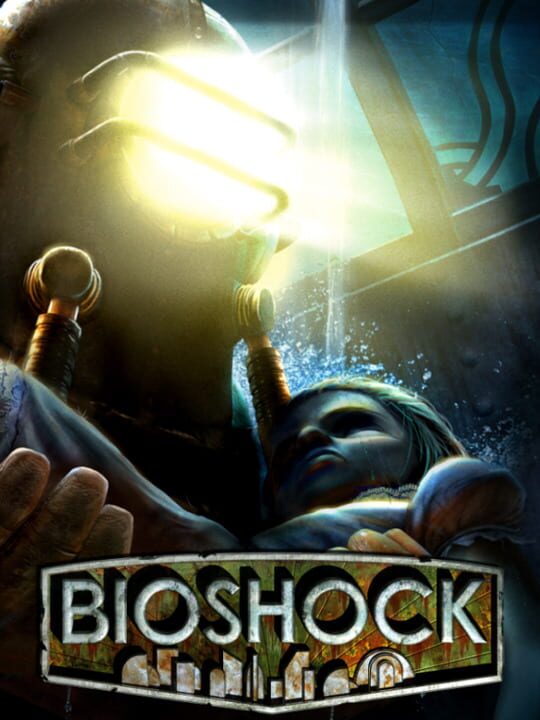
▲ Official Cover Art (Source: IGDB)
| Project Title | Primary Developer | Core Gameplay Philosophy | Setting Context |
|---|---|---|---|
| BioShock | Irrational Games | Linear Narrative / Immersive Sim | Underwater Dystopia (Rapture) |
| Judas | Ghost Story Games | Malleable Narrative / FPS | Deep Space Colony Ship |
| System Shock 2 | Looking Glass / Irrational | RPG-Lite / Survival Horror | Cyberpunk Space Station |
The Biological and Mechanical DNA of Judas
It is impossible to scrutinize the early footage and mechanical reveals of Judas without recognizing the fundamental pillars of BioShock. The character of Hope, with her uncanny, doll-like movements and disturbing emotional range, serves as a spiritual successor to the Little Sisters of Rapture. Furthermore, the player’s arsenal features a suite of abilities that erupt from the hand in a manner that will feel instantly familiar to anyone who once hunted for ADAM. These powers do not just exist for combat; they interact with the environment to create electrified pools of water and other emergent hazards, maintaining the systemic depth we have come to expect.
Despite these similarities, Judas attempts to break the mold by offering a narrative that is far more malleable than the linear rollercoaster rides of the past. Levine has emphasized that while the aesthetics—such as steam furnaces and ornate, 20th-century inspired imagery—persist, the structure of the game is built to react to player choice in a more meaningful way. This shift from a scripted descent into madness to a player-steered odyssey marks a significant departure in design philosophy. The challenge lies in balancing that freedom with the high-intensity storytelling that made previous titles so memorable for the hardcore community.
The Philosophical Roots of the BioShock Franchise
To understand why BioShock is so difficult to escape, one must look back at the developmental history of the 1990s at Looking Glass Studios. The internal logic of these games was forged through titles like Thief and System Shock 2, where factions were defined by extreme, uncompromising ideologies. In those early works, players navigated the friction between the Pagans and the Hammerites, or the cold logic of SHODAN versus the biological collective of The Many. These weren’t just enemies to shoot; they were representations of fanaticism that forced the player to question their own role in the world’s collapse.
▲ Official Artwork (Source: IGDB)
The transition from these early projects to the underwater city of Rapture allowed for a more grounded exploration of free-market deregulation and objectivism. When the series moved to the clouds in the sequel, the focus shifted to religious exceptionalism and the dehumanizing nature of extreme nationalism. Throughout these iterations, the core message has remained consistent: a deep-seated wariness of rigid belief systems and groupthink. This consistency of voice is what makes the series feel like a singular, ongoing conversation with the player about the nature of power and individual agency.
While a separate team continues to work on a new entry in the series under the leadership of Rod Fergusson, the road has been fraught with creative challenges and dead ends. Leadership at the parent company has admitted that finding the right creative purchase for the franchise without its original architect has resulted in lost time and resources. This highlights a fundamental truth in game development: some franchises are so tightly bound to a specific creative voice that they become nearly impossible to replicate. As we move closer to the release of Judas, it becomes clear that while the name on the box has changed, the spirit of the immersive sim is still very much alive.
The BioShock identity is a burden that elevates and constrains future design.
The difficulty in developing a sequel without Levine demonstrates that the franchise’s value isn’t just in its IP, but in its specific philosophical interrogation of the player. Judas represents a high-stakes gamble to see if those same mechanical and thematic hooks can survive in a non-linear format. For players, this means the next few years will decide if the genre can evolve past the ‘lighthouse’ or if it is destined to repeat its own history.
For more information on the history of immersive sims, visit the MobyGames Database for comprehensive developer credits.
Final Pulse Score: 8.5 / 10