
Derelict Star is currently rewriting the rules of what constitutes a polished movement system in the modern indie scene, sparking a heated debate among high-level game designers. While many modern platformers opt for the snappy, friction-heavy controls popularized by titles like Mega Man or Celeste, this project takes a radically different approach by leaning into momentum-based physics that demand hours of patient mastery. The result is a title that has polarized the industry, leading to high-profile friction between its creator and legendary developers who find its initial barrier to entry unnecessarily steep.
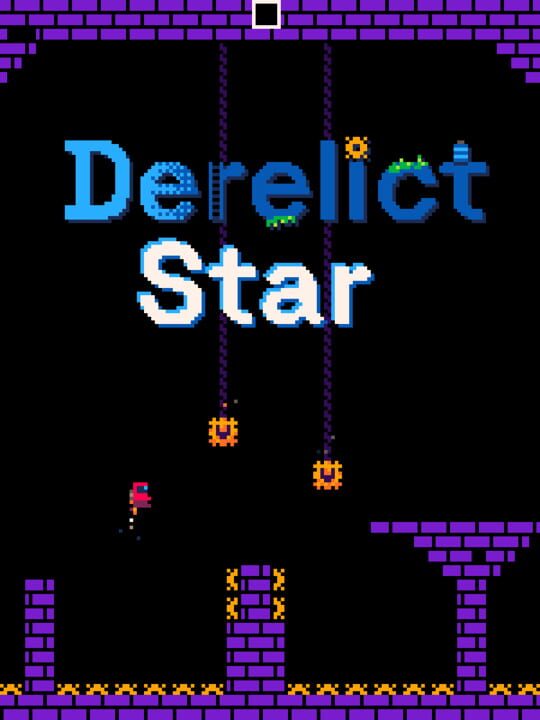
▲ Official Cover Art (Source: IGDB)
| Game Title | Derelict Star |
| Developer | John Williams (gate) |
| Release Date | Early April 2026 |
| Core Genre | Precision Movement Platformer |
| Primary Mechanic | Momentum-based P-Meter System |
The Jonathan Blow Critique and the Definition of Polish in Derelict Star
The conversation surrounding Derelict Star reached a boiling point recently when industry veteran Jonathan Blow, creator of Braid and The Witness, publicly voiced his frustration with the game. Blow famously exited the experience during the introductory levels, labeling the controls as clunky and unpolished. His core argument centered on the idea that if a game contains deeper puzzle-adventure elements, those elements should not be gated behind mechanical systems that feel unwieldy to a seasoned player. Blow suggested that basic platforming techniques used for decades were ignored here, leading to an experience that he felt was uninteresting in its difficulty.
However, this critique highlights a fundamental divide in how players and designers perceive movement. What Blow describes as clunkiness is actually the core identity of Derelict Star. Unlike traditional platformers where the character stops the moment a button is released, this game utilizes a physics system where momentum is inherited from every action. This requires players to think several steps ahead, accounting for velocity and trajectory rather than relying on twitch reflexes alone. To dismiss this as a lack of polish is to overlook the intentionality behind the game’s heavy, stateful movement.
The developer, John Williams, has since responded by noting that the game is almost singularly focused on these subtleties. If a player does not enjoy the initial friction of learning the character’s weight, they likely won’t enjoy the hundreds of screens that follow. The game does not seek to be a puzzle-platformer in the vein of Animal Well; it is a celebration of movement as the puzzle itself.
Analyzing the Mutant P-Meter: A Modern Reimagining
▲ Official Artwork (Source: IGDB)
One of the most innovative features found in Derelict Star is its evolution of the classic P-Meter, originally seen in Super Mario Bros. 3. While the original Mario system was a relatively simple gauge for flight and speed, Williams has transformed it into a mutant-freak modern reimagining that serves as the central mechanic for every encounter. The meter on the UI isn’t just for show; it dictates exactly how much air you can gain from your jetpack and how far your horizontal momentum will carry you through a gauntlet of spikes.
By making the astronaut character obey strict physical laws, the game creates a high skill ceiling that rewards those who can maintain their speed across multiple screens. This is a game where the button input display at the bottom of the screen is vital information. You aren’t just pressing jump; you are managing a collision between a complex physics engine and your own muscle memory. This approach draws heavily from the legacy of the N series, focusing on the tactile pleasure of performing a digital ballet once the systems are fully understood.
The Return of Momentum-Focused Design
In the current 2026 gaming landscape, stateful, momentum-focused platforming is an underserved niche. Most modern titles prioritize accessibility, ensuring the player feels in control at all times. Derelict Star rejects this by making the player feel like they are constantly at the mercy of their own speed. This design philosophy creates a unique sense of reward; reaching a high platform isn’t just a matter of pressing a button, but the culmination of a perfectly executed run-up and a precisely timed jetpack burst.
This commitment to physics over convenience is what makes the game stand out on Steam. It asks for a level of attention and engagement that many modern gamers have been conditioned to avoid. By forcing players to feel out the weight of the astronaut, the game transforms exploration into a constant test of skill rather than a simple traversal task.
Mastering Derelict Star Requires a Paradigm Shift in Platforming Expectations
The controversy surrounding the game reveals a major shift in design trends where intentional mechanical friction is often mislabeled as a lack of polish. By prioritizing momentum and the P-Meter over traditional snappy controls, the developer has created a high-skill sanctuary for players who miss the physics-heavy era of N++. This isn’t a game that needs to be fixed; it is a game that needs to be practiced, standing as a testament to the value of deep, uncompromising movement systems.
Final Pulse Score: 8.8 / 10