
Final Fantasy VII Rebirth has officially shattered its platform boundaries, making a monumental debut this week on Xbox Series and Switch 2. This strategic expansion marks a turning point for the franchise, as the middle chapter of the remake project finally reaches a broader audience beyond its initial ecosystem. For players who have been waiting for the definitive experience on their hardware of choice, the wait is over, and the impact on the global RPG meta is expected to be substantial.
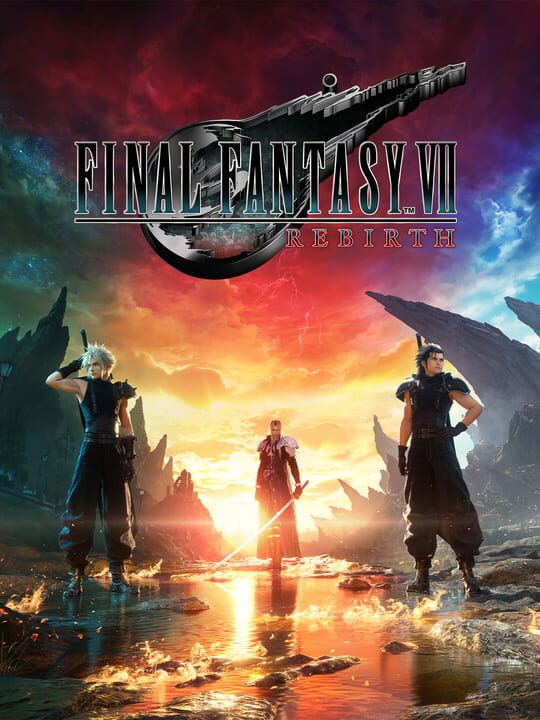
▲ Official Cover Art (Source: IGDB)
| Game Title | New Platforms | Release Format |
|---|---|---|
| Final Fantasy VII Rebirth | Xbox Series, Switch 2, PC | Digital (Game-Key Card) |
| A-Train9 Evolution | Switch 2 | Physical (40th Anniversary Box) |
| River City Saga: Journey to the West | PS5, Switch, PC | Digital / Physical |
| Tetris the Grand Master 4: Absolute Eye | Switch | Digital |
| Donkey Kong 64 | Switch 2, Switch | N64 Classics Library |
Final Fantasy VII Rebirth: Breaking Exclusivity Chains
The arrival of Final Fantasy VII Rebirth on the Xbox Series hardware is a significant win for Microsoft’s ecosystem, providing a high-fidelity experience that leverages the console’s velocity architecture for near-instant loading during open-world traversal. Meanwhile, the Switch 2 version represents a technical milestone for Nintendo’s current-gen hardware, offering a portable way to experience the massive scale of the Grasslands and Junon regions. The game-key card format for these platforms suggests a heavy reliance on digital infrastructure while still giving collectors something to put on their shelves.
Furthermore, Sony enthusiasts haven’t been left behind, as a New Price Version of Final Fantasy VII Rebirth has also launched for the PlayStation 5. This budget-friendly entry point is perfectly timed for those who have upgraded to the PS5 Pro and want to experience the visual fidelity of the Rebirth project at a lower cost of entry. The PC version is also seeing a major push via the Microsoft Store, ensuring that the title is accessible across almost every major gaming environment available in 2026.
The Broader Japanese Release Landscape
While Final Fantasy VII Rebirth is taking the lion’s share of the headlines, the Japanese market is seeing several other high-profile drops this week. A-Train9 Evolution is making its way to the Switch 2, celebrating a 40th-anniversary milestone with a dedicated memorial box that will likely become a rare collector’s item. This simulation giant continues to dominate its niche, offering deep logistical gameplay that feels right at home on the updated Switch hardware.
▲ Official Artwork (Source: IGDB)
Action fans can dive into River City Saga: Journey to the West, which is now available on PS5, Switch, and PC via Steam. This title brings a unique mythological twist to the classic beat-’em-up formula. Additionally, puzzle enthusiasts are being treated to Tetris the Grand Master 4: Absolute Eye on the original Switch, proving that the older platform still has plenty of life left in it for high-precision arcade ports.
Expansion of Classic and Live-Service Content
Beyond the standalone releases, this week is packed with updates and retro revivals. Donkey Kong 64 has officially joined the Nintendo 64 Classics library for both Switch and Switch 2, filling a major gap in the retro catalog for subscribers. In the live-service space, major version updates are hitting for titles like Arknights: Endfield and Honkai: Star Rail, keeping the meta fresh for millions of daily players.
Even the fighting game community has something to celebrate as Tekken 8 receives its latest DLC character, Kunimitsu. The addition of this fan-favorite ninja to the current-gen roster is expected to shift competitive tier lists significantly. Between these massive updates and the cross-platform launch of Final Fantasy VII Rebirth, the wallet of a hardcore gamer in June 2026 is under more pressure than ever.
The platform-agnostic future of Final Fantasy VII Rebirth is here.
The decision to bring such a massive title to Xbox Series and Switch 2 simultaneously signals a shift in strategy where reach outweighs exclusivity. For the player, this means the ‘console wars’ are increasingly irrelevant to software access, but hardware performance will be the new battleground. Watching how the Switch 2 handles the sheer density of the Rebirth engine compared to the PS5 Pro will define technical discourse for the rest of the year.
Final Pulse Score: 9.5 / 10