
1666: Amsterdam has officially resurfaced, marking a monumental moment for fans of atmospheric historical fiction and experimental action-adventure. Originally conceived over a decade ago, this ambitious title from Patrice Désilets and Panache Digital Games has transitioned from a legendary piece of lost media to a tangible, playable reality. With the launch of a functional prologue and the promise of a full release later this year, the project represents a rare victory for creative independence in an industry often dominated by corporate stagnation.
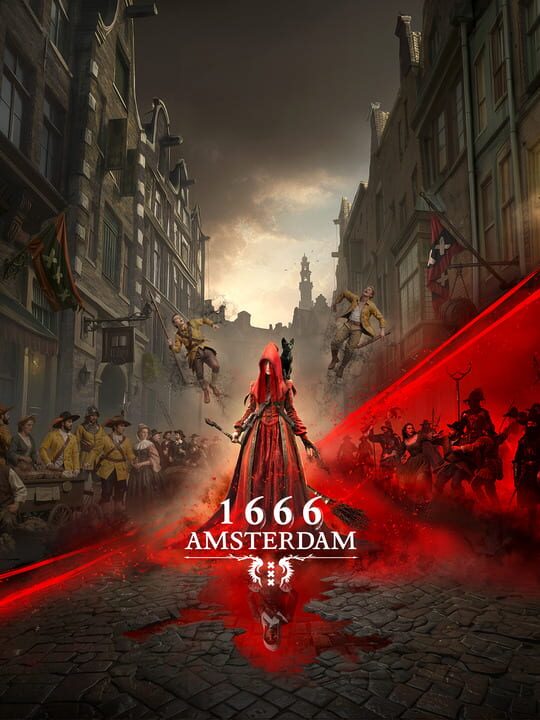
▲ Official Cover Art (Source: IGDB)
| Project Lead | Patrice Désilets (Panache Digital Games) |
| Release Window | Early Access Late 2026 |
| Platform Availability | PC (Steam, EGS), PS5 Pro, Xbox Series X/S |
| Current Build | 30-Minute Playable Prologue |
| Genre | Dark Action-Adventure / Supernatural History |
The Long-Awaited Resurrection of 1666: Amsterdam
The journey of 1666: Amsterdam is one of the most storied development cycles in modern gaming history. After the project was caught in the crossfire of publisher bankruptcies and intellectual property disputes in the early 2010s, many assumed the vision for a supernatural Amsterdam would never see the light of day. However, the persistence of the original creative director has brought the title back to life. Moving away from the cinematic hand-holding prevalent in many modern AAA titles, the development team has focused on iterative, playable builds rather than polished marketing slices, ensuring that the final product remains true to its initial, dark vision.
This commitment to transparency is evident in the current distribution strategy. By releasing a prologue directly to players on platforms like Steam and the Epic Games Store, the studio is bypassing the typical hype cycle in favor of direct engagement. For players who have followed the industry since 2011, seeing this game actually run on current hardware like the PS5 Pro and high-end PCs is a cathartic experience that proves even the most troubled projects can find a path to completion when the rights return to the creators.
Deep Narrative Layers and Supernatural Mechanics in 1666: Amsterdam
The core of 1666: Amsterdam revolves around a complex worldview that blends historical fact with dark, supernatural fantasy. Players take on the role of Noa Brooklyn, a character designated as a Collector. This role places the player in direct contact with entities known as Originals, mysterious beings who have existed alongside humanity for centuries, wielding immense power and influence. The narrative complexity suggests a story that is not just about historical tourism, but about unraveling the unseen threads that have shaped human history through a lens of cosmic horror and political intrigue.
▲ Official Artwork (Source: IGDB)
The Dual-Timeline Connection
One of the most intriguing elements of 1666: Amsterdam is its structural duality. While the titular date suggests a primary focus on the 17th-century Netherlands, the game integrates a narrative thread set in 1999. This modern connection involves a character named Aaron, whose unique perspective allows him to see the world through the eyes of a cat. This mechanic is not just a narrative quirk but appears to be a core pillar of the environmental puzzle-solving and stealth systems. By jumping between different perspectives and eras, the game aims to build a comprehensive history of the city of Amsterdam that transcends a single lifetime.
The Role of the Collector and the Zaindaris
As Noa Brooklyn undergoes her Commencement, players are introduced to the factions vying for control within the shadows of the city. The Zaindaris represent a group seemingly aligned with the protagonist, though the developers have hinted that 1666: Amsterdam is a world where nothing is quite what it seems. The gameplay focus in the prologue centers on Noa choosing a Companion, a choice that likely dictates the mechanical approach to the upcoming third-person action sequences. This systemic approach to character building suggests a high degree of replayability as players explore different ways to navigate the influence of the Originals.
1666: Amsterdam Challenges the Status Quo of Historical Sandbox Games
The shift from traditional historical simulation to a multi-timeline supernatural thriller marks a significant evolution for the genre. By utilizing animal-perspective mechanics and a non-linear narrative, the game moves beyond the shadow of the director’s previous work to create a claustrophobic, high-concept experience. The decision to release a prologue first allows the community to stress-test these experimental systems before the full 2026 Early Access rollout.
Final Pulse Score: 8.5 / 10