
Crimson Desert has recently become the epicenter of a polarizing industry debate regarding the fine line between creative inspiration and mechanical imitation. Following the emergence of several gameplay previews, the title has faced scrutiny from high-profile figures within the RPG space, most notably Larian Studios’ publishing director, Michael Douse. The discourse centers on whether the game’s vast array of systems constitutes a bold new vision or, as Douse suggested on March 28, 2026, a “cynical amalgamation” of elements borrowed from established hits.
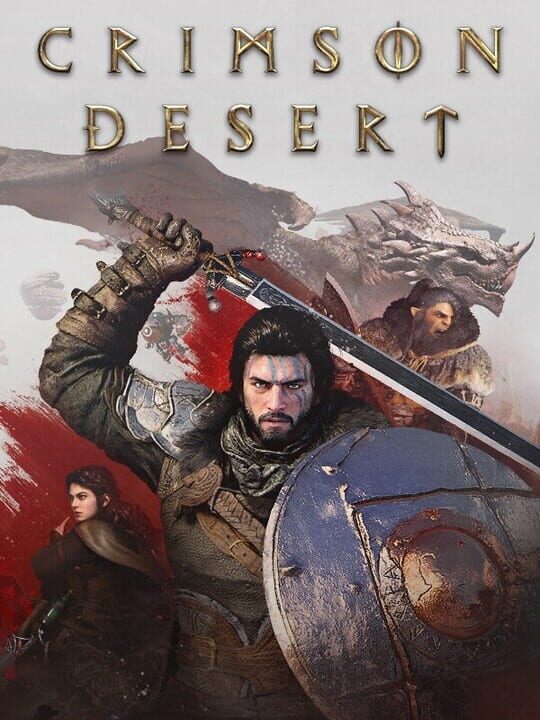
▲ Official Cover Art (Source: IGDB)
The Larian Perspective: Decoding the Criticism of Crimson Desert
The controversy ignited when Michael Douse took to social media to voice his concerns regarding the design philosophy behind the upcoming title. He characterized the project as a “Now That’s What I Call Gaming” collection, likening it to a gas station compilation of popular trends rather than a cohesive, original work. While Douse admitted that the gameplay remains entertaining, his core argument rests on the idea that Crimson Desert represents a low-risk strategy of patchwork development that could set a troubling precedent for both premium and F2P titles.
However, many industry analysts argue that this critique ignores the fundamental nature of game development. Even masterpieces like Baldur’s Gate 3 rely heavily on established D&D frameworks and systems refined in previous Larian titles. The difference, according to critics of Douse’s take, lies in how these mechanics are contextualized within the world of Pywel. If a system is fun and functional, the origin of its inspiration becomes secondary to the player experience.
Project Overview and Key Data
| Feature | Details |
|---|---|
| Game Title | Crimson Desert |
| Developer | Pearl Abyss |
| Core Philosophy | Single-player adventure with MMO-derived systems |
| Key Inspiration Points | Black Desert, Tears of the Kingdom, The Witcher 3 |
Evolution Over Imitation: The Pearl Abyss Strategy
To understand why Crimson Desert feels like a “hodgepodge,” one must look at the history of its developer, Pearl Abyss. Having built their reputation on the massive success of Black Desert, the studio is naturally inclined toward deep, systemic complexity. Many of the features being labeled as “borrowed” are actually evolutions of the trade and economic systems Pearl Abyss pioneered in the MMO space years ago. Transforming these mechanics for a single-player narrative isn’t necessarily cynical; it’s a logical expansion of their existing expertise.

▲ Official Artwork (Source: IGDB)
Critics point to the inclusion of “sky islands” and physics-based interactions as direct nods to recent Nintendo titles. While these influences are undeniable, the sheer scope of the game suggests a level of ambition that transcends simple trend-chasing. Building a world as dense as Pywel requires a massive investment of time and resources—factors that risk-averse, purely “cynical” publishers usually avoid in favor of safer, more streamlined experiences. You can learn more about the developer’s history at the official Pearl Abyss corporate site.
The Paradox of Authenticity
In the modern gaming landscape, players are increasingly savvy and sensitive to “check-the-box” game design. If Crimson Desert were truly a cynical product, it would likely feel hollow or disjointed. Instead, early impressions describe a game that is often messy and incomprehensible in its complexity, which ironically suggests a high degree of creative risk. A truly cynical game is polished to a fault and stripped of any mechanics that might confuse the average consumer; Pearl Abyss has taken the opposite path.
The internal trade systems, the systemic interactions between NPCs, and the brutal combat all point toward a game that is trying to do everything at once. While this may result in a lack of focus, it is the antithesis of the “safe” development cycle that Douse warned against. The gaming community’s resonance with the title suggests that they value this messy ambition over clinical perfection. regarding our deep dives into the Pywel ecosystem.
Pulse Gaming Perspective: Reclaiming the Narrative for Crimson Desert
While Michael Douse’s comments highlight a valid concern regarding the homogenization of open-world mechanics, labeling this specific project as cynical feels misplaced. Innovation rarely happens in a vacuum; it is the synthesis of existing ideas into a new, cohesive whole that defines progress. By blending MMO-tier complexity with single-player storytelling, Pearl Abyss is moving the needle forward, even if they are using familiar tools to do it.
Ultimately, the success of the title will be measured by its ability to weave these disparate mechanics into a rewarding loop. Whether it is remembered as a messy masterpiece or a derivative experiment, it has already succeeded in starting one of the most important conversations of the year regarding the nature of originality in 2026. The industry should perhaps worry less about where mechanics come from and more about the joy they provide when they are finally in the players’ hands.
Final Pulse Score: 8.2 / 10