
1666: Amsterdam has finally emerged from over a decade of development purgatory, offering players a firsthand look at Patrice Désilets newest creative endeavor through a surprise prologue release. This initial slice of gameplay marks a significant milestone for Panache Digital, transitioning a legendary industry rumor into a tangible, albeit polarizing, playable experience. The project, which was famously reclaimed by its creator after a lengthy legal battle, attempts to bridge multiple centuries of history with a supernatural thread that feels both ambitious and unsettling for modern audiences.
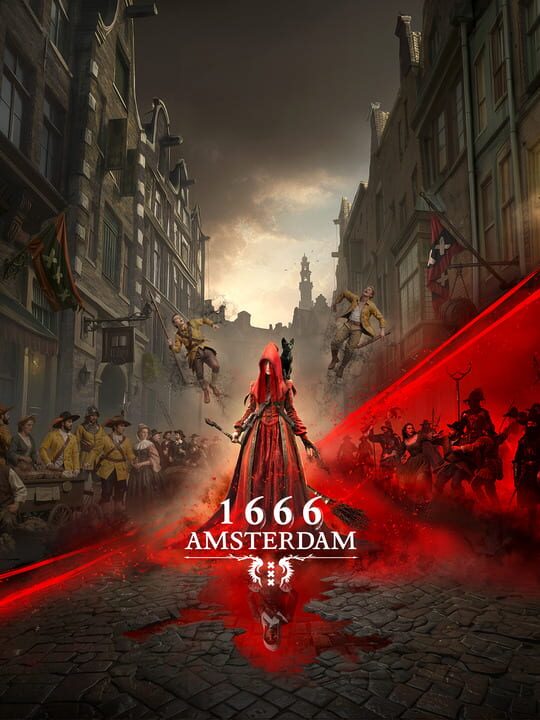
▲ Official Cover Art (Source: IGDB)
| Developer | Panache Digital Games |
| Genre | Third-Person Action Adventure |
| Release Phase | Early Access Late 2026 |
| Lead Protagonist | Noa (The Collector) |
| Key Settings | Amsterdam 1666, 1999, and Present Day |
| Unique Mechanic | Multi-Era Consciousness Shifting |
The Triple-Timeline Narrative and Character Dynamics
The core structure of 1666: Amsterdam deviates from traditional linear storytelling by straddling three distinct eras: the titular seventeenth century, the millennium eve of 1999, and the modern day. In the historical segments, players take control of Noa, a supernatural figure known as a Collector who possesses the ability to manipulate the environment through witchcraft. The narrative weave becomes complex as players realize that events in the present day university library are inextricably linked to a mysterious letter and a ritual performed decades earlier in a hotel overlooking the Amstel river.
This experimental approach to storytelling aims to create a sense of inevitable destiny, where the actions of ancestors and descendants echo across time. The prologue specifically highlights a moment where the player transitions from a university student investigating her family history to a pair of lovers in 1999, eventually looping back to Noa in 1666. The most striking realization for players occurs when they find themselves inhabiting the consciousness of a cat, discovering that the animal seen in the historical ritual was actually the player character all along, creating a closed-loop narrative hook.
Interactive Witchcraft and Gameplay Systems in 1666 Amsterdam
While the initial trailers promised intense supernatural action, the current gameplay demo focuses heavily on atmospheric interaction and environmental puzzles. As Noa, players use a concentration mechanic to interact with the world, such as igniting braziers or sacrificial pyres to progress through rituals. The witchcraft elements are presented as dark and disruptive, often accompanied by visual glitches and screen-shaking effects that emphasize the chaotic nature of the powers at play. This artistic choice helps to differentiate the title from more polished, traditional fantasy games currently on the market.
The investigation loop appears to be a cornerstone of the modern and 1999 segments, requiring players to decrypt letters and navigate maps to uncover hidden truths. The developer has described the full game as an action-adventure where players will investigate by day and face demons by night. However, the prologue remains quite rigid, guiding the player through narrow corridors and scripted events rather than offering a wide open world to explore. This has led to some concerns among the community regarding the actual depth of the mechanics and how much freedom players will truly have in the final version of 1666: Amsterdam.
▲ Official Artwork (Source: IGDB)
Technical Concerns and the Path to Early Access
Despite the excitement surrounding its return, 1666: Amsterdam faces several hurdles as it approaches its early access launch. The prologue has received mixed feedback on digital storefronts, with many players noting that the visual fidelity feels somewhat dated compared to contemporary 2026 titles. Additionally, a controversy regarding the use of generative AI in promotional and prototype assets briefly overshadowed the game’s announcement, forcing the studio to issue a public apology and a promise that no such assets will appear in the final release, which is a critical step in rebuilding player trust.
There is also a growing debate about the games suitability for the early access model, which is typically reserved for systems-heavy or multiplayer experiences. Since this is a story-driven adventure, some players worry that the early access release might be a strategy to secure further funding rather than a necessity for gameplay refinement. With a team of approximately 70 people, Panache Digital is working on a scale much smaller than the triple-A giants usually associated with this genre, which explains the more focused and perhaps jankier nature of the current build compared to the polished trailers shown previously.
1666 Amsterdam serves as a fascinating study in creative persistence and narrative risk taking
By merging three timelines through a single consciousness, the game attempts a level of narrative cohesion rarely seen in the genre. While the technical polish may not rival blockbuster franchises, the unique focus on dark folklore and historical investigation provides a refreshing alternative to the current market. The success of the full release will depend entirely on whether the developers can expand the rigid prologue into a truly reactive and exploratory world.
Final Pulse Score: 6.8 / 10
Related Article: 1666 Amsterdam Release Date and Prologue Details