
Gothic 1 Remake arrives as a fascinating bridge between 2001 design philosophy and the hardware capabilities of 2026. While many modern RPGs guide players with glowing markers and generous tutorials, this reimagining of the classic mining colony prison preserves the original harshness that defined the series. As the years have passed, the technical compatibility of the original title has waned, making this remake a necessary intervention for both preservation and accessibility. It serves as a stark reminder of a time when games demanded survival rather than just participation, forcing players to earn every scrap of ore and every ounce of respect within a hostile, magical barrier.
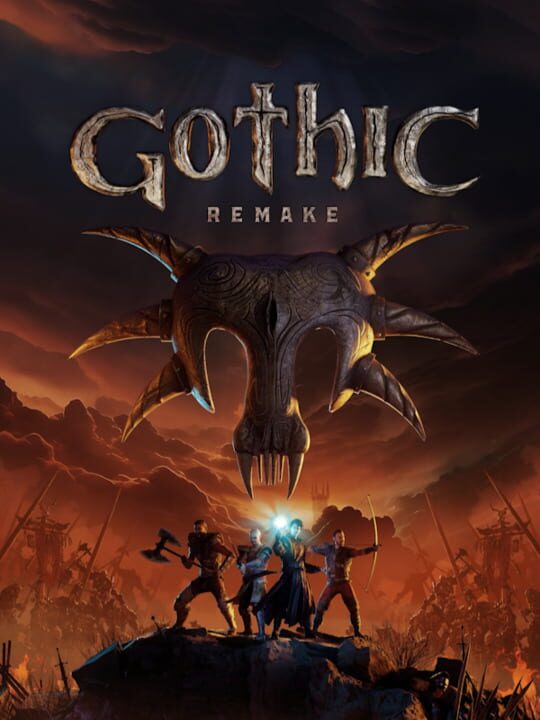
▲ Official Cover Art (Source: IGDB)
| Developer | Alkimia Interactive |
| Platform Status | PC, PlayStation 5, Xbox Series X/S |
| World Design | Faction-Based Open World |
| Progression | Learning Point System |
| Visual Tech | Modernized Lighting and Models |
| Audio | Fully Revoiced Script |
Gothic 1 Remake Mechanics and Visual Overhaul
The visual transformation in Gothic 1 Remake is immediately apparent, replacing the low-poly models and muddy textures of the past with sophisticated lighting and high-fidelity environments. The Colony now feels like a lived-in prison, where the dense forests and rocky outcroppings of the barrier-surrounded valley are rendered with impressive detail. Modern lighting systems breathe new life into the three primary camps, highlighting the architectural differences between the corrupt Old Camp and the swamp-dwelling cultists. Beyond the aesthetics, the audio design has received a significant boost, featuring a completely revoiced script that elevates the narrative delivery far beyond the original standards while retaining the earnest tone of the classic experience.
Navigating the social lattices of The Colony remains the core strength of the experience. Gothic 1 Remake does not rely on the hand-holding common in contemporary open-world titles, often stripping away objective markers and requiring players to listen to NPCs for directions or study their environment. This forced immersion creates a rewarding sense of place, as players must memorize landmarks and understand the internal politics of the three factions to progress. Whether it is paying off guards for protection or navigating a meritocracy where the strong thrive, the social simulation provides a level of depth that many big-budget titles still struggle to replicate in the modern era.
Survival and Social Structures in The Colony
However, this commitment to the original design brings certain frustrations into the modern gaming landscape. The combat in Gothic 1 Remake remains somewhat stiff, particularly in the early hours where the Nameless Hero is untrained and effectively helpless against even minor threats. While the new branching armor paths and modernized control schemes provide some relief, the core loop often involves significant grinding to overcome statistical hurdles. Leveling up requires spending Learning Points at trainers, a system that feels authentic to the setting but may alienate those accustomed to more fluid progression. Furthermore, while the first half of the game excels in worldbuilding, the latter half’s transition into a more traditional world-saving narrative loses some of the political nuance that makes the early hours so compelling.
Progression from an untrained prisoner to a capable warrior is a slow and deliberate journey within Gothic 1 Remake. In the early game, the protagonist clutches weapons with both hands, swinging awkwardly and leaving wide openings for counterattacks. As players invest in specific skills, the animation quality visibly improves, allowing for combos and critical hits that make encounters more manageable. This visual representation of character growth is a highlight of the game design, linking mechanical stats directly to the player visual experience. Magic also plays a pivotal role in the mid-game, offering utility spells that can transform the hero into different creatures to bypass obstacles or cut down travel time across the valley rugged terrain.
▲ Official Artwork (Source: IGDB)
Technically, the game still exhibits some of the eccentricities associated with its lineage. AI behavior can be inconsistent, with NPCs occasionally getting stuck during escort missions or failing to react to the player presence in restricted areas. These bugs, while not usually game-breaking, serve as a reminder that the transition to modern engines has not entirely erased the series idiosyncratic nature. Despite these flaws, the inclusion of new side quests, such as the ability to train rideable scavenger birds, provides fresh content for returning veterans and helps flesh out the daily life within the magical barrier. For those who can overlook the clunky combat, the environmental storytelling remains a high watermark for the genre.
Gothic 1 Remake stands as a preservationist project that prioritizes atmosphere over fundamental mechanical evolution
By prioritizing world-building and social systems over combat fluidness, the developers have ensured that the game remains a distinct entity in a crowded RPG market. It is a title that respects the player intelligence by refusing to simplify its navigation or survival mechanics for the sake of mass appeal. This commitment to the original friction is precisely what makes the experience feel fresh in an era of over-designed user interfaces. While the technical polish isn’t perfect, the earnestness of the recreation makes it the definitive way to experience this piece of gaming history.
Final Pulse Score: 7.7 / 10