
Stellaris has always excelled at delivering grand galactic scale, but the newly released Nomads expansion shifts the paradigm entirely by unshackling players from traditional territorial boundaries. By introducing mobile civilizations that roam the stars in colossal Arkships, this update attempts to capture the nomadic desperation of classic sci-fi tropes. For players who often find themselves bogged down by the mid-game administrative grind of managing dozens of colonized systems, this nomadic lifestyle offers a fresh, hyper-focused alternative that alters the core loop of galactic domination.
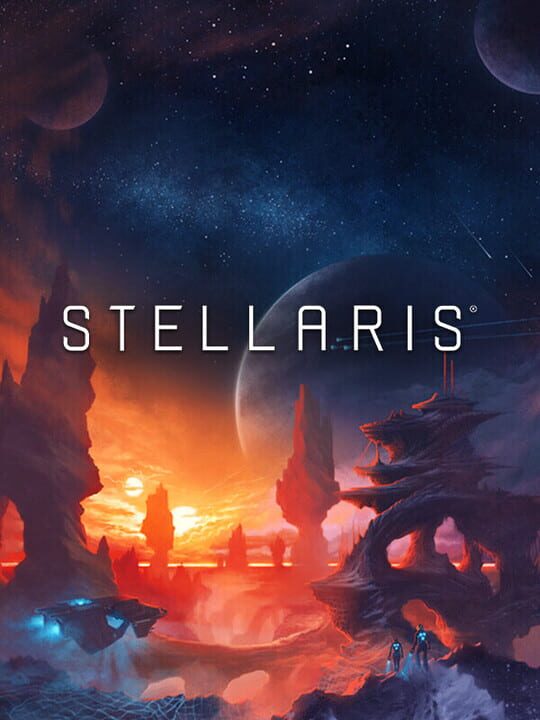
▲ Official Cover Art (Source: IGDB)
| Attribute | Detail |
| Expansion Title | Nomads |
| Key Gameplay Mechanic | Mobile Arkships and Waystations |
| Featured Origins | The Sacred Path and Forever Cruise |
| New Currency | Operational Reserves |
| Unique Events | Champion’s Forge Live Tournament |
The Mobile Arkship Experience and Mechanics Breakdown
The core of the Nomads expansion revolves around the Arkship, a massive vessel that serves as a colony, shipyard, and primary battle fleet combined into a single mobile unit. This allows nomadic factions to bypass closed borders entirely, exploring the farthest reaches of the galaxy without the immediate need to claim and defend static territory. Players can choose from unique origins such as The Sacred Path, which tasks an arthropoid race of pilgrims with discovering ancient sacred sites, or the Forever Cruise, which focuses on transporting passengers across the cosmos. This freedom of movement recreates the iconic tension of running a fleet on the run, altering the core loop of galactic domination in Stellaris.
Weighing the Pros and Cons of Galactic Nomads
While the initial phase of Stellaris mobile play feels incredibly liberating, the economic reality of the nomadic lifestyle introduces major mechanical friction. Instead of claiming systems, players build Waystations to harvest and stockpile local resources. However, these resources must be physically transported back to the Arkship via slow-moving logistics ships, creating severe bottlenecks as the fleet moves further away. Alternatively, players can harvest planetary resources directly, but this inflicts a massive seventy-five percent penalty on mining station production and severely damages relations with the system’s owner, forcing players to rely on uncolonized space.

▲ Official Artwork (Source: IGDB)
The Friction of Waylines and Operational Reserves
As the galaxy inevitably gets colonized by static empires, nomadic factions must adapt to survive. The most viable strategy involves establishing Wayline treaties with sympathetic galactic factions, allowing players to construct logistics hubs inside foreign territory. To secure these diplomatic arrangements, players must complete lucrative contracts such as remote research, scanning uncharted systems, or ferrying intergalactic tourists. Unfortunately, the developer introduced a new unified currency called Operational Reserves, which blends energy credits and minerals. This mechanic adds unnecessary confusion, as players must adjust reserve consumption rates for minor bonuses without a clear breakdown of the underlying math.
Atmospheric Additions and the Grand Tournament
Despite some structural shortcomings in its logistics systems, the expansion injects immense flavor into the broader Stellaris galaxy. Interacting with other wandering fleets makes the universe feel far more dynamic and populated. The audio-visual design also receives a massive boost, highlighted by the stirring Manduul Haan track featuring traditional Mongolian throat singing by Batzorig Vaanchig. Furthermore, random events like the Champion’s Forge Live event, a massive television broadcast where players can enter their fleets into a chaotic free-for-all tournament, add brilliant emergent storytelling moments to every playthrough.
How the Stellaris Nomads expansion redefines cosmic pacing
By removing the traditional boundary restrictions of color-on-a-map painting, the developers have successfully introduced a genuinely different style of play. However, the current iteration of the Wayline system and the confusing Operational Reserves show that managing a mobile empire still requires significant balancing. Players must brace for a steep learning curve as they transition from expansionist conquerors to diplomatic wanderers.
Final Pulse Score: 7.8 / 10
Related Article: Stellaris Nomads Expansion and Moving Planets