
Palworld has reached a critical turning point in its international legal saga as the United States Patent and Trademark Office (USPTO) recently issued a non-final ruling to revoke a key patent held by Nintendo. This specific patent, which outlines the mechanics of summoning a sub-character to engage in battle, has been a central pillar in Nintendo’s aggressive stance against Pocketpair. As the industry watches closely in April 2026, this reversal suggests that the attempt to gatekeep fundamental gameplay loops may be more difficult than the Kyoto-based giant anticipated.
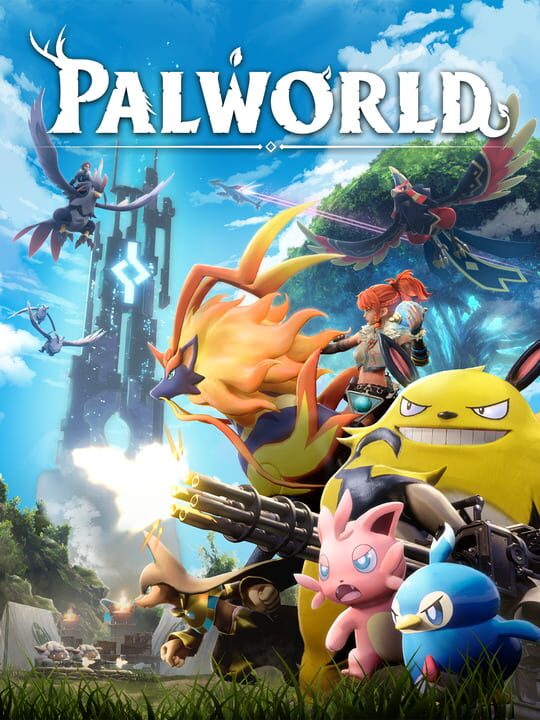
▲ Official Cover Art (Source: IGDB)
| Detail | Information |
|---|---|
| Game Title | Palworld |
| Developer | Pocketpair |
| Key Patent Number | US Patent No. 12,403,397 |
| USPTO Status | Non-Final Rejection (As of late March 2026) |
| Legal Jurisdiction | United States & Japan |
The Mechanics of the Dispute and Palworld Influence
The conflict between Nintendo and Pocketpair officially ignited in September 2024 when a patent infringement lawsuit was filed in the Tokyo District Court. Unlike typical copyright disputes that focus on visual character designs, Nintendo’s strategy relied on patenting specific game interactions. The patent in question, US Patent No. 12,403,397, was originally granted on September 2, 2025, and covers the intricate process of releasing a creature from a storage device to fight an opponent. For many, this appeared to be a direct strike at the heart of Palworld and its monster-catching survival systems.
Industry analysts have noted that Nintendo’s efforts to ring-fence these mechanics have far-reaching consequences. If such patents were upheld, it could create a chilling effect for other major developers like FromSoftware or Atlus, who utilize similar summoning tropes. However, the USPTO’s reexamination, ordered by director John A. Squires last November, has thrown a significant wrench into these plans. The examiner’s decision to reject the claims highlights a growing skepticism toward patenting “obvious” combinations of existing gaming concepts.
Why the USPTO Rejected the Character-Summoning Patent

▲ Official Artwork (Source: IGDB)
The core of the USPTO’s rejection lies in the concept of “prior art.” According to regulatory reports from Games Fray, the examiner did not even need to cite another specific game to justify the rejection. Instead, the USPTO referenced older patent applications filed by Konami, Bandai Namco, and ironically, Nintendo themselves. The conclusion was that the specific method of summoning and battling was an obvious evolution that any person with ordinary skill in the art would have developed.
Nintendo now has a two-month window to respond to this non-final ruling. They may seek extensions or attempt to narrow the scope of their claims to save the patent. In Japan, Nintendo has also been busy modifying existing patents to better suit their courtroom battle against Pocketpair. Despite these hurdles, Palworld continues to expand its reach, recently securing a cross-media partnership with Sony that aims to turn the survival hit into a global entertainment franchise. This suggests that while the legal battles rage on, the commercial momentum of the game remains largely unchecked.
Pulse Gaming Perspective: Palworld and the Protection of Creative Iteration
The USPTO’s rejection of this patent is a massive win for the industry, as it prevents a single entity from monopolizing generic mechanics like creature summoning. This ruling ensures that indie developers can continue to iterate on established genres without the constant fear of patent litigation. For Palworld, this provides vital breathing room in the US market while they tackle the more complex litigation currently unfolding in the Tokyo District Court.
As we move further into 2026, the outcome of this response from Nintendo will define the boundaries of intellectual property in gaming for the next decade. Whether Nintendo can successfully argue that their implementation is uniquely innovative remains to be seen. For now, the “monster-catching” genre remains open for innovation, much to the relief of the global dev community.
The resilience of Pocketpair’s vision highlights a shift in how the industry views “clones” versus “evolutions.” By successfully navigating these legal waters, the developers have proven that there is room for more than one giant in the creature-collection space. We will continue to monitor the USPTO filings as Nintendo prepares its rebuttal.
Final Pulse Score: 8.5 / 10