
Guild Wars 3 is officially set to redefine the boundaries of the massively multiplayer genre by adopting a hybrid philosophy that honors the franchise’s complex legacy. While the original game was often classified as a cooperative online RPG with instanced missions and the second entry became a titan of open-world event-driven gameplay, the third installment aims for a distinctive middle ground. This strategic positioning suggests that ArenaNet is moving away from the industry trend of constant escalation, choosing instead to create a refined experience that prioritizes mechanical depth and narrative variety over sheer map scale. By acknowledging that all three games can coexist on different timelines, the developers are carving out a unique space for this sequel that doesn’t necessitate the obsolescence of its predecessors.
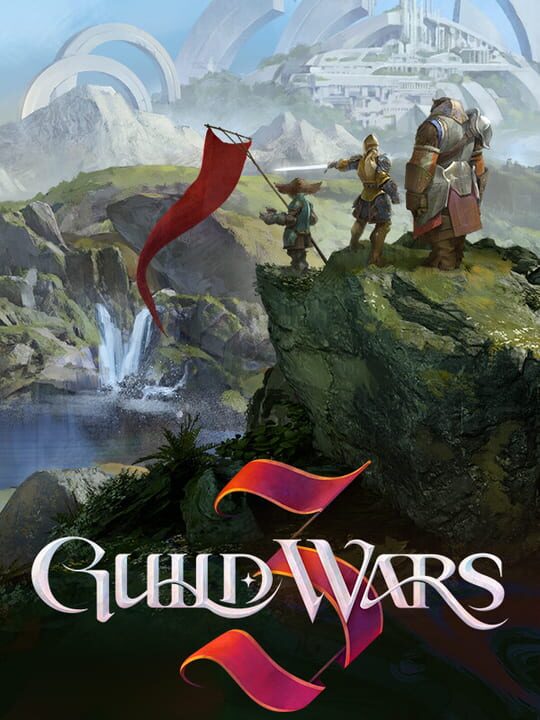
▲ Official Cover Art (Source: IGDB)
| Attribute | Detail |
| Developer | ArenaNet |
| Genre | Hybrid Spectrum MMORPG |
| World Setting | Tyria (Alternate Timelines) |
| Project Status | Actively In Development |
The Strategic Evolution of the Guild Wars 3 Spectrum
Defining the specific identity of Guild Wars 3 requires a deep dive into what the studio calls the MMO spectrum. For many veterans, the first game offered a highly tactical, skill-deck-building experience that felt intimate despite its shared hubs. In contrast, the second game revolutionized the genre with its large-scale world bosses and horizontal progression. The upcoming third chapter is described as landing near the middle of this spectrum. This implies a return to more focused, perhaps party-oriented content that utilizes the massive infrastructure of modern networking without losing the tactical friction that made the original series a cult classic. It is a relief for those who find current 2026 MMO offerings to be exercises in frustration and repetitive bloat.
This middle-ground approach allows the team to explore gameplay loops that don’t rely on the large-scale pillars that define contemporary titles. Instead of just adding more players to a single instance, the focus seems to be shifting toward how these players interact with the world of Tyria across different eras. The decision to maintain three separate live experiences is a bold move in an industry typically driven by forced migration to the newest product. It suggests that Guild Wars 3 will offer a verticality in its storytelling and a specificity in its mechanics that caters to a different player psychology than the expansive, sometimes overwhelming nature of its direct predecessor.
Why Coexistence is the Core Philosophy of Guild Wars 3
The announcement that Guild Wars 3 will not replace its ancestors is a masterstroke in player retention and brand loyalty. By stating that all three games can coexist as different experiences on different timelines, ArenaNet is effectively building a multiverse of Tyria. This allows the developers to tell stories that might have been restricted by the established lore of the current live game. For the player, this means their investment in previous titles remains respected, while the new game offers a fresh entry point with a vastly different mechanical soul. This lack of a replacement mandate allows the new title to take more creative risks with its combat systems and social structures.
▲ Official Artwork (Source: IGDB)
Redefining the Cooperative RPG Experience
Speculation among the community has been intense, with some predicting a shift toward the survival-lite elements seen in other modern titles, while others hope for a pure successor to the instanced tactical play of 2005. The reality of Guild Wars 3 likely sits in a sophisticated integration of both. By utilizing modern hardware like the PlayStation 5 Pro and the latest PC tech, the game can achieve a level of world persistence and environmental reactivity that was impossible during the development of the earlier games. The goal is clearly to push the MMORPG genre forward by looking backward at what made cooperative play meaningful before it was diluted by the need for infinite scale.
Ultimately, the value proposition for the player hinges on how this spectrum is balanced. If the game successfully captures the tight, rewarding skill interactions of the first game while maintaining the vibrant, living world feel of the second, it could set a new standard for the genre in the late 2020s. We are looking at a project that values the player’s time and intelligence, offering a specific type of MMO experience that doesn’t try to be everything to everyone, but instead aims to be the best version of its own unique vision.
Guild Wars 3 and the Bold Bet on Mechanical Identity
ArenaNet is making a calculated move by avoiding the trap of a direct sequel that merely offers more of the same. By positioning Guild Wars 3 in the middle of the MMO spectrum, they are targeting a gap in the market for high-fidelity, tactically dense cooperative experiences that still feel massive. This strategy minimizes internal competition within their own franchise while providing a clear alternative to the trend of oversized, hollow open worlds that have dominated the genre lately.
Final Pulse Score: 9.0 / 10
Related Article: Guild Wars 3 Philosophy Respects Player Time