
Fallout: New Vegas remains a masterclass in role-playing design, tasking players with navigating a complex web of morally gray factions, unstable political landscapes, and difficult choices that culminate in one of four main endgame paths. Unlike traditional narratives that present a clear, heroic resolution, the Mojave Wasteland of Obsidian Entertainment’s creation offers no perfect solutions. Every choice comes with a heavy price tag, forcing players to weigh the lesser of multiple evils in a world devastated by nuclear fire and human greed. The beauty of the game lies in this very lack of compromise, ensuring that every player’s journey ends on a bittersweet, thought-provoking note.
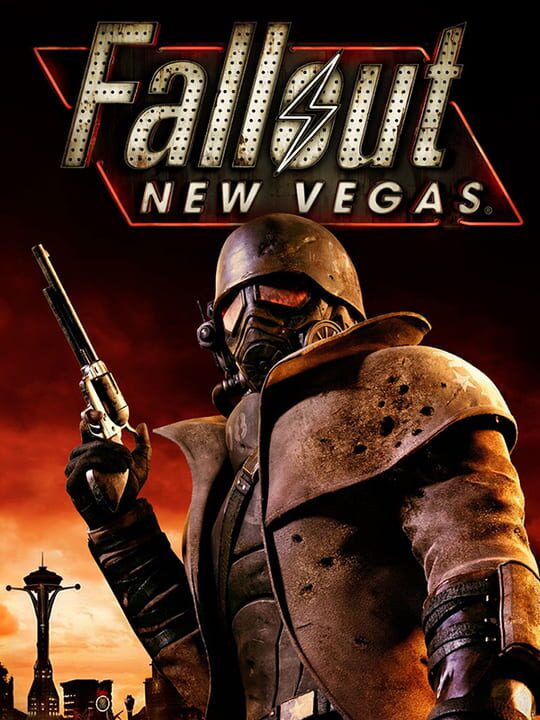
▲ Official Cover Art (Source: IGDB)
| Game Director | Josh Sawyer |
| Developer | Obsidian Entertainment |
| Primary Setting | Mojave Wasteland |
| Key Factions | NCR, Caesar’s Legion, Mr. House, Independent |
| Core Conflict | Control of Hoover Dam |
The Philosophy Behind the Fallout: New Vegas Faction War
During a recent discussion on The Examined Game with Steven Lake, game director Josh Sawyer shared his personal perspective on which faction offers the best hope for the region. Sawyer pointed out that handing total control to despotic individuals like Caesar or the enigmatic Mr. House feels inherently dangerous, as it places the destiny of thousands in the hands of unchecked, autocratic rulers. While some players find the brutal efficiency of Caesar’s Legion or the cold logic of Mr. House compelling, Sawyer views these concentrated power structures as highly volatile and prone to eventual catastrophic failure.
Even the New California Republic, often viewed as the most democratic option on the surface, is heavily critiqued within the narrative. Sawyer highlighted that the NCR is deeply plagued by corruption, bureaucratic inefficiency, and an aggressively imperialistic agenda. Even when players encounter virtuous soldiers sacrificing everything on the front lines, the overarching motivation of the NCR remains highly questionable. This systemic imperialism makes it incredibly difficult to view their expansion into the Mojave as a purely positive force, leaving many players searching for a different path forward.
Why an Independent Fallout: New Vegas is the Least Worst Path
For Sawyer, the Independent ending, facilitated by the player and Yes Man, stands out as the most viable option among the flawed choices. Choosing independence does not magically fix the desert; in fact, the developers intentionally designed this path to showcase the immediate rise of localized dysfunction, chaos, and institutional corruption. However, the core appeal lies in the untapped potential of self-governance. Since a unified, self-organized Mojave has never been tried, it offers a clean slate free from the baggage of old-world superpowers or tyrannical dictators.
▲ Official Artwork (Source: IGDB)
This design philosophy highlights the narrative brilliance of Fallout: New Vegas, where freedom is not depicted as an instant utopia but as a chaotic, difficult journey. It challenges the player to accept responsibility for the vacuum left behind after driving out both the NCR and the Legion. By forcing players to grapple with the realistic aftermath of revolution, the game achieves a level of immersion and thematic depth that few role-playing titles have ever managed to replicate, keeping the community engaged in philosophical debates years after its original launch.
Beyond these narrative discussions, the legacy of the franchise continues to face real-world industry turbulence. Sawyer has been connected to reports regarding a new Fallout project at Obsidian Entertainment, which would mark a highly anticipated return to the wasteland. However, these creative ambitions must navigate a challenging industry climate, following significant restructuring at parent company Xbox. The studio saw approximately twenty-five percent of its workforce laid off alongside the cancellation of multiple internal projects, leaving fans anxious about how these corporate shifts will impact the future of these beloved role-playing worlds.
How the Fallout: New Vegas independent ending redefines player agency in modern RPGs
By refusing to offer a traditional happy ending, the game forces players to engage in genuine political philosophy. Choosing independence is not about achieving perfection, but about embracing the chaotic potential of self-determination over established tyranny. This nuanced approach to player choice is why the game’s mechanics and world design remain the benchmark for narrative-driven RPGs.
Final Pulse Score: 9.5 / 10
Related Article: Fallout New Vegas Bethesda Obsidian Controversy