
Silent Hill: Townfall marks a bold shift for the iconic horror series by plunging players directly into the psychological torment of its protagonist through an intimate first-person viewpoint. Developed by Screen Burn Interactive and published by Konami, this upcoming title departs from the traditional third-person cameras of its predecessors to lock players behind the eyes of Simon Ordell, an amnesiac navigating the isolated Scottish port town of St. Amelia. By stripping away the visual buffer of a third-person character model, the developers aim to amplify vulnerability and make every corner of this chilly, mid-1990s environment feel genuinely threatening.
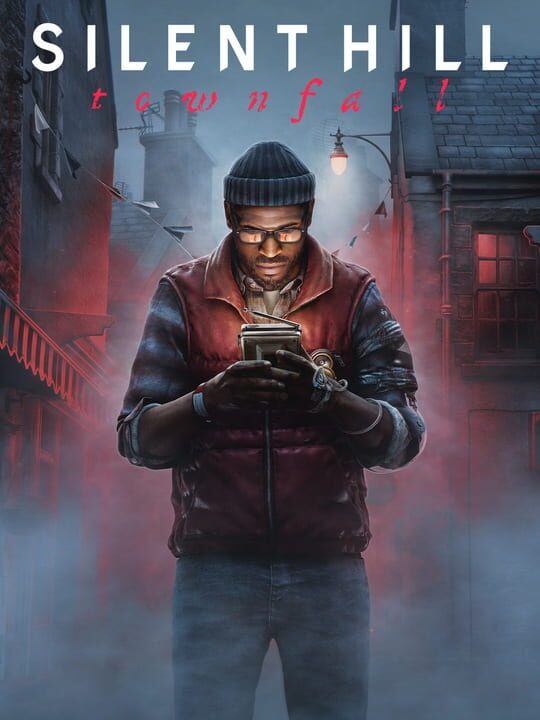
▲ Official Cover Art (Source: IGDB)
| Developer | Screen Burn Interactive |
| Publisher | Konami |
| Protagonist | Simon Ordell |
| Setting | St. Amelia, Scotland (mid-1990s) |
| Perspective | First-Person |
| Key Mechanic | Handheld CRTV Device |
The Chilling Mid-1990s Worldview of St. Amelia
The choice of setting in Silent Hill: Townfall does more than just establish a dreary aesthetic; it fundamentally shapes the player’s interaction with the world. St. Amelia is a desolate Scottish port town trapped in the mid-1990s, an era when digital technology was in its infancy but lacked the omnipresence and reliability of modern smartphones. Players will find themselves interacting with period-accurate analog hardware, including dial-up modems, prepaid card electricity meters, pay phones, and primitive electronic mail systems. This retro tech acts as a narrative anchor, preventing players from relying on modern conveniences like online maps or instant communication, thereby heightening the isolation.
Screen Burn Interactive has gone to extreme lengths to ensure that this technology feels authentic rather than gimmicky. For instance, the visual feed of the in-game cathode-ray tube television (CRTV) was created by running footage through an actual broadcast monitor and re-filming it. This process captures the genuine pixel layouts and analog distortion patterns that modern digital filters fail to replicate perfectly. The resulting visual grit feeds into the psychological tension, making players question if the static and grain are playing tricks on their eyes as they explore the decaying streets.
How Silent Hill: Townfall Revolutionizes Mechanics Through First-Person Design
The shift to a first-person perspective in Silent Hill: Townfall was not a late-stage adjustment but a core design choice built to support its unique mechanical systems. The most prominent example is the replacement of the franchise’s iconic static-spewing radio with a handheld CRTV. This device serves multiple functions: it shows Simon environmental clues to solve complex puzzles, reveals images of the past to trigger his memories, and tracks the movements of nearby threats. Rendering this complex interface in a traditional third-person perspective would have forced the team to use non-diegetic user interface elements like a mini-map, breaking the player’s immersion. In first-person, Simon holds the screen directly in front of his eyes, making the tech feel like an organic part of the physical space.
Furthermore, the gameplay emphasis is squarely on stealth, evasion, and tension rather than empowering the player through action. Standard horror maneuvers like peeking around corners or hiding in cramped cupboards lose their terror when viewed from an detached third-person camera, which often makes the player feel like a powerful, tactical agent. By trapping the player’s viewpoint within Simon’s eyes, every act of hiding becomes a claustrophobic gamble where you cannot see what is lurking directly outside your immediate field of view.

▲ Gameplay & Official Media (Source: IGDB)
Restoring Psychological Tension to Modern Horror
For decades, the horror genre has debated the efficacy of camera angles, but Silent Hill: Townfall makes a compelling case for the raw terror of the first-person perspective. The combination of unreliable analog machinery, a claustrophobic Scottish setting, and the complete lack of a character model standing between the player and the environment creates an intense level of personal vulnerability. Players cannot rely on quick action reflexes or third-person camera tricks to scan around corners safely. Every step into the fog of St. Amelia requires deliberate caution, successfully capturing the dread that made the classic entries so legendary while paving a fresh, mechanical path forward for the franchise.
The first-person perspective in Silent Hill: Townfall eliminates the protective barrier of the third-person camera to maximize personal dread.
By leveraging authentic, physically simulated analog technology like the handheld CRTV, the game grounds its puzzle-solving and navigation in a tactile reality. This deliberate friction, combined with the claustrophobia of mid-1990s Scotland, ensures that player tension is driven by mechanical vulnerability rather than cheap jump scares. It is a masterful realization of psychological horror design.
Final Pulse Score: 9.0 / 10
Related Article: Silent Hill Townfall Release and Setting Analysis
Related Article: Silent Hill Townfall Authentic Scottish Horror