
STALKER 2 Heart of Chornobyl has officially taken its biggest technical leap forward since launch with the deployment of its monumental 2.0 update alongside the Cost of Hope expansion. For nearly two years, players venturing across the Chornobyl Exclusion Zone have endured a brutally demanding rendering pipeline that punished even high-tier graphics hardware in high-density settlements. By migrating the underlying game architecture to an upgraded build of Unreal Engine 5, developer GSC Game World addresses long-standing performance bottlenecks while refining atmospheric environmental fidelity across the entire wasteland.
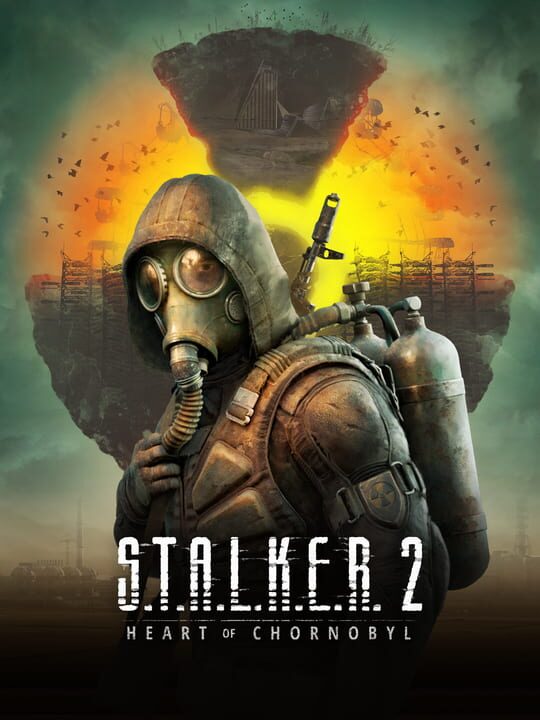
▲ Official Cover Art (Source: IGDB)
| Update Version | Patch 2.0 Overhaul |
|---|---|
| Core Engine Migration | Upgraded Unreal Engine 5 Build |
| Target Platforms | PC and Handheld Systems |
| Key Upscaling Additions | AMD FSR 4 Integration |
| Major Weather Additions | Dynamic Volumetric Fog System |
| Expansion Parity | Cost of Hope Launch Support |
Measurable Performance Gains Across Desktop and Handheld Hardware
The most crucial aspect of patch 2.0 is how it optimizes the most GPU-intensive zones in the game. In densely populated faction hubs like Rostok, previous builds often suffered severe frame drops regardless of user settings. Testing reveals that mainstream hardware configurations experience immediate uplifts, jumping from roughly 40 frames per second at 1080p High settings on version 1.7 to a much more stable 51 frames per second on patch 2.0, representing a noticeable 28 percent performance increase.
High-end setups also gain immense headroom from the updated Unreal Engine 5 branch. An RTX 5080 running at 1440p Epic settings with DLSS Quality enabled advances from an average of 83 frames per second to a blistering 110 frames per second, marking a 33 percent leap. While quieter wilderness outskirts like the woods near Zalissya show more modest gains, the engine improvements reliably deploy additional processing power directly where players need it most during chaotic faction firefights.
Handheld players on Steam Deck hardware finally gain meaningful stability as well. Previously struggling to maintain sub-30 framerates on aggressive upscaling profiles, the introduction of AMD FSR 4 allows the device to target a steady 30 frames per second on Low presets with dramatically improved image clarity, turning handheld survival into a viable experience.
Visual Overhauls and Environmental Enhancements in STALKER 2 Heart of Chornobyl
Beyond raw frame output, patch 2.0 implements substantial visual modifications across the Exclusion Zone. Lighting calculations now feature more precise shadow dispersion and realistic ambient diffusion into darkened interiors. Artifacts like the distracting static noise on wet surfaces and puddles that plagued earlier DLSS implementations have been completely eliminated, yielding clean, natural reflections.
The natural world feels significantly more hazardous thanks to denser foliage placement across fields and roadways. Thicker tall grass and expanded brush lines make sudden encounters with charging mutant boars or stealthy Bloodsuckers far more intense. Furthermore, the newly introduced volumetric fog system blankets low-lying swamps and forest paths, elevating the trademark tension that defines survival in the Zone.

▲ Gameplay & Official Media (Source: IGDB)
Quality of Life Tools and Lingering Stability Quirks
Alongside atmospheric weather, GSC Game World has introduced utility items like field binoculars to allow long-range scouting of rival stalker factions. While dedicated snipers may still prefer looking down high-magnification rifle scopes, binoculars provide broad tactical awareness during reconnaissance. Minor technical hitches like floating NPC placement or occasional sprint stamina bugs still surface, but the game is remarkably stable compared to its early 2024 launch state.
Unreal Engine 5 migration successfully cures the Zone of its worst performance ailments
The 2.0 update transforms STALKER 2 Heart of Chornobyl from a demanding hardware punisher into a remarkably refined survival benchmark. By resolving rendering bottlenecks in dense settlements and upgrading upscaling suites to FSR 4, GSC Game World provides tangible framerate stability without sacrificing bleak atmospheric density.
Final Pulse Score: 9.0 / 10