
Wishseeker enters the tactical roguelite arena with a clear objective to dismantle the genre sluggish pacing while retaining strategic depth. Developed by Indonesian studio MelonCat and published by Soft Source Publishing, this turn based strategy RPG challenges players to navigate shifting procedural dungeons with a tailored squad of four adventurers. By implementing simultaneous decision making and rapid grid skirmishes, the title aims to deliver an intense tactical loop that respects player time whether running solo or teaming up online.

▲ Official Cover Art (Source: IGDB)
| Developer | MelonCat |
| Publisher | Soft Source Publishing |
| Platform | PC (Steam) |
| Genre | Turn Based Tactics Roguelite RPG |
| Release Date | To Be Announced |
| Playtest Access | Playtest Sign Up |
Solving the Turn Based Downtime Dilemma in Wishseeker
Traditional grid tactics games frequently struggle with pacing bottlenecks, forcing players to endure prolonged enemy phase animations and sluggish transitions. Wishseeker attacks this structural friction directly by engineering combat specifically around low downtime mechanics. Enemies execute actions swiftly without protracted pauses, maintaining momentum across every procedural encounter. This rapid flow ensures that calculating positioning, attack ranges, and threat zones feels fluid rather than stalled by lengthy downtime animations.
The momentum focus extends across its cooperative architecture. When diving into online co op with up to four participants, every player manages their assigned heroes concurrently. Turns unfold simultaneously rather than consecutively, eliminating the common frustration of waiting several minutes for teammates to finalize their moves. Solo tacticians retain complete manual control over all four party members, giving hardcore strategists full operational control over unit synergy and tactical field placement.
Roster Depth and Procedural Dungeon Scaling
Dungeon crawling runs demand meaningful build diversity, and Wishseeker structures its progression around eight distinct playable characters. Each hero arrives equipped with a personal kit featuring over twenty bespoke skills, laying the foundation for diverse party compositions. Players encounter shifting drafts of abilities, stat scaling pathways, and rare artifacts throughout every run, requiring adaptable planning rather than reliance on static meta strategies.
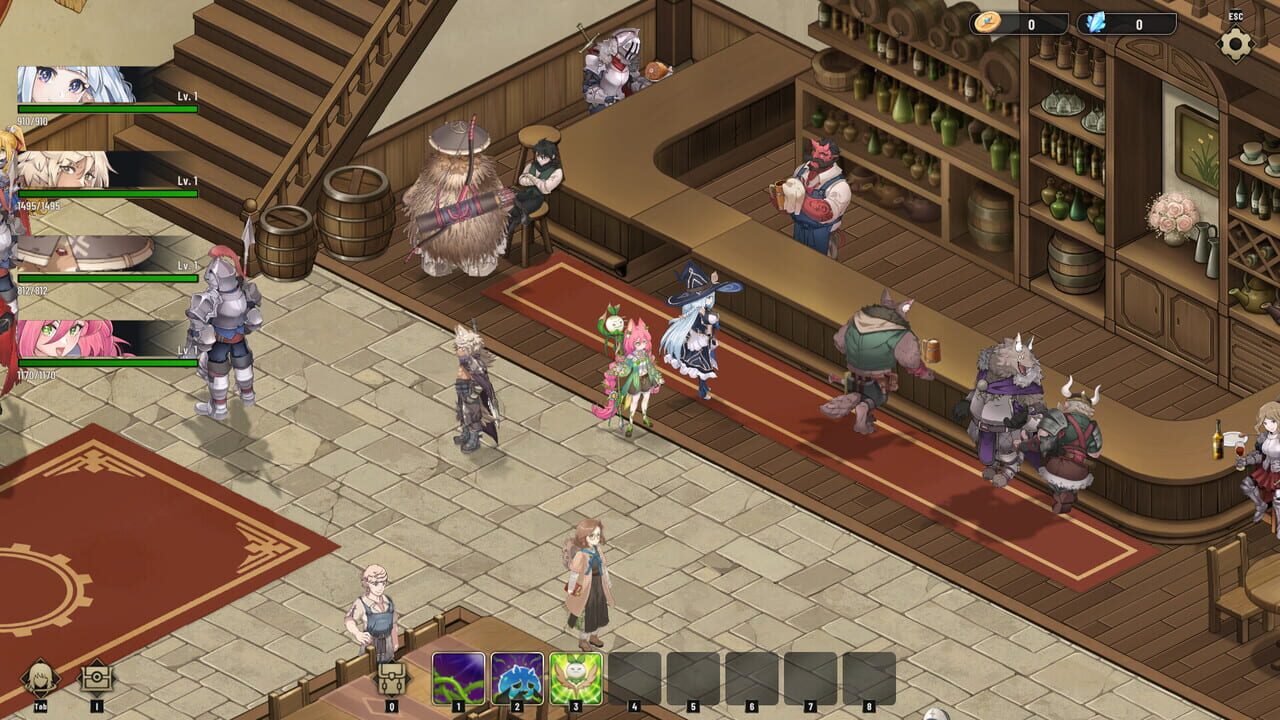
▲ Gameplay & Official Media (Source: IGDB)
Biomes Bosses and High Stakes Synergies
Expeditions take squads across more than five unique biomes, each populated by bespoke enemy archetypes and demanding multi boss gauntlets. Navigating these biomes requires balancing immediate battlefield survival against long term party scaling. Synergizing artifact passives with specific hero stat scaling can transform standard area of effect attacks or defensive stances into high damage chain reactions capable of dismantling late game boss mechanics.
The procedural dungeon layout ensures that no two expedition routes present the exact same risk versus reward profile. Players must constantly weigh resource investments, choosing whether to pursue high threat elite encounters for powerful artifact drops or stabilize team health before stepping into unfamiliar boss territory. Prospective tacticians interested in testing these combat systems early can register for upcoming playtest phases via official developer portals ahead of the full PC launch.
Wishseeker redefines tactical roguelite pacing through rapid combat and true simultaneous turns.
Eliminating idle downtime in turn based strategy games is a challenging design endeavor, particularly when integrating cooperative multiplayer. MelonCat focus on simultaneous execution addresses the primary friction point of squad tactics. If the character kit variety and artifact scaling balance remain tightly tuned across all five biomes, this title could become a standout co op tactics staple on PC.
Final Pulse Score: 8.4 / 10