
RollerCoaster Tycoon Wonderworks arrives as a refreshing return to form for a simulation franchise that has spent two decades chasing past glories. Developed by Springloaded Games, the studio known for Let is Build a Zoo, this brand-new installment aims to bridge the tactile charm of the original isometric classics with modern management depth. Behind closed doors at Gamescom, a comprehensive look at the opening tutorial scenario showcased a design philosophy focused entirely on rewarding, intricate park management.
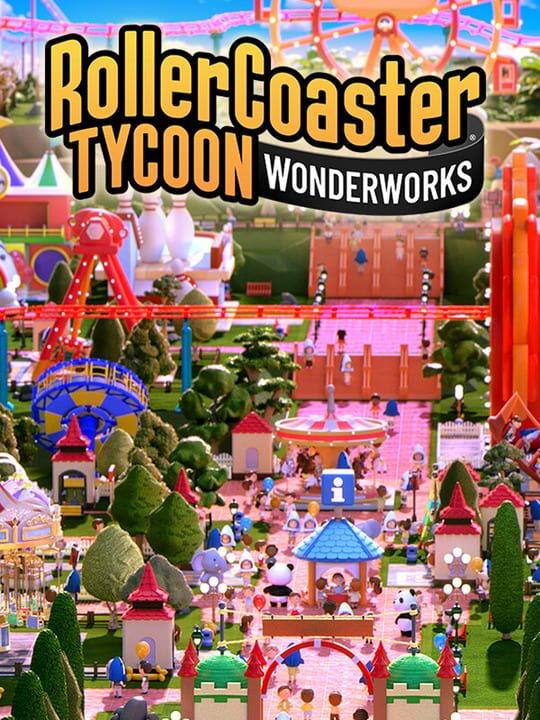
▲ Official Cover Art (Source: IGDB)
| Attribute | Detail |
|---|---|
| Developer | Springloaded Games |
| Publisher | Atari |
| Platform | PC Steam Early Access |
| Price Point | $24.99 / €24.99 |
| Release Window | Winter 2026 |
Scrappy Origins and Deeper Management Systems in RollerCoaster Tycoon Wonderworks
Rather than dropping players into established parks with clean amenities, RollerCoaster Tycoon Wonderworks embraces an authentic zero-to-hero trajectory. The early stages feature delightful, makeshift attractions cobbled together from scrap materials. Carousels feature repurposed oil drums painted in bright primary colors, park entrances start as modest wooden shacks, and early refreshment stalls consist of folding tables serving jug lemonade and pickled goods.
Progression relies heavily on an overhauled research and logistics framework. Instead of abstract menus passively unlocking upgrades, research now requires dedicated physical buildings placed within your park boundaries. Scientists and park researchers exist as physical simulated entities who require rest, amenities, and proper logistical planning to remain productive. Research trees branch non-linearly, giving players active agency over which attractions, shops, and scenery items to prioritize next.
Staff management introduces granular tactical decisions that reshape daily park operations. Stall workers and maintenance crews experience natural fatigue and require bathroom breaks, prompting players to devise distinct scheduling solutions. You can hire backup staff rotations at the expense of monthly operational costs, or establish strict park opening hours so employees can head home to recuperate before the morning rush.

▲ Gameplay & Official Media (Source: IGDB)
Precision Engineering with the Coaster Builder and Ride Simulator
Track design remains the beating heart of the experience, and the coaster creation tool strikes a careful balance between accessibility and engineering depth. Players can easily lay out lift chains, banking turns, vertical loops, and custom stations with high precision. An animated real-time ghost train runs along active track construction, providing instant visual feedback on velocity and structural continuity.
Physics handling has received a major overhaul with the inclusion of an optional Realistic Physics toggle. Casual builders can enjoy lenient coaster creation without constant stalling, while hardcore designers can fine-tune every drop and camelback hill under authentic gravitational forces. A dedicated Ride Simulator menu lets managers calibrate mechanical acceleration, cycle times, and operational strain on flat rides, directly calculating nausea ratings against wear-and-tear repair cycles.
Visual Polish and Future Early Access Roadmap
Visually, the game utilizes stylized 3D polygonal assets that retain the clean silhouette and readable aesthetic of Chris Sawyer classic releases. Real-time lighting casts dramatic dynamic shadows across the midway as daytime transitions into night, enhancing immersion during time-accelerated management loops. With Sawyer kept in the loop on development progress, the foundational feel honors the franchise legacy.
The road ahead is clearly defined as the development team prepares for a PC Early Access debut later this winter at $24.99. Atari expects an active year-long early access phase to introduce water rides, dynamic weather patterns, expanded meta-progression, and legacy building tools based on player feedback.
RollerCoaster Tycoon Wonderworks looks poised to deliver the granular mechanical depth that veteran park managers have craved for years.
By shifting research and employee stamina into active spatial systems, the simulation creates meaningful logistical trade-offs at every stage of expansion. The combination of toggleable realistic physics and dedicated ride calibration ensures both casual builders and simulation purists have the tools necessary to craft intricate parks. If the Early Access updates fulfill their roadmap promises, this entry could finally restore the series to its rightful place.
Final Pulse Score: 8.8 / 10