
Guild Wars 3 is officially steering the veteran MMORPG franchise into uncharted territory by replacing traditional tab-targeting and rigid cooldown rotations with high-octane action mobility. ArenaNet demonstrated an early look at its ambitious design philosophy, revealing a world where momentum, aerial strikes, and precise environmental interaction form the core combat loop. Rather than chasing the massive zerg encounters of the past, the development team is building a modern sandbox that prioritizes mechanical depth and physics-driven teamwork over sheer player density.
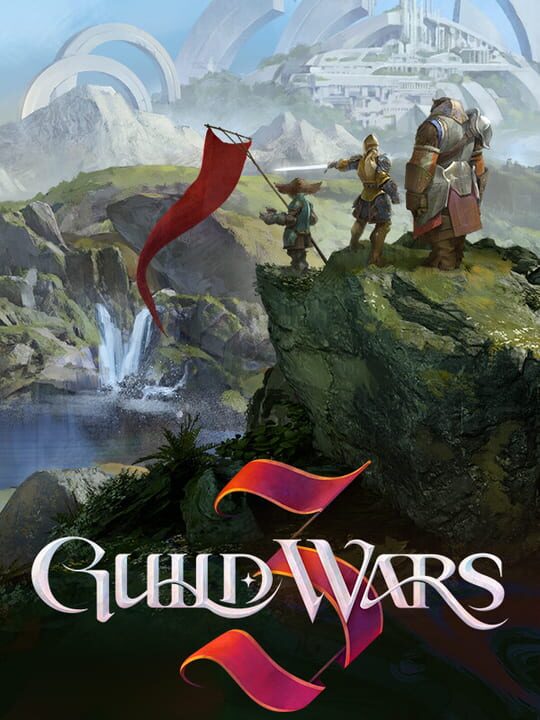
▲ Official Cover Art (Source: IGDB)
| Developer | ArenaNet |
| Setting | Ancient Orr (1200 Years Prior to Guild Wars) |
| Combat Style | Dynamic Action with Momentum Scaling |
| Target Player Scale | Approximately 20 Players per Instance |
| Key Movement Systems | Wall Running, Gliding Strikes, Co-op Vaulting |
Revisiting Ancient Orr Through Fluid Parkour and Momentum
Guild Wars 3 transports players more than twelve centuries into the past to explore Ancient Orr long before its historical cataclysm. The landscape presents sweeping plains beneath floating marble architecture, guarded by an early peacekeeping faction known as the Vaelwardens. Navigating this untamed era requires far more physical agility than past entries ever demanded, incorporating full wall-running, cliff mantling, and momentum-preserving gliders into baseline exploration.
Combat designer Kevin Stocker and studio head Colin Johanson emphasized that movement directly feeds offensive power. Dropping from a glider onto an unsuspecting foe multiplies the impact damage and radius based on falling velocity, while vaulting off cliffs allows players to loop acrobatic heavy strikes back into retreating enemies. Melee physics extend to kinetic crowd control, enabling players to kick targets into sheer rock faces for bonus collision damage, turning the environment itself into an active weapon.
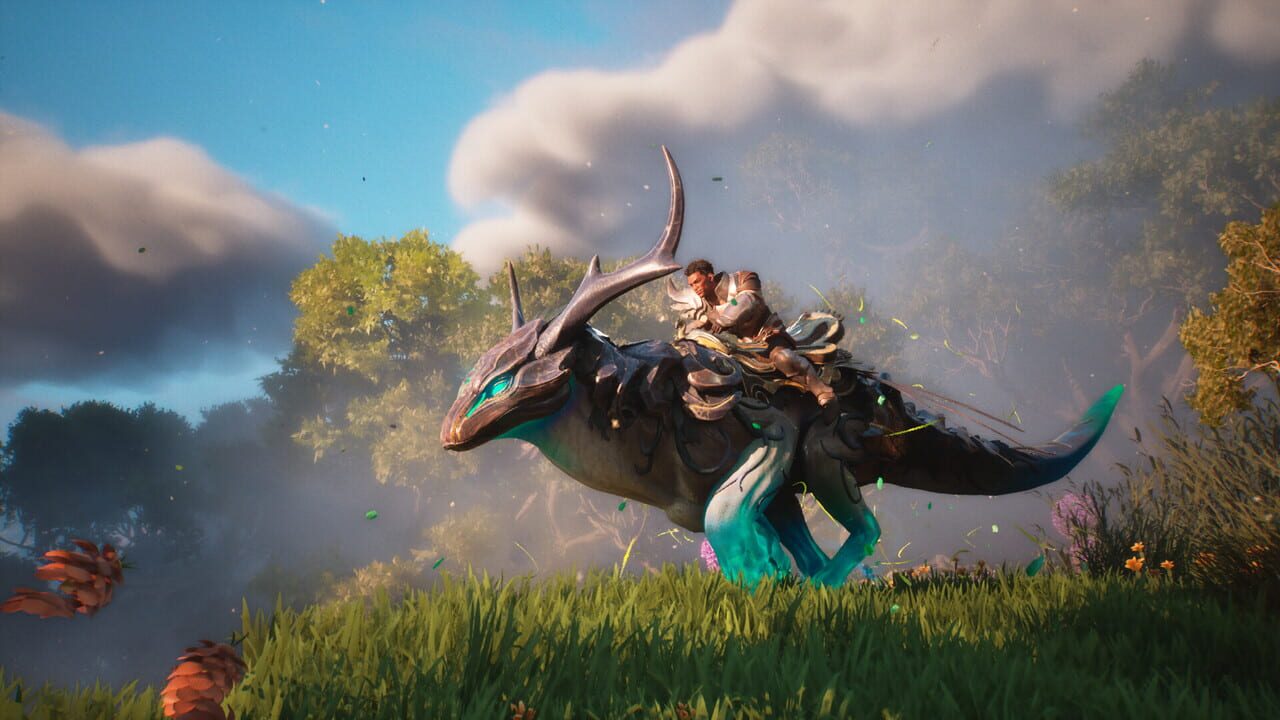
▲ Gameplay & Official Media (Source: IGDB)
Why the 20 Player Threshold Redefines the MMORPG Meta
The transition to visceral, physics-heavy action fundamentally reshapes how Guild Wars 3 approaches multiplayer scale. Traditional massive battles with hundreds of active participants inevitably degrade real-time collision detection and precise hitbox interactions. To protect the integrity of responsive combat, the studio has pinpointed roughly 20 players as the optimal balance point where dynamic encounters remain readable, challenging, and technically stable without collapsing into unreadable visual noise.
This structural shift positions the game between fully instanced hubs and massive open worlds, adopting an architectural model comparable to dynamic shared spaces. Players can explore solo or in small squads, seamlessly crossing paths with other adventurers in the wild to execute emergent cooperative tactics. Combat interactions showcase advanced synergy, such as a warrior holding up a tower shield to act as a springboard, catapulting an ally over heavily armored enemies to expose vulnerable rear weak spots.
Bridging the Gap Between Action Games and Living Worlds
By shedding archaic hotbar clutter, Guild Wars 3 aims to capture the immediate responsiveness of modern action titles while preserving long-term social persistence. The design team began conceptualizing this hybrid philosophy nearly a decade ago, recognizing that contemporary players demand fluid agency rather than static stat-checking. Refining instance density to support intricate movement physics could establish a fresh benchmark for how future online role-playing games balance mechanical skill against cooperative social spaces.
Guild Wars 3 trades overwhelming raid headcounts for precise action physics and meaningful cooperative synergy.
ArenaNet is making a calculated bet that mechanical depth and spatial momentum deliver a more engaging experience than traditional zerg combat. Capping dynamic world instances around twenty players ensures that hitboxes, environmental collisions, and tactical partner launches operate with pure responsiveness. This evolution addresses long-standing genre fatigue by turning every terrain contour into a tactical advantage.
Final Pulse Score: 8.8 / 10
Related Article: Guild Wars 3 Scale and Combat Design Breakdown