
Wanderburg takes the established bullet heaven formula and reconstructs it into a massive rolling fortress powered by medieval siege engineering and chaotic physics. Developed by Randwerk, this roguelike survival shooter introduces a fresh mechanical twist to an increasingly crowded genre. Instead of dodging swarms on foot with auto firing magical spells, players pilot a modular hybrid of a fortified keep and an armored combat vehicle across destructible battlefields.
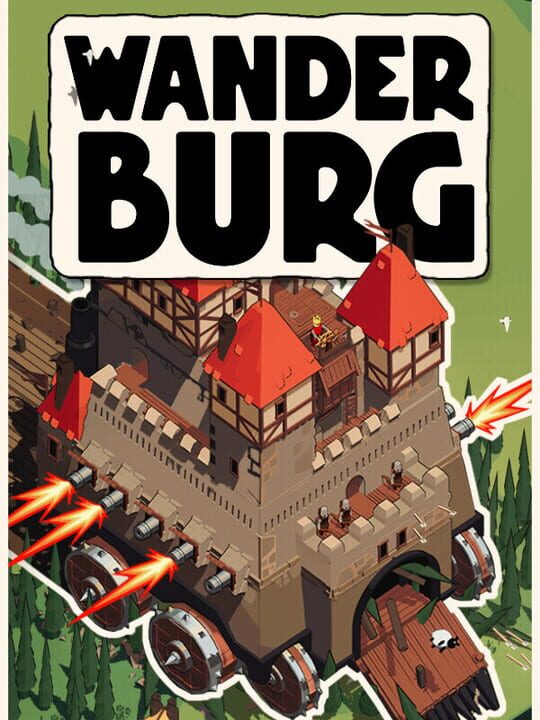
▲ Official Cover Art (Source: IGDB)
| Attribute | Detail |
|---|---|
| Title | Wanderburg |
| Developer | Randwerk |
| Platform | PC (Steam) |
| Release Status | Early Access (September 9, 2026) |
| Target Early Access Window | 6 to 12 Months |
| Genre | Bullet Heaven / Action Roguelike |
Modular Siege Architecture and Bouncy Physics
The core gameplay loop revolves around building and expanding your mobile fortress as each survival run progresses. You begin every match piloting a modest base frame equipped with a lone cannon. Defeating enemy fortresses, scattering hostile infantry, and hoovering up stray livestock rewards the resources necessary to purchase architectural attachments. These building components range from barracks that deploy automated foot soldiers to colossal side mounted warhammers capable of pulverizing elite opponents.
Mobility plays an equally critical role in tactical survival. Players are not restricted to traditional treads or caterpillar tracks, as the customization pool allows conversion to mechanical walking legs. The physics engine introduces a deliberate, comical top heaviness where towering architectural expansions sway and bounce aggressively across uneven terrain, forcing pilots to balance weapon coverage against structural stability.
How Wanderburg Redefines Roguelike Survival Loops
Progression systems in the bullet heaven subgenre frequently fall into predictable stat scaling, yet Wanderburg shifts tactical decision making toward spatial geometry and collision mechanics. Every modular room added to the structure expands your vehicle hitbox while simultaneously increasing offensive throughput. Finding the correct balance between offensive surface area and navigational agility forms the strategic core of every encounter.
Resource Harvesting and Map Dynamics
Unlike traditional arena survivals where downed enemies drop static experience gems, battlefield harvesting in this title requires active environmental interaction. Vacuuming cattle herds and plundering fleeing villages dynamicizes route planning, encouraging players to steer their unwieldy structures directly into volatile skirmishes rather than circling perimeter zones passively.

▲ Gameplay & Official Media (Source: IGDB)
Early Access Trajectory and Long Term Roadmap
With its foundational mechanics established, developer Randwerk plans to refine balance and expand module variety across an early access period estimated between six and twelve months. Community feedback will direct adjustments to weapon synergies, enemy behavioral patterns, and mobility upgrades. Enthusiasts eager to pilot these lumbering medieval monstrosities can jump into the fray on Steam right now.
Wanderburg converts arena survival into tactile vehicular engineering
By swapping rigid hitboxes for modular physics driven fortresses, the game injects much needed physical consequence into the bullet heaven formula. Success relies on spatial risk assessment where fortress expansion increases combat power at the expense of maneuverability. If the developer delivers consistent module variety throughout early access, this mobile castle concept will establish an enduring niche.
Final Pulse Score: 8.2 / 10
Related Article: Tyr Tank Shooter Playtest Hands On Impressions
Related Article: Carcass Clad Wrong Organ Cooperative Tank Horror Analysis