
Marvel’s Wolverine arrives as one of the most anticipated superhero action titles of the generation, aiming to establish a brand new mutant narrative foundation for Insomniac Games. Following Logan before his official tenure with the X-Men, the adventure pairs the clawed protagonist alongside familiar figures like Sabretooth and Mystique on a mission to safeguard mutantkind. While the narrative delivers emotional weight and top-tier cinematic storytelling, the core gameplay loop struggles to escape the design tropes of two console generations past.
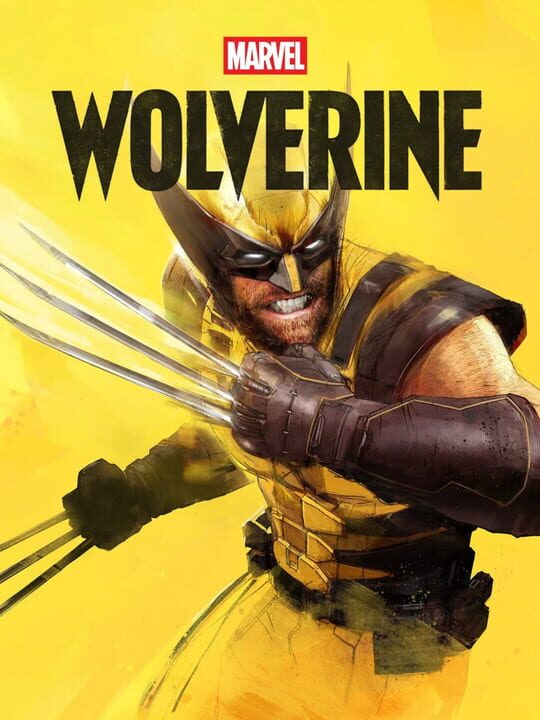
▲ Official Cover Art (Source: IGDB)
| Developer | Insomniac Games |
| Game Directors | Mike Daly, Marcus Smith |
| Narrative Director | Walt Williams |
| Genre | Third-Person Action Adventure |
| Key Strengths | Character writing, visual fidelity, voice acting |
| Key Weaknesses | Dated combat loop, enemy sponge mechanics, excessive hand-holding |
Story and Character Work in Marvel’s Wolverine
The strongest asset across the entire campaign of Marvel’s Wolverine is undoubtedly its narrative execution. Developing a dense ensemble cast while keeping the personal stakes grounded is a formidable challenge, yet the story handles Logan’s nuanced dynamics with Jean Grey and Troy Baker’s portrayal of Nathaniel Essex with genuine dramatic resonance. Liam McIntyre delivers an exceptional performance as Logan, stepping completely away from film imitation to present an authentic, comic-inspired mutant driven by survival and moral conflict.
The visual presentation complements the storytelling at every turn. By narrowing the scope from an expansive open world into focused, linear environments, the rendering engine achieves incredible fidelity. Locations such as the neon-lit backstreets of Tokyo and the dense districts of Madripoor offer rich atmospheric detail. These zones provide pockets of exploration that hint at broader world design, though progression ultimately funnels back into rigidly scripted pathways.
Dated Combat Mechanics and Encounter Design
Where Marvel’s Wolverine stumbles noticeably is in the repetitive execution of its combat systems. Third-person brawling feels virtually unchanged between the opening hour and the twelve-hour finale. Logan’s offensive repertoire is restricted to a small selection of unlockable abilities, such as targeted lunges and health regeneration, but you are limited to equipping four skills at once. These powers rarely alter encounter dynamics in meaningful ways, leaving basic claw swipes as the primary offensive tool.
This restraint diminishes the fantasy of playing as an unstoppable berserker. Instead of feeling like razor-sharp adamantium weapons slicing through opposition, attacks often behave like blunt instruments against standard human adversaries in flak vests. Heavily armored enemies introduce substantial health pools that turn skirmishes into tedious endurance tests, compelling players to hoard ability cooldowns simply to bypass damage sponges rather than orchestrating creative combat chains.

▲ Gameplay & Official Media (Source: IGDB)
Pacing Issues and Exploratory Friction
Between skirmishes, the momentum in Marvel’s Wolverine slows down through mandatory investigative sequences. Players frequently activate sensory modes to track environmental clues across meticulously rendered rooms, leading into scripted walk-and-talk segments that restrict player agency even when puzzle solutions are immediately apparent. The inclusion of arbitrary XP crates scattered throughout modern urban backdrops further reinforces an archaic design philosophy that clashes with the game’s cinematic ambition.
Boss encounters follow a predictable rhythm heavily reliant on repetitive parry sequences. While the boss mechanics are functional and visually spectacular, players will master defensive timings long before depleting extensive health gauges. The absence of alternate playable perspectives, such as sequence breaks utilizing Jean Grey or Mystique, leaves the overall campaign pacing feeling uniform from start to finish.
Marvel’s Wolverine achieves narrative excellence while remaining trapped in legacy action frameworks
Insomniac crafted a phenomenal visual showcase and a compelling story foundation for mutant storytelling. However, the combat architecture fails to deliver the lethal fluidity expected of Logan, leaning on repetitive archetypes and spongy encounters. The title succeeds as a cinematic comic adaptation, but its mechanical foundation requires significant modernization in future installments.
Final Pulse Score: 6.5 / 10
Related Article: Marvel’s Wolverine Gameplay Systems Breakdown