
The discourse surrounding massive open-world action titles often intensifies once the gap between critical appraisals and community sentiment widens. Following the release cycle of Crimson Desert, discussion has reignited over how time constraints impact critical evaluations versus patient consumer exploration. Pearl Abyss European CEO Lybee Park recently addressed this divide, pointing out that initial critical assessments leaned heavily on hurried playthroughs that bypassed the core charm woven throughout the expansive landscape.
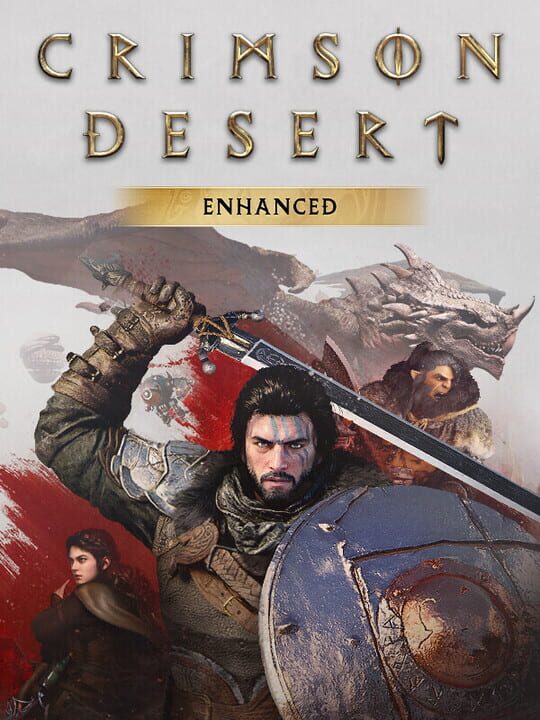
▲ Official Cover Art (Source: IGDB)
The Anatomy of the Review Crunch in Sprawling Open Worlds
According to Park, critics faced systemic obstacles when evaluating the game prior to public availability. Reviewers operated on builds that did not completely match the retail experience while working against strict publishing deadlines. When pressed for time in an epic of this scale, the standard journalistic approach naturally involves rushing down the golden path of the primary narrative campaign. Park argued that this hyper-focus on main quests actively works against what makes the setting distinctive, as the world design deliberately distributes world-building, intricate environmental details, and environmental storytelling far beyond the primary quest markers.
This friction between critical logistics and experiential game design raises valid questions about how modern action RPGs are consumed. In an industry where review codes often arrive days before global embargo dates, absorbing dozens of hours of side content, emergent combat encounters, and world activities becomes an operational impossibility. While Park acknowledges that early impressions had their merits based on the builds provided, the claim remains that critics simply lacked the necessary leisure time to wander, stumble upon dynamic events, and engage with the underlying mechanical ecosystem at an organic pace.
Pacing Disconnects Between Critical Scrutiny and Leisure Exploration
While the developer perspective highlights legitimate logistical hurdles, the tension between critical analysis and casual enjoyment stems from fundamentally different objectives. The core responsibility of an analytical evaluation is not to meander endlessly hoping a title eventually reveals its brilliance, but to identify mechanical friction, narrative momentum, and responsive user feedback. If a player must dedicate extensive hours to unstructured wandering before encountering engaging gameplay loops, that pacing structure itself represents a vital point of critique. When examining the broader release of Crimson Desert, several core design and scheduling realities emerge:
- Pre-Launch Build Discrepancies: Evaluating software that differs from the day-one retail package frequently exposes technical hitches and balance inconsistencies that are later patched for the general public.
- The Golden Path Vulnerability: When the primary storyline fails to sustain engagement on its own merits, relying on scattered side objectives to salvage user interest highlights narrative pacing weaknesses.
- Review Economy Versus Player Freedom: Reviewers must measure density and reward loops within compact deadlines, whereas general players consume vast worlds at self-directed intervals across multiple weeks.
Structural Open World Design versus Campaign Architecture
The situation surrounding Crimson Desert underscores a long-standing philosophical debate in contemporary game design. Developers constructing sprawling ecosystems often scatter their best mechanics, emergent physics interactions, and varied monster encounters across secondary outposts and untracked wilderness. However, if the critical pathway feels rigid or derivative in comparison, early consensus will inevitably reflect that imbalance. Players with hundreds of hours of personal investment will celebrate the serendipity of discovering hidden encounters, but critical frameworks evaluate the coherence of the entire package, starting with the spine of the experience.
Ultimately, bridging the gulf between launch impressions and player discovery requires publishers and development studios to reexamine their pre-launch distribution strategies. Expecting reviewers to grasp the nuanced depths of an immense sandbox during a condensed testing window is inherently contradictory. If a production studio believes its greatest design accomplishments live in subtle environmental discovery, providing sufficient turnaround time before judgment is rendered remains paramount to ensure an authentic reflection of the interactive world.
📌 Frequently Asked Questions (FAQ)
Q. Why does Pearl Abyss believe critic review scores for Crimson Desert were lower?
A. Pearl Abyss European CEO Lybee Park stated that critics evaluated pre-launch builds under tight time constraints, forcing them onto the primary questline instead of exploring the scattered details and charm of the open world.
Q. What core issue creates the gap between critics and everyday players in large action RPGs?
A. Critics operate under strict launch deadlines that necessitate rushing main campaigns, while players explore at their own leisure, encountering side content and systemic features that reviewers may not have had time to experience.
Q. Did critics play the exact final version of Crimson Desert?
A. According to developer statements, reviewers played a build that was not the exact identical version deployed for the official retail launch.
The Reality Behind Open World Review Embargoes
The divergence between critic reception and player sentiment in Crimson Desert reveals an structural impasse in gaming journalism. Demanding that reviewers absorb vast systemic depth within days forces linear campaign rushing, exposing narrative weaknesses while burying exploration rewards. If studios want systemic complexity to be properly recognized, review schedules must expand to accommodate modern sandbox scales.
Final Pulse Score: ⭐⭐⭐⭐☆