
Industrial engineering enthusiasts have reached a monumental milestone as developer Wube Software has deployed version 2.1 to the stable branch. Serving as the final major milestone update for the legendary factory simulation, this release bundles together more than 30 quality of life refinements and systems improvements that originally slipped past the massive 2.0 overhaul. Rather than introducing completely unmapped planetary frontiers or sprawling new research branches, the 2.1 release focuses on polishing core interactions across both the vanilla base game and the critically acclaimed Space Age expansion. The factory must still grow, but the logistical friction holding back complex automated designs has been substantially diminished.
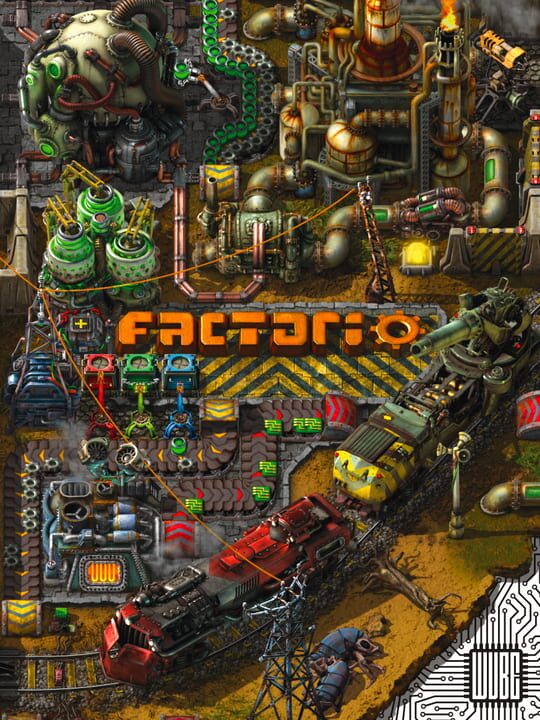
▲ Official Cover Art (Source: IGDB)
Streamlining Orbital Logistics and Sub-Assembly Layouts
The headline operational upgrade in version 2.1 completely transforms interplanetary shipping through the introduction of mixed rocket cargo. Previously, players were forced to dedicate an entire orbital launch payload to a singular item archetype, leading to frustrating logistical bottlenecks when attempting to assemble remote orbital platforms or deliver bespoke construction components across planetary systems. Rockets can now be loaded with a varied assortment of materials, dramatically expediting forward base establishment and small scale space platform construction without wasting critical rocket fuel or silo cycles.
On the ground level, base builders have received a long requested physical manipulation tool: the ability to flip pumpjacks and burner miners. While factory engineers have spent years carefully rotating directional footprints, inverted fluid inputs and awkward ore patches frequently forced unsightly pipe spaghetti and inefficient belt weaving. Flipping these fundamental extraction buildings ensures that symmetric facility layouts and compact blueprints can maintain structural beauty without sacrificing continuous throughput.
Tactical Defense Upgrades and Deterministic Asteroid Physics
Base security and defensive automation also receive significant systemic passes in this swansong update. Land mines have transcended their traditional role as purely expendable reactive explosives; they can now function as circuit tripwires and early warning enemy detectors. By tying mine trip events into the broader circuit network, automated perimeter defenses can dynamically trigger siren alerts, reroute auxiliary power to laser turrets, or dispatch targeted artillery barrages before approaching biter hordes breach outer perimeter walls.

▲ Gameplay & Official Media (Source: IGDB)
Meanwhile, high orbit transit systems benefit from a fundamental recalculation of space hazard damage mechanics. Asteroid damage values are now calculated based entirely on an asteroid remaining health pool rather than dynamic travel velocity. In prior Space Age builds, high velocity impacts introduced volatile damage spikes that frequently overwhelmed defenses in chaotic flight lanes. This change renders cosmic travel significantly more predictable, allowing automated defensive turrets to neutralize incoming debris with calculated precision and predictable ammo reserves.
Configurable Space Age Mechanics and Fluid Routing Overhauls
Recognizing the diverse design philosophies within the community, version 2.1 introduces granular campaign flexibility by allowing engineers to tackle the Space Age expansion without the controversial Quality mechanic enabled. While the Quality tier system introduced deep optimization loops, some players found the probabilistic item tiers at odds with deterministic factory ratios. Giving players native toggle control ensures pure throughput enthusiasts can explore new planetary surfaces without managing multi tier item sorting loops.
Visual fidelity and mechanical rendering also see substantial architectural improvements, led by a revamped pump rendering system. Fluid wagons have notoriously tested station design patience, frequently failing to connect cleanly to visual pump models along densely compressed rail spurs. The updated rendering logic now guarantees clean, responsive pump connections regardless of station curvature or condensed platform geometry, pairing with newly refreshed 3D models across several core manufacturing buildings.
Key Additions in the 2.1 Swansong Patch
- Mixed Rocket Payloads: Orbital transport silos now accept diversified cargo rosters within a single launch container.
- Flippable Extraction Buildings: Pumpjacks and burner mining drills can now be mirrored horizontally for optimal pipe and belt symmetry.
- Circuit Integrated Mines: Land mines operate as proximity sensors and network tripwires to command automated defensive arrays.
- Deterministic Asteroid Impact: Hazard damage scales strictly off remaining asteroid hit points rather than unpredictable velocity thresholds.
- Optional Quality Module System: Players can play the Space Age expansion with the RNG driven Quality mechanic completely deactivated.
- Adaptive Fluid Station Rendering: Liquid pumping stations now connect visually and functionally across unorthodox rail alignments.
📌 Frequently Asked Questions (FAQ)
Q. What is the primary focus of Factorio version 2.1?
A. Version 2.1 serves as the final major update for Factorio, delivering over 30 quality of life improvements, visual updates, and systemic adjustments for both the base game and the Space Age expansion.
Q. How do mixed rocket payloads work in the new update?
A. Rockets can now carry multiple different item types within a single launch cargo hold, eliminating the need to launch dedicated single item shipments to build orbital platforms.
Q. Will Factorio continue to receive updates in the future?
A. While version 2.1 is the final major content update, developer Wube Software will maintain long term support through bug fixes while shifting development toward new prototype projects.
Logistical Perfection Before The Final Transition
Version 2.1 represents the ultimate calibration of Factorio as a complete systemic masterpiece. By addressing long standing logistical headaches such as mixed orbital cargo and directional pumpjack flipping, Wube Software has eliminated peripheral friction while keeping the core automation puzzle pristine. As active development shifts toward technical maintenance and unannounced experimental prototypes, Factorio bows out with unmatched engineering polish.
Final Pulse Score: ⭐⭐⭐⭐⭐