
Competitive first-person shooters live and die by responsiveness, and the arrival of Call of Duty Modern Warfare 4 on Nintendo Switch 2 should have been a triumphant return for the franchise on Nintendo hardware. Marking the first mainline release on a Nintendo platform since 2013, the tactical shooter attempts to bridge the gap between home console horsepower and hybrid versatility. However, critical latency metrics reveal that handheld and docked combatants face a crushing responsiveness penalty that threatens to derail their kill-to-death ratios across crossplay lobbies.
▲ Official Cover Art (Source: IGDB)
Latency Breakdown and the Competitive Gap
In high-stakes 6v6 skirmishes, split-second reaction times decide gunfights before an opponent even turns a corner. Technical telemetry reveals that while PlayStation 5 clocks a snappy 49.1 milliseconds of input latency at 60 frames per second, the Switch 2 edition lags significantly behind. Operating in docked mode, players contend with roughly 81 milliseconds of input delay. Uncoupling the console for portable play exacerbates the deficit further, pushing latency to an average of 100 milliseconds, with volatile spikes stretching from 83 milliseconds up to an agonizing 125 milliseconds.
This means a portable player on Switch 2 faces more than double the reaction buffer required on other modern hardware. In a title where optimal time-to-kill metrics hover around several hundred milliseconds, adding up to 75 milliseconds of pure hardware latency instantly stacks the deck against handheld sharpshooters, effectively neutering aggressive run-and-gun playstyles.
| Platform Profile | Measured Input Latency |
|---|---|
| PlayStation 5 (Performance 60fps) | 49.1ms |
| Switch 2 Docked (Target 60fps) | 81.0ms |
| Switch 2 Portable Mode (Average) | 100.0ms |
| Switch 2 Portable Mode (Worst Case) | 125.0ms |
Framerate Stability and Visual Compromises
To preserve combat readability, port developer Digital Legends and Infinity Ward engineered Call of Duty Modern Warfare 4 to target a baseline of 60 frames per second in multiplayer. For the most part, the hybrid console holds this refresh target, assisted by Variable Refresh Rate support on compatible external displays that helps smooth out momentary frame pacing hiccups. However, particular alpha-heavy rendering scenarios, such as aiming down sights through the transparent viewport of a tactical riot shield, still induce noticeable stutter.
Outside the frenetic multiplayer theater, the standalone campaign adopts a locked 30 frames per second cap at a 4K output target while docked. To sustain that cadence, aggressive graphical downgrades are on full display. Environmental geometry suffers from simplified shading, while character models exhibit noticeably smoothed facial textures that surrender the photorealistic grit found on rival hardware.
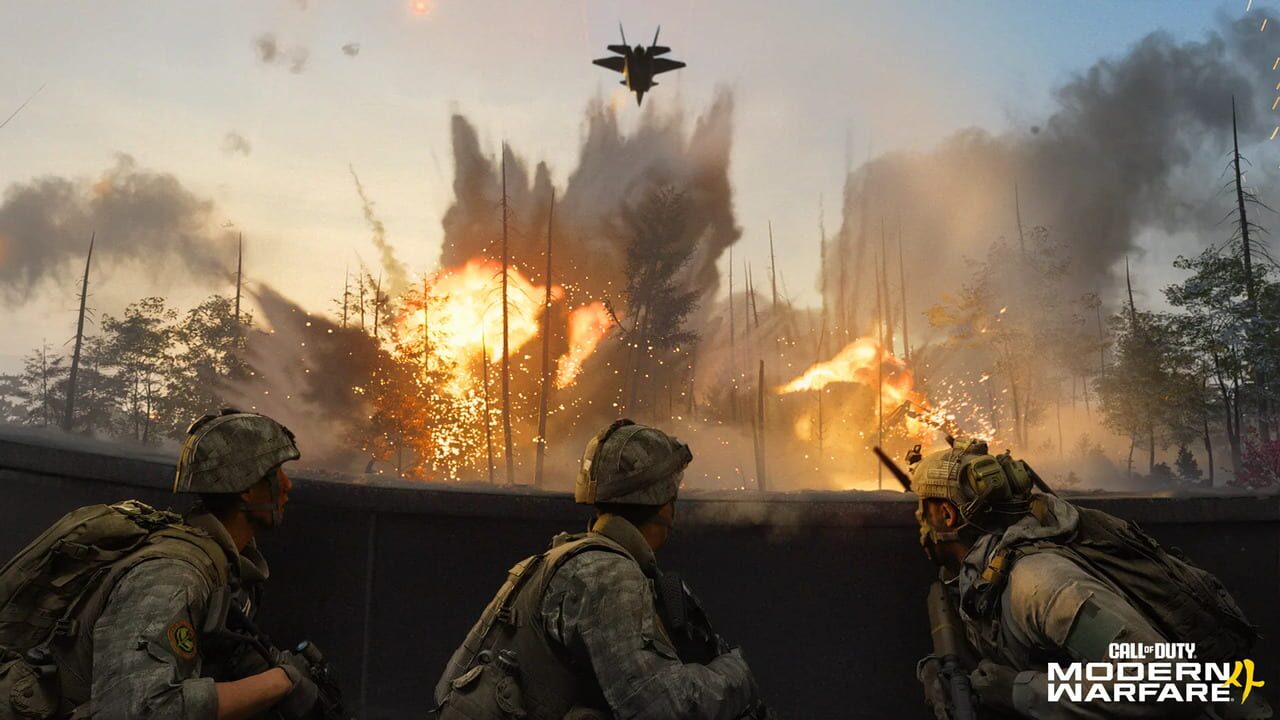
▲ Gameplay & Official Media (Source: IGDB)
Pros and Cons of the Switch 2 Port
- Pros: Respectable 60fps multiplayer target, smooth 30fps campaign pacing, and full crossplay feature parity.
- Cons: Severe input delay exceeding 100ms in portable mode, alpha-effect framerate drops, and heavily softened environmental textures.
Meta Implications for Crossplay Combat
Because crossplay pools Switch 2 enthusiasts alongside PC, PlayStation 5, and Xbox Series X/S squads, this hardware disparity directly dictates tactical viability. Fast-paced twitch aiming and slide-canceling maneuvers become unreliable under an 80 to 125 millisecond response barrier. Players attempting to master the competitive ladder on Nintendo hardware will likely find themselves pushed toward passive, lane-holding strategies with pre-aimed assault rifles or light machine guns to offset their sluggish trigger response.
📌 Frequently Asked Questions (FAQ)
Q. What is the measured input latency for Call of Duty Modern Warfare 4 on Switch 2?
A. Testing shows input latency sits at roughly 81ms in docked mode and averages 100ms in portable mode, fluctuating between 83ms and 125ms.
Q. How does Switch 2 latency compare to PlayStation 5 in multiplayer?
A. PlayStation 5 operates at approximately 49.1ms of input latency at 60fps, meaning Switch 2 in portable mode suffers from more than double the delay.
Q. What framerate does the campaign mode run at on Nintendo Switch 2?
A. The single-player campaign targets and runs at 30 frames per second at 4K while docked, prioritizing stability over higher refresh rates.
Sub-Optimal Polling Cripples Handheld Shot Callers
While achieving functional 60fps multiplayer on hybrid silicon is an admirable engineering milestone, input buffering remains an unforgiving bottleneck. In twitch-centric shooters like Call of Duty Modern Warfare 4, latency parity matters far more than baseline resolution. Until post-launch optimization patches streamline internal render pipelines and controller polling, taking this shooter on the go remains strictly a casual affair.
Final Pulse Score: ⭐⭐⭐☆☆
Related Article: Call of Duty Modern Warfare 4 Finale Details