
Emerging from the Temple of Time into the ruined streets of Hyrule Castle Town remains one of the most defining moments in action adventure history. For millions of players, the stark realization that childhood innocence has vanished comes not from dialogue or cutscenes, but from the paralyzing shriek of a ReDead shambling through the gloom. In the newly released overhaul of The Legend of Zelda Ocarina of Time on Nintendo Switch 2, that foundational encounter almost took on a far darker, visceral horror tone during early production. As development teams modernized every acoustic cue and polygon, they discovered that modern fidelity could easily push a nostalgic scare into genuine psychological terror, forcing the directors to recalibrate where atmosphere ends and excessive dread begins.
▲ Official Cover Art (Source: IGDB)
The High Cost of Visual Fidelity in Modernizing Terror
When rebuilding iconic enemy behaviors under contemporary graphical engines, even subtle art adjustments carry massive gameplay ramifications. Producer Hidemaro Fujibayashi revealed that during the creation of The Legend of Zelda Ocarina of Time, the production staff pushed the envelope on creature performance, upgrading model geometry, cloth deformation, and positional audio to modern standards. However, combining hyper realistic skin textures, agonizing shambling animations, and bone chilling audio design quickly crossed a critical threshold. The monster ceased to be a tense fantasy obstacle and morphed into something resembling survival horror, unsettling internal playtesters and shifting the emotional cadence away from the traditional spirit of Hyrule.
The dilemma stems from how generational design philosophy interacts with player imagination. On original hardware, low polygon geometry and muffled sound synthesis allowed the human mind to fill in the grotesque blanks, producing an iconic and eerie mood without overwhelming the senses. Recreating those exact monster parameters with modern shaders and spatial audio made the ReDead experience far too intense for a broad audience. Recognizing that pushing graphical realism risked distorting the core identity of the adventure, leadership chose to pull back the visual extremity in order to preserve the timeless balance that made the original masterwork so enduring.
▲ Gameplay & Official Media (Source: IGDB)
Mechanical Readability Versus Unfair Stun Locks
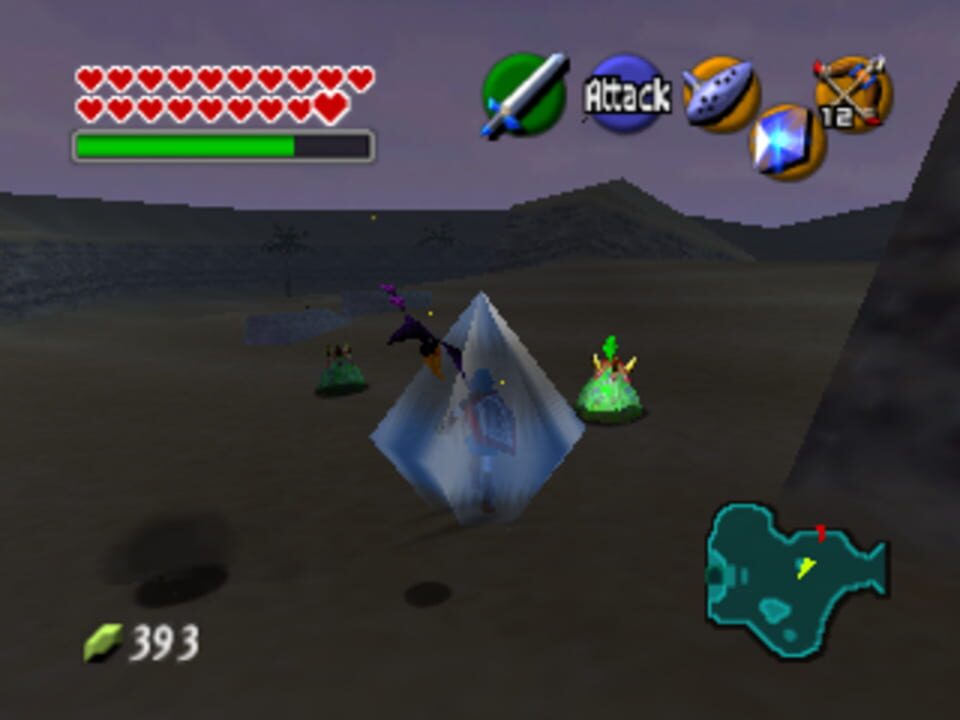
Beyond cosmetic adjustments, the development team also tackled the frustrating mechanical reality of the original paralyzing gaze. To maintain tension without penalizing players through ambiguous hitboxes, the updated version of The Legend of Zelda Ocarina of Time introduces crucial readability cues that directly improve tactical combat. Rather than instantly freezing Link without clear feedback, the remake features distinct visual trajectories indicating where the creature is looking, accompanied by luminous red vine tendrils that physically coil around Link when he is successfully incapacitated.
- Directional Line of Sight: Clearly defined visual cones give players an opportunity to break line of sight before the paralyzing shriek triggers.
- Status Effect Indicators: Visible red tendrils wrap around Link, clarifying the exact duration and source of the stun lock state.
- Flanking Counterplay: Once the attack trajectory is recognized, Link can circle behind the distracted creature to deliver critical backstabs.
- Tuned Sound Mix: Piercing audio screams remain shocking while dialing back low frequency bass distortion that previously disoriented players.
These subtle readability enhancements showcase the careful collaboration between veteran leadership like Eiji Aonuma and a fresh generation of junior designers. Younger team members brought ambitious visual ambitions, but senior directors guided them back toward functional clarity. By providing immediate telegraphing, the encounter rewards observational awareness and precise execution rather than relying on trial and error survival tactics, turning an otherwise traumatic encounter into an engaging spatial puzzle.
Preserving Atmosphere in an Ageless Masterpiece
Striking the correct balance between nostalgia and mechanical innovation is the central reason why this rebuilt version of The Legend of Zelda Ocarina of Time has immediately captured critical acclaim as the premier release of 2026. Rather than altering enemy rosters or inserting unearned shock value, the design philosophy respects the emotional boundaries set decades ago. The ReDeads are still deeply unsettling, their hollow moans still raise the hairs on your neck, and their deadly embrace still punishes careless exploration across post time skip Hyrule.
Ultimately, restraint is the most difficult tool for modern game creators to wield when working with powerful hardware. With uncapped processing power and intricate lighting models, making an enemy terrifyingly realistic is easy, but making it fit the precise tonal frequency of an adventure epic requires extraordinary discipline. By checking their impulses and dialing back visceral horror in favor of clean gameplay mechanics, Nintendo ensured that this return to the Temple of Time remains welcoming to newcomers while delivering the exact haunting thrill veteran adventurers carry in their memories.
📌 Frequently Asked Questions (FAQ)
Q. Why did developers dial back the ReDead design in the remake?
A. Producer Hidemaro Fujibayashi explained that modern graphics, audio, and realistic movement made the ReDead enemies far too frightening for the intended tone of the adventure, prompting the team to tone them down.
Q. How has ReDead combat mechanically changed in the updated release?
A. The remake adds clear directional indicators showing the monster gaze and red vine-like tendrils signifying when Link is frozen, making it easier for players to avoid paralyzing screams and counterattack from behind.
Q. Who directed the creative adjustments during production?
A. Producers Hidemaro Fujibayashi and Eiji Aonuma worked with a team of younger designers to balance modern visual ideas with the timeless design principles of the original game.
Restraint Defines True Remake Excellence
Modern graphics often tempt developers to mistake graphic realism for enhanced immersion, but atmospheric fantasy requires thematic boundaries. By reigning in the terrifying fidelity of the ReDead, the production team prevented accidental genre drift toward survival horror. Improving visual telegraphs while protecting the iconic pacing proves that true preservation lies in refining gameplay readability, not chasing unchecked visual excess.
Final Pulse Score: ⭐⭐⭐⭐⭐
Related Article: Zelda Ocarina of Time Remake Metacritic Score Analysis