
With Phantom Blade Zero now officially in the hands of action enthusiasts across PlayStation 5 and PC, the gaming community has witnessed a rare alignment of cinematic authenticity and uncompromising character action mechanics. Developer S-Game has spent years engineering what it proudly dubs a kungfupunk universe, attempting to capture the physical kineticism of Hong Kong wire-fu cinema without sacrificing the razor-sharp responsiveness demanded by modern hardcore players. While contemporary character action titles frequently lean into exaggerated fantasy swordplay, S-Game tackled the daunting challenge of translating authentic wuxia disciplines into high-speed, dynamic digital combat that honors decades of martial arts heritage.
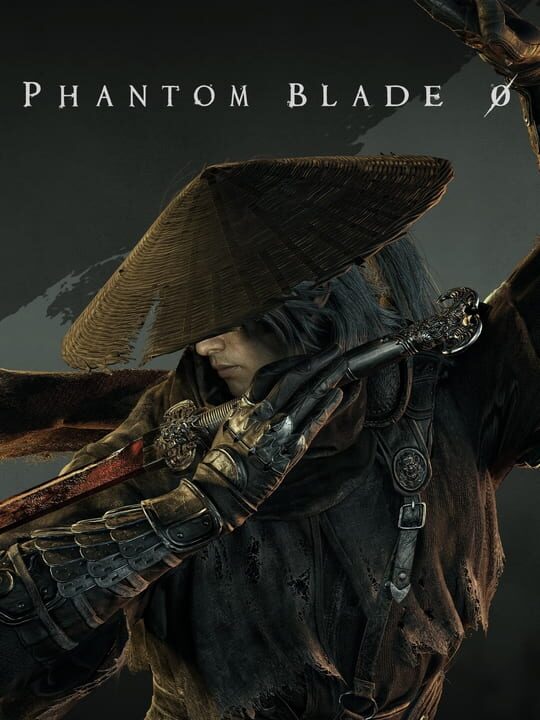
▲ Official Cover Art (Source: IGDB)
The Two-Decade Evolution from Rainblood to AAA Kungfupunk
The journey leading to Phantom Blade Zero represents a twenty-year artistic obsession for director Soulframe Liang. The universe traces its lineage back to Liang independently crafting Rainblood: Town of Death on the RPGMaker engine, later expanding through multiple indie sequels, mobile installments, and the cross-platform title Phantom Blade: Executioners. Stepping into the AAA development space meant abandoning familiar development shortcuts and constructing an entirely custom technological pipeline from the ground up to realize a truly interactive wuxia film.
Translating the buoyant, physics-defying aesthetics of traditional wuxia onto modern hardware proved notoriously difficult for the production team. For decades, standout digital kung fu experiences were largely produced outside of China, exemplified by Western and Japanese productions that captured technical martial systems with mechanical precision. S-Game sought to reclaim that cultural domain by proving an authentic Chinese martial philosophy could be woven into an international blockbuster, ensuring that the movement and martial philosophy of protagonist Soul felt distinct from conventional Western hack-and-slash tropes.
Donnie Yen and the Authentic Cinema Pipeline
To avoid the shallow surface mimicry that often plagues genre adaptations, S-Game forged a creative partnership with legendary martial arts icon Donnie Yen. While gaming studios routinely enlist prominent cinematic figures strictly for promotional likenesses, Yen joined the production as a dedicated creative consultant alongside an experienced stunt team of 15 to 20 seasoned performers. Action director Kenji Tanigaki, an acclaimed martial arts choreographer and longtime protégé of Yen, coordinated on-set motion capture to translate cinematic fight cadence directly into real-time gameplay animations.
Despite juggling major Hollywood filming schedules, Yen regularly traveled to S-Game Shanghai motion capture facilities to personally direct combat sequences and perform for his in-game persona, Mó Yuan, an enigmatic warrior who fights while protecting an infant in cutscenes. This hands-on collaboration fundamentally reshaped how the development team handled character momentum, spatial awareness, and stunt coordination, moving the production away from generic slash routines into genuine cinematic choreography.

▲ Gameplay & Official Media (Source: IGDB)
Master Yang and the Non-Linear Martial Arts Engine
At the center of daily combat execution stands combat director Yang Liu, affectionately known on set as Master Yang. Liu combined his comprehensive background in classical Chinese martial arts with specialized stage direction to build an animation framework based entirely on situational physics and natural human reaction. Rather than assigning static swing frames to specific inputs, Liu conceptualized at least ten distinct attack variations per weapon based on the protagonist spatial proximity to his target.
This technical philosophy becomes immediately apparent across the expansive arsenal featured throughout Phantom Blade Zero, which boasts 30 primary weapons alongside 25 secondary implements. When Soul closes the distance against a towering adversary, his offensive trajectory shifts automatically: strikes delivered beneath a massive foe trigger compact, upward leverage techniques, whereas distant targets prompt soaring, lunging opening combinations that transition seamlessly into defensive positioning.
Breaking the Sequential Combo Mold
Both Liang and Liu anchored their design architecture around Bruce Lee famed philosophical principle of embracing fluid, adaptive movement. Traditional action combat engines traditionally bind players to rigid, predetermined button strings, forcing inputs into predictable one-two-three combo routes that can feel robotic and disjointed during frantic encounters. In contrast, Phantom Blade Zero utilizes a specialized connective transition system, allowing the recovery frames of any attack to link directly into an alternative move without breaking player momentum.
This circular attack flow shines brightest when executing real-time weapon swaps mid-combo, where heavy blade swings blend uninterrupted into agile secondary utility attacks. The underlying engine calculates combat encounters not as rigid mathematical turns, but as an unbroken choreographic dance between attacker and defender. By bridging classic Hong Kong action cinema techniques with tight controller responsiveness, S-Game has managed to establish a distinctive combat identity that redefines modern martial arts gaming.
📌 Frequently Asked Questions (FAQ)
Q. What is Donnie Yen role in Phantom Blade Zero?
A. Donnie Yen served as an active creative consultant, helped direct combat sequences alongside a 15 to 20 person stunt team, and provided motion capture for the in-game character Mó Yuan.
Q. How many weapons are available in Phantom Blade Zero?
A. The game features an extensive combat system consisting of 30 primary weapons and 25 secondary weapons, each utilizing distance-based dynamic animation sets.
Q. How does the combo system in Phantom Blade Zero differ from traditional action games?
A. Rather than relying on rigid sequential combo strings, the combat engine uses a modular flow system that allows the protagonist to link any attack into any other strike or weapon swap smoothly without resetting animation momentum.
The Convergence of Martial Stunt Direction and Animation Logic
The mechanical success of Phantom Blade Zero proves that authentic martial arts games require stunt coordination at the architectural level rather than mere motion-captured visual styling. By utilizing distance-adaptive attack animations and ditching linear button-string combos for modular transition states, S-Game effectively cracked the fluid rhythm of classic martial cinema. This technical synthesis validates high-budget, domestic wuxia game design on the global competitive stage.
Final Pulse Score: ⭐⭐⭐⭐⭐
Related Article: Phantom Blade Zero Review Roundup 2026
Related Article: Phantom Blade Zero Gameplay Preview Analysis