
Factorio stands as a titan of the automation genre, having spent thirteen years evolving from a niche indie project into a definitive masterclass in systems design. As we reach June 2026, the development journey is approaching its final destination with the announcement of Update 2.1. This forthcoming patch is set to be the last major content delivery for the title, marking a transition from active feature expansion to a focused phase of long-term stability and maintenance. For a community that has spent thousands of hours optimizing conveyor belts and logistical networks, this news signals the end of an era while solidifying the game’s legacy as a completed, polished work of art.
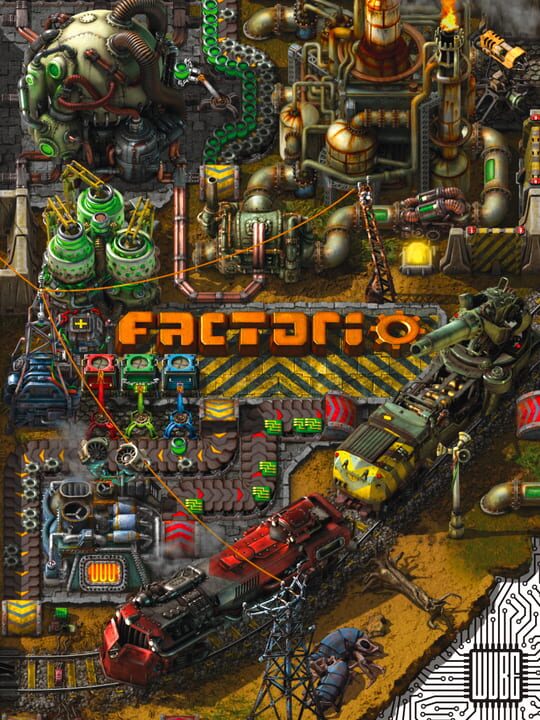
▲ Official Cover Art (Source: IGDB)
| Feature | Details |
|---|---|
| Final Major Update | Version 2.1 |
| Development Status | Transitioning to Long-Term Support (LTS) |
| Post-2.1 Focus | Bug fixes, platform compatibility, modding support |
| Recent Milestone | Factorio: Space Age Expansion |
| Developer | Wube Software |
The Legacy of Automation and the Space Age Peak
The journey to this conclusion has been nothing short of legendary in the gaming world. Since its early days in 2013, Factorio has consistently pushed the boundaries of what a management simulation can achieve. The 2020 launch was merely the beginning of its contemporary dominance, which was further cemented by the release of the Space Age expansion in late 2024. That expansion didn’t just add content; it fundamentally altered the endgame by introducing multi-planetary logistics and space-based manufacturing, effectively doubling the scope of an already massive experience.
By reaching this “good place” to conclude development, the team at Wube Software is acknowledging that the core loop is now perfected. The complexity found in the interplay between resource extraction, power management, and defense against indigenous threats has reached a level of balance that few titles ever achieve. Unlike the modern trend of endless live-service updates that often bloat and dilute the original vision, this decision reflects a commitment to a cohesive and finished product. Players can dive into the current build knowing they are experiencing the definitive version of the vision first laid out over a decade ago.
Factorio Update 2.1 and the Shift to Long-Term Support
Update 2.1 is positioned as the final polish on an already shimmering surface. While Wube Software has confirmed that this update will not introduce massive new mechanics like additional planets or enemy archetypes, its value lies in the refinement of the existing ecosystem. The focus is squarely on quality-of-life improvements that smoothen the user experience and internal tweaks that empower the already vibrant modding community. This ensures that even after the official developer focus shifts, the game remains a fertile ground for community-driven innovation.

▲ Official Artwork (Source: IGDB)
Sustainability Through Technical Maintenance
The transition to long-term support (LTS) is a critical move for a game with the technical complexity of this title. In this phase, the developers will prioritize engine compatibility, ensuring the game runs flawlessly on modern hardware and operating systems well into the future. This includes ongoing support for platform-specific features and ensuring that the underlying code remains robust as external technologies evolve. For the hardcore player base, this means their massive megabases will remain functional and performant for years to come.
Furthermore, the minor quality-of-life patches expected post-2.1 will likely address lingering friction points in the interface or logistics logic. By focusing on “modding features,” the developers are effectively handing over the keys to the kingdom. Factorio has always been a haven for modders, and providing them with even more powerful tools in the final build ensures that the gameplay can continue to expand through community creativity long after the official roadmap has concluded.
Prototyping the Future Beyond the Factory
While the sun sets on active development for the factory builder we know and love, Wube Software is not standing still. The studio has openly discussed the recruitment of new talent to fill vacancies as they move toward “other game prototypes and experiments.” This is a standard but exciting evolution for an independent studio that has spent the better part of a decade on a single IP. Though the studio is candid about the fact that there won’t be anything to share for a significant amount of time, the DNA of their meticulous design philosophy is sure to carry over into whatever comes next.
The transition allows the team to step away from the constraints of the existing engine and explore new genres or mechanics that wouldn’t fit within the current framework. For the fans, this represents the beginning of a long wait, but given the track record of excellence established since 2013, the anticipation is well-founded. The factory may be complete, but the engineers are simply moving to a different workshop.
Official development insights and historical context regarding these changes can be found directly on the developer’s Friday Facts blog.
Factorio 2.1 represents the rare victory of a finished, self-contained masterpiece over the infinite live-service model.
By calling time on active gameplay development, Wube Software is protecting the integrity of the game’s balance rather than succumbing to feature creep. The shift to long-term support ensures that the current engine remains the gold standard for performance, while the focus on modding tools essentially makes the game immortal. This isn’t the death of the game, but its ascension into the hall of permanently relevant classics.
Final Pulse Score: 9.8 / 10