
Final Fantasy VII Rebirth has officially expanded its reach to the Nintendo Switch 2 and Xbox Series X|S as of June 3, 2026, marking a pivotal moment for Square Enix’s remake project. Bringing a massive, open-world RPG originally designed for high-end hardware to a handheld-capable platform presented significant technical hurdles. However, the release confirms that the developer has moved beyond simple asset downgrades, opting instead for a complete architectural re-evaluation of how the world of Gaia is rendered on current-gen hardware. This expansion allows a broader audience to experience Cloud’s journey beyond Midgar without compromising the core atmosphere that defined the original experience.
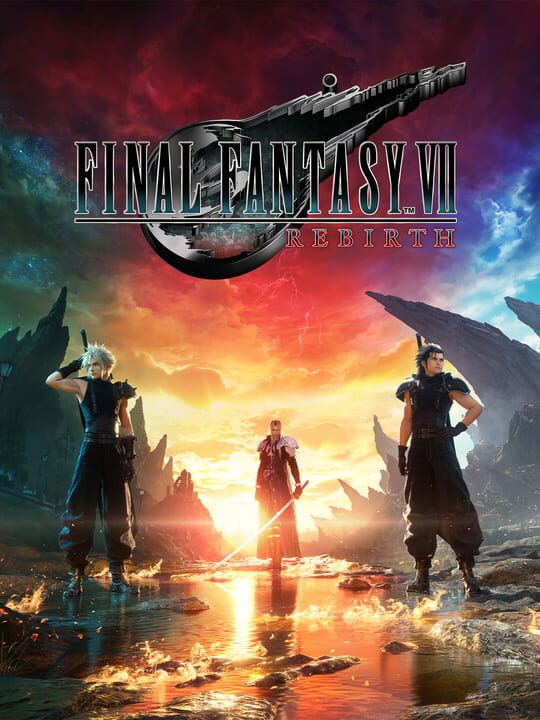
▲ Official Cover Art (Source: IGDB)
| Feature | Details |
|---|---|
| Platforms | Nintendo Switch 2, Xbox Series X|S, PS5, PC |
| Game Engine | Customized Unreal Engine 4 |
| Switch 2 RAM | 12GB (Optimized Streaming) |
| Primary Tech | NVIDIA DLSS & Massive Environment System |
| Performance Target | 30 FPS (Dynamic Resolution) |
The Optimization Philosophy: What to Leave in Final Fantasy VII Rebirth
The primary challenge in porting Final Fantasy VII Rebirth to the Nintendo Switch 2 was the transition from a hardware environment with 16GB of RAM to one with 12GB. Director Naoki Hamaguchi has emphasized that the team rejected the idea of simply cutting content or reducing polygon counts across the board. Instead, the development focused on a philosophy of “retention,” asking what elements were essential to the player’s immersion. This led to a complete redesign of the Level of Detail (LOD) systems specifically for the Switch 2, ensuring that while information density changes based on distance, the visual identity of the world remains intact.
By leveraging a heavily modified version of Unreal Engine 4, the team implemented a “Massive Environment” system. This technology functions similarly to modern geometry streaming solutions, allowing the game to handle vast amounts of environmental data without overtaxing the CPU or memory bandwidth. In urban centers like Kalm or Junon, where NPC density and architectural detail are at their peak, the engine now utilizes specific asset levels that prioritize the “feeling” of a bustling city over raw object count. This systemic approach ensures that the narrative weight of these locations is never lost to technical limitations.
Leveraging DLSS and Advanced Scaling on Nintendo Switch 2
▲ Official Artwork (Source: IGDB)
One of the most critical components of the Final Fantasy VII Rebirth port is the implementation of NVIDIA’s Deep Learning Super Sampling (DLSS). On the Nintendo Switch 2, the game utilizes a sophisticated Dynamic Resolution system to maintain a stable 30 frames per second. In handheld mode, the internal resolution scales between 672×380 and 1344×756, while the TV mode ranges from 960×540 to a full 1920×1080. DLSS then bridges the gap, using AI-driven upscaling to provide a final image that looks remarkably crisp even when the internal rendering load is reduced to preserve battery life and thermal performance.
The technical team also addressed specific visual artifacts that often plague upscaled images. For instance, the rendering of hair and fine textures on characters like Cloud and Tifa received bespoke adjustments. By applying a subtle blur to hair density flows, the developers mitigated the “shimmering” effect often seen with DLSS in high-contrast scenes. This level of granular optimization demonstrates that the Switch 2 version of Final Fantasy VII Rebirth is not a generic port but a specialized build designed to maximize the specific strengths of the NVIDIA-powered hardware.
CPU Management and World Streaming Efficiency
While much of the discussion surrounds GPU performance, the CPU demands of Final Fantasy VII Rebirth are equally daunting. The game manages complex NPC logic, background streaming, and animation updates simultaneously. To accommodate the Nintendo Switch 2, Square Enix optimized the animation update frequency based on the player’s distance from an object. By reducing the refresh rate of background character movements that are barely visible to the eye, they freed up significant CPU cycles for core game logic and seamless world streaming.
This efficiency is most noticeable during Chocobo exploration. Traveling across the world map at high speeds requires the engine to load and unload massive amounts of data in real-time. Through refined caching strategies and SIMD (Single Instruction, Multiple Data) enhancements at the engine level, the port avoids the stuttering or “pop-in” that often ruins large-scale RPGs on portable systems. The result is a cohesive experience that maintains the scale and grandeur of the PS5 original, proving that Final Fantasy VII Rebirth is a masterclass in modern cross-platform engineering.
The game is available now on the Official Nintendo Store, as well as Steam and Xbox.
Final Fantasy VII Rebirth on Switch 2 proves that bespoke optimization beats raw power every time.
By shifting the focus from “cutting assets” to “re-engineering systems,” Square Enix has set a new benchmark for what is possible on handheld-hybrid hardware. The use of DLSS as a fundamental part of the rendering pipeline, rather than a mere post-process, allows the game to punch far above its weight class. This port doesn’t just deliver the game; it delivers the experience without the compromises we usually expect from mobile-tethered silicon.
Related Article: Final Fantasy 7 Rebirth Switch 2 and Xbox Demo Details
Related Article: Final Fantasy VII Rebirth Switch 2 and Xbox Release News
Final Pulse Score: 9.5 / 10