
Rayman Legends Retold is officially stepping into the spotlight as the catalyst for a new era in one of gaming’s most beloved platforming franchises. While some fans might have expected a return to the series’ 1995 roots, the decision to modernize the 2013 masterpiece serves a much larger strategic purpose for the developers at Ubisoft Milan and Montpellier. Instead of a simple upscaling, this project represents a total reimagining designed to fix historical narrative gaps and leverage modern hardware to its fullest potential.
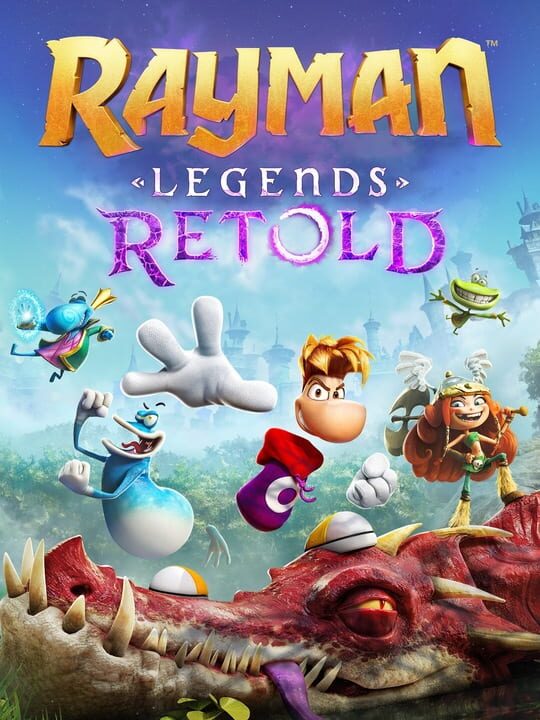
▲ Official Cover Art (Source: IGDB)
| Developer | Ubisoft Milan / Ubisoft Montpellier |
| Release Date | October 1, 2026 |
| Platforms | Nintendo Switch 2, PlayStation 5, Windows PC, Xbox Series X |
| Engine | Snowdrop Engine |
| Key Features | 3D Dragon Ride levels, New Final World, Remastered OST by Grant Kirkhope |
The Strategic Logic Behind Rayman Legends Retold
Choosing to remake the fifth entry in a series rather than its debut often raises eyebrows, but for Rayman Legends Retold, the choice was dictated by the depth of the source material. The development team noted that the original 2013 release already contained the richest version of the Rayman world, featuring a massive roster of characters including Globox, Barbara, and the Grand Minimus. By focusing on this specific iteration, the developers can provide a comprehensive introduction for new players while giving returning fans a version of the game that finally lives up to its original creative ambitions.
This relaunch isn’t just about nostalgia; it’s about establishing a high-quality baseline for the franchise moving forward. The internal goal was to reach a quality bar that could compete with the most innovative modern platformers. By utilizing a game that already possessed a solid mechanical foundation, the studios were able to focus their resources on evolving the art style and expanding the narrative, ensuring that the “new era” of the series begins with a title that feels both complete and cutting-edge.
Gameplay Overhaul: Why Rayman Legends Retold Fixes the Past
One of the most compelling reasons for the existence of Rayman Legends Retold is the opportunity to address long-standing criticisms of the original release. Even though the 2013 version was highly acclaimed, its narrative structure was often described as disjointed, particularly regarding its conclusion. The Retold edition introduces a brand-new final world specifically designed to tie the story together, transforming a collection of disconnected levels into a more cohesive, cinematic experience that players can follow from start to finish.
Beyond the story, the technical shift to the Snowdrop engine allows for significant mechanical improvements. The navigation system, previously centered around a gallery of paintings that some found cumbersome, has been completely overhauled for better flow. Additionally, the introduction of 3D Dragon Ride levels serves as a bridge between the classic 2D platforming the series is known for and the more ambitious 3D environments the team hopes to explore in future installments. This transition allows the developers to experiment with perspective and depth without losing the tight, responsive controls fans expect.
▲ Official Artwork (Source: IGDB)
Building a New Team for a Classic IP
The development of Rayman Legends Retold also serves a practical purpose within Ubisoft’s internal ecosystem. Much of the original team that defined the early days of the series has moved on to other projects, such as Beyond Good and Evil 2, or left the company entirely. This remake acts as a training ground for a new generation of developers to learn the nuances of what makes a Rayman game feel authentic. By working within the established framework of a classic, the new team can master the series’ unique momentum and whimsical tone before diving into entirely original entries.
This strategy mirrors successful moves by other industry leaders who use remakes as a jumping-off point for franchise reinvention. It ensures that the creative DNA of the series is preserved while being updated with modern sensibilities. For the player, this means a more polished experience that benefits from contemporary design philosophy, such as the influence of recent genre-defining hits that have pushed the boundaries of what a 2D platformer can achieve in terms of world-building and visual flair.
Legacy Meets Modern Ambition
Despite the forward-looking nature of the project, the creators remain deeply inspired by the golden age of platformers from the early 2000s. The ambition seen in titles like Rayman 2 and other sixth-generation classics is a primary motivator for the “Retold” project. By integrating music from legendary composer Grant Kirkhope and pushing the visual fidelity to new heights, the goal is to recapture that sense of grand adventure that has been missing from the genre for far too long. Rayman is no longer just catching up to the competition; he is actively being positioned to lead it once again.
Rayman Legends Retold is a calculated bridge between 2D perfection and a 3D future.
By selecting the most feature-complete entry to remake, Ubisoft is bypassing the awkward growing pains of a total series reboot. The transition to the Snowdrop engine and the addition of 3D transition levels suggest that this isn’t just a celebratory lap for the 2013 classic, but a technical stress test for a much larger, fully 3D Rayman project currently in the early stages of development.
Related Article: Rayman Origins Remaster Leak Details
Related Article: Rayman Legends Retold Release Date Leaks
Final Pulse Score: 8.8 / 10