
Independent developer House House has officially revealed the use of generative artificial intelligence during the closing phases of development on Big Walk. The studio confirmed that large language models were consulted specifically to troubleshoot complex technical roadblocks deep within the game engine architecture. While the studio clarified that this usage accounted for well under one-tenth of a percent of the total codebase, the admission has reignited fiery debates across the community regarding where the line should be drawn for software automation in creative game production.
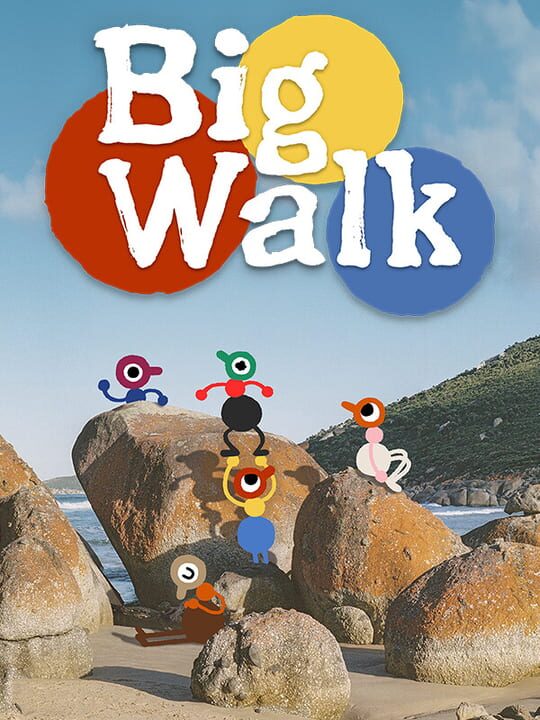
▲ Official Cover Art (Source: IGDB)
Troubleshooting Sunset Stutters and Engine Hurdles
The technical issue that prompted this controversial measure stemmed from a severe performance drop occurring during in-game sunrise and sunset sequences. In Big Walk, a cooperative exploration adventure heavily reliant on atmospheric lighting, the rendering pipeline struggled to cull inactive shadow casters positioned behind player perspectives. This specific engine bottleneck caused frame rates to plummet by half during dynamic transitions, creating an unplayable stutter during what should have been peak visual moments. After consulting external technical support yielded no viable workarounds, the team turned to an AI model to brainstorm alternative rendering approaches.
According to the development team, the chatbot provided a conceptual avenue that eventually allowed engineers to bypass the culling flaw after extensive manual alterations. The final implementation translated to roughly ten lines of customized code that stabilized the frame rates across dynamic lighting shifts. Outside of this isolated rendering patch, the studio emphasized that generative models were completely absent from world-building, dialogue writing, character design, and environmental art in Big Walk.

▲ Gameplay & Official Media (Source: IGDB)
The Growing Debate Over Ethical Lines in Game Code
Despite the functional success of the engine fix, the admission has sent shockwaves through indie development circles that traditionally take a zero-tolerance stance against machine-generated assets. Prominent industry figures and award jurors have recently reaffirmed collective pledges to disqualify titles utilizing generative tools in any production capacity, explicitly rejecting the idea that underlying logic scripts should be exempt from scrutiny. For many creators, incorporating algorithmic generation into software engineering presents the same systemic risks to creative labor as automated visual illustration.
- Engine Optimization: The procedural fix resolved critical shadow-caster culling drops that cut frame rates in half during sunrise lighting phases.
- Code Scope: Algorithmic assistance contributed to less than 0.1 percent of total project logic, specifically restricted to roughly ten lines of heavily modified script.
- Disclosure Accountability: The studio admitted to proceeding without a formal internal policy regarding automated tools, expressing concern that voluntary usage risks normalizing controversial technology.
- Creative Purity: All narrative themes, cooperative soundscapes, art direction, and mechanics in Big Walk remain purely crafted by human developers.
Community Backlash and Development Accountability
The timing of the revelation has drawn particular scrutiny from enthusiasts who previously praised the studio for its principled stances on independent artistic ownership. House House candidly admitted that developing Big Walk without an established policy on automated machine generation was a structural failure on their part. The developers expressed remorse that their pragmatic bug-fixing approach might inadvertently contribute to treating synthetic tools as an inevitable standard for the wider games ecosystem. As public sentiment grows increasingly sensitive to silent algorithmic integration, the incident demonstrates that even minor technical shortcuts can overshadow years of authentic artistic craftsmanship.
📌 Frequently Asked Questions (FAQ)
Q. Why did the developers of Big Walk use generative AI?
A. House House used an LLM chatbot to brainstorm solutions for a severe shadow caster rendering bug in Unity that halved the game frame rate during sunrise and sunset.
Q. How much of the Big Walk codebase was influenced by AI?
A. The developers confirmed that well under 0.1 percent of the total codebase was involved, amounting to approximately ten lines of heavily modified code.
Q. Were any art or narrative elements generated by AI in Big Walk?
A. No, the studio clarified that generative tools were never used for art, sound, character models, or narrative design during production.
Pragmatic Engineering Clashes With Indie Philosophy
The controversy surrounding Big Walk exposes an intensifying divide between practical runtime engineering and the ethical boundaries of independent game design. While ten lines of heavily rewritten shader logic hardly constitute replacing human programmers, the indie scene views any concession to generative models as a dangerous slippery slope. Developers must realize that technical transparency is no longer optional, and even isolated back-end patches now carry significant cultural weight across gaming communities.
Final Pulse Score: ⭐⭐⭐☆☆