
Dishonored defined a benchmark for systemic freedom and atmospheric world-building, proving that complex sandbox mechanics can captivate dedicated gamers when given proper scope. Veteran designer Harvey Smith has offered crucial perspective on the ongoing debate surrounding production scales in systemic games. While smaller experimental projects can isolate clever mechanical puzzles, the sprawling multi-layered playgrounds that allow players to bend physics and manipulate AI require substantial resources to truly flourish.

▲ Official Cover Art (Source: IGDB)
| Key Design Philosophy | Emergent Systemic Physics and Analog AI |
| Landmark Genre Titles | Deus Ex, Dishonored, BioShock |
| Core Gameplay Risk | Feature conservatism driven by ballooning scope |
| Mechanical Highlight | Unintended player-driven solutions to environmental obstacles |
| Creative Direction | Independent systemic game craft at Black Pony Immersive |
Systemic Complexity and the Anatomy of Emergent Play
The hallmark of any genuine immersive simulation is the unpredictable collision of distinct gameplay rules. In high-caliber design, mechanics are not scripted sequences, but open-ended tools given to the player to manipulate the surrounding environment. When analog artificial intelligence interacts with responsive environmental physics, the game world becomes a sandbox of spontaneous possibilities where no two playthroughs feel identical.
A legendary example from classic systemic design highlights this mechanical philosophy perfectly. During the development of Deus Ex, players discovered they could attach proximity mines to walls, leap onto them, and daisy-chain them upward to scale vertical architecture. This unscripted vertical mobility was never planned by developers, yet the underlying systemic integrity allowed it to happen naturally. That same dynamic tactical flexibility established in Dishonored gave fans the freedom to combine teleportation powers, time manipulation, and environmental traps in ways that continually surprised the creators themselves.
Balancing Dishonored Scale Against Mechanical Conservatism
Expanding the scale of an interactive world introduces significant design hazards if creative courage falters during development. When production costs escalate, projects often fall into the trap of dumbing down systems, trading deep emergent interactions for rigid cinematic corridors and repetitive single-button inputs. That mechanical conservatism completely strips away player agency, leaving an empty shell that looks impressive visually but offers shallow interactive engagement.
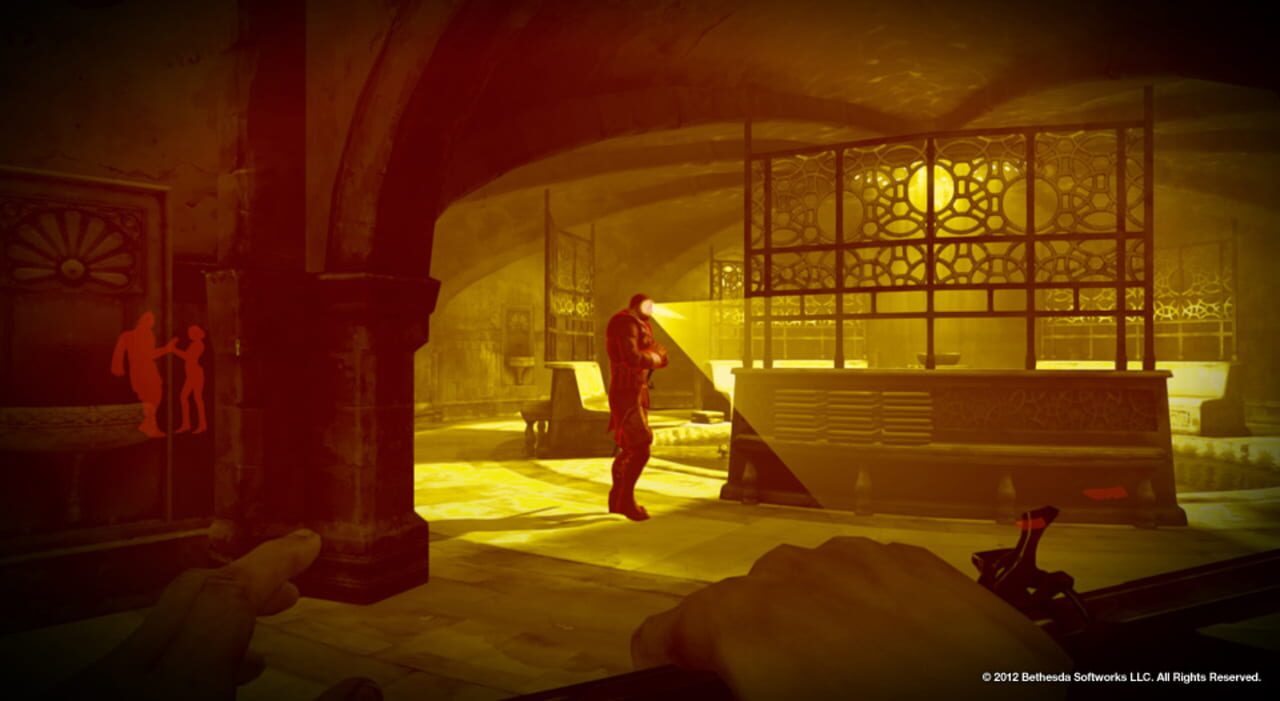
▲ Gameplay & Official Media (Source: IGDB)
The core danger is that expanding scope without mechanical depth results in games that lead the player entirely by the nose. High-budget simulations must resist the temptation to streamline their mechanics into basic action loops. The reason why Dishonored succeeded where purely scripted action titles faltered was its refusal to compromise on dense vertical level architecture and intricate cause-and-effect systems that rewarded observant, inventive playstyles.
Finding the Sandbox Sweet Spot for Modern Systems
Scaling down too far carries its own set of distinct mechanical compromises. Ultra-compact independent projects often provide rich visual atmosphere and environmental lore, but they frequently lack the engineering bandwidth required to build fully reactive AI routines and wide-ranging tactile tools. Without expansive systemic breadth, an experience risks turning into a walking tour rather than a dynamic playground of emergent choices.
Striking the ideal balance means providing enough developmental runway to build robust simulated physics while retaining the creative daring to let players break intended paths. As Harvey Smith embarks on new systemic endeavors through his independent venture Black Pony Immersive, the focus remains firmly locked on delivering uncompromised emergent depth. Maintaining that sweet spot ensures that the systemic magic of Dishonored and its predecessors will continue to evolve through player-driven ingenuity.
The true power of Dishonored lies in trusting player creativity over scripted spectacles
Systemic games reach their peak when developers invest in deeply interconnected physical and behavioral mechanics rather than linear pathways. High production scale only succeeds when it actively serves tactile experimentation and expansive player freedom. Keeping design scope strictly focused on systemic responsiveness ensures that player choices remain genuinely unpredictable, rewarding, and mechanically meaningful.
Final Pulse Score: 9.2 / 10
Related Article: Dishonored Origins and Early Pitches Explored
Related Article: Deus Ex and Warren Spector Legacy Breakdown