
Dota 2 was the secret catalyst for the most significant AI shift in gaming history, as revealed by newly unsealed court documents from the Musk v. Altman legal battle. These records show that Valve’s Gabe Newell wasn’t just a fan of the technology; he was a silent architect of its early success. By donating precisely $20,008,279 in 2018, Newell cemented himself as one of the primary backers of the OpenAI project during its most formative years, proving that the future of competitive play was always intended to be driven by neural networks.

▲ Official Cover Art (Source: IGDB)
The impact of this relationship on the player base cannot be overstated. While we were all busy grinding MMR, the very foundations of the game were being used to train entities that could eventually outthink any human pro. This wasn’t just about corporate synergy; it was about testing the limits of complex decision-making in a high-stakes environment. The data revealed that Newell’s involvement went far beyond a simple wire transfer, as he served as the sole member of an informal advisory board during the period when the AI’s Dota 2 performance began to exceed all expectations.
| Detail Type | Information Found in Lawsuit |
|---|---|
| Game Title | Dota 2 |
| Donation Amount | $20,008,279 |
| Role of Gabe Newell | Informal Advisory Board Member |
| Key Tech Milestone | AGI performance uptick in 5v5 matches |
How Dota 2 Fueled the Evolution of AGI
According to internal emails from Shivon Zilis to Elon Musk dated April 23, 2018, the development of the Dota 2 AI was looking better than anticipated. The speed at which the bots were learning to coordinate their abilities and predict enemy rotations caused internal concern at OpenAI that the timeline to Artificial General Intelligence (AGI) was closer than previously thought. For players, this explains why the OpenAI Five project felt so dominant; it wasn’t just a programmed script, but an evolving consciousness refined within the lanes of the Radiant and Dire.
Newell’s belief in this technology suggests that Valve’s hands-off approach to certain balance updates might have been influenced by how AI perceives the meta. If an AI can solve the game, the human experience must adapt to more creative, less predictable playstyles. This financial and advisory commitment highlights a vision where Dota 2 serves as a living laboratory, a concept that continues to influence how modern gaming engines integrate machine learning to manage toxicity and matchmaking today.
From Bot Matches to Brain-Computer Interfaces
The transition from software to hardware is the next logical step in this journey. Recent activity from January 2026 shows that Newell has continued his streak of strategic investments, participating in a funding round for Merge Labs. This company, which lists OpenAI as a research partner, focuses on brain-computer interface (BCI) technology. For the hardcore Dota 2 community, this raises an incredible prospect: the ability to execute complex combos through thought alone, bypassing the mechanical latency of a physical mouse and keyboard.
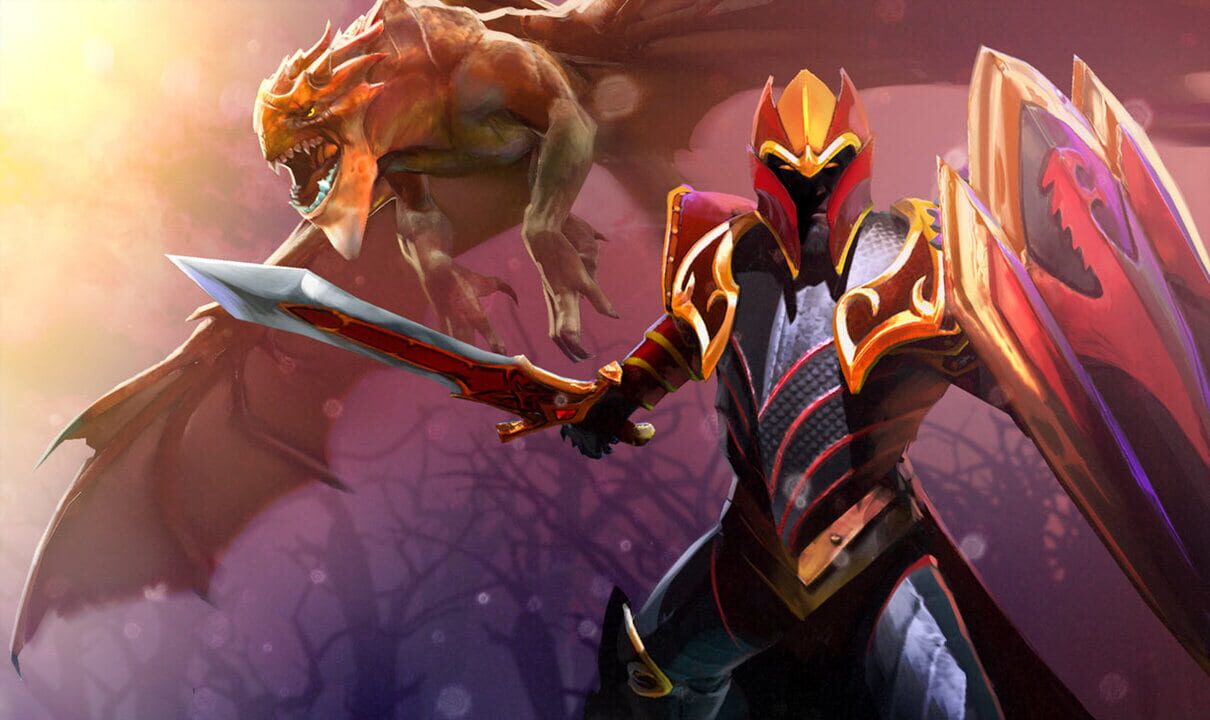
▲ Official Artwork (Source: IGDB)
Newell’s personal interest in neuromodulation and neural interface chips, specifically through his company Starfish Neuroscience, marks a 180-degree turn in his understanding of the brain. He has moved from skepticism to a belief that a significant near-term consumer market exists for this tech. Imagine a world where the reaction speed in Dota 2 is limited only by your synapses rather than your APM. This isn’t science fiction anymore; the foundations were laid back in 2018 when Newell first put his weight behind the OpenAI vision.
The SpaceX and Kojima Connection
The lawsuit documents also reveal some lighter, yet fascinating, industry crossovers. Following Hideo Kojima’s visit to Valve in 2018, Newell attempted to facilitate a meeting between the legendary developer and Elon Musk for a SpaceX tour. While seemingly unrelated to gameplay, it shows the high-level circle of influence that dictates the future of our industry. When the biggest names in gaming, aerospace, and AI collaborate, the results inevitably trickle down to the player experience, whether through better server optimization or revolutionary input methods that could redefine how Dota 2 is played in the next decade.
As we look toward the horizon, the marriage of AI and neuroscience appears to be Newell’s ultimate endgame. The precision required to compete at the highest levels of Dota 2 makes it the perfect stress test for any neural chip or AI model. We are no longer just playing a MOBA; we are participating in a multi-billion dollar data experiment. For more details on Valve’s historical contributions to AI, check the official OpenAI supporter list from 2018.
Pulse Gaming Perspective: Newell is playing 4D chess with our neural pathways and Dota 2 is the board.
By funding the very AI that crushed our pros years ago, Gabe Newell ensured that Valve remains at the bleeding edge of human-computer interaction. This isn’t just about bots; it’s about a future where your brain is the controller and the game knows your next move before you do.
The ongoing revelations from the legal battle between Musk and Altman will likely continue to shed light on how much of our favorite hobby is actually a byproduct of a race toward AGI. For now, every time you jump into a match, remember that your movements are part of a legacy that Gabe Newell started with a $20 million check and a belief in the power of the machine.
Final Pulse Score: 9.2 / 10