
Dragon Quest Monsters: The Withered World expands its horizon as Square Enix and developer TOSE unveil major gameplay details surrounding its overarching narrative, environmental variety, and field exploration systems. Following protagonists Bianca and Nera on their mission through the Kingdom of Witherwood, players must confront a devastating corruption spread by mysterious meteocite crystals. The journey across this decaying land introduces tactical monster taming alongside active world restoration mechanics.

▲ Official Cover Art (Source: IGDB)
| Developer | TOSE / Square Enix |
| Publisher | Square Enix |
| Platforms | PS5, Xbox Series X/S, Switch 2, Switch, PC |
| Release Date | December 3, 2026 |
| Genre | Monster-Taming RPG |
Theatrical Villains and Unlikely Allies in Witherwood
The core narrative of Dragon Quest Monsters: The Withered World centers on the fading power of the ancient Archeagles and the rise of a theatrical menace. The primary antagonist, Thespidor, dubbed the showrunner of the darkness below and voiced by Feliks Mathur, orchestrates the spread of life-draining meteocite crystals across the realm. His recurring presence promises scripted confrontations and thematic boss encounters throughout the campaign.
To counter this encroaching blight, players interact with a colorful cast of supporting characters. King Withers, the solemn monarch of Witherwood voiced by Kim Durham, aids the party with quest objectives despite his melancholic demeanor. The adventure also introduces Ed, a self-styled living legend of monster wrangling voiced by Vinay Lad, accompanied by his mischievous partner Scruffy, voiced by Tobias Weatherburn. These companions flesh out the tactical and narrative depth as Bianca and Nera journey beyond the castle walls.
Diverse Biomes and High-Threat Encounters in Dragon Quest Monsters: The Withered World
Exploration in Dragon Quest Monsters: The Withered World departs from static plains into highly specialized environmental biomes. Players will venture through diverse regions such as Taiboku, characterized by dense bamboo groves, rice paddies, and the puzzle-heavy Memory Hall dungeon. In contrast, the vibrant plains of Lushland feature climbable giant produce like colossal cabbages and pumpkins that serve as strategic vantage points for mapping terrain.
Dynamic weather patterns and shifting climates directly influence monster habitats, ranging from sun-drenched lowlands to perpetual rain swamps and freezing mountain spires. While navigating these dungeons and fields, scouts will encounter high-level monsters wreathed in ominous reddish auras. Taming these formidable beasts requires rigorous party preparation, offering high-risk, high-reward recruitment opportunities for competitive team building.
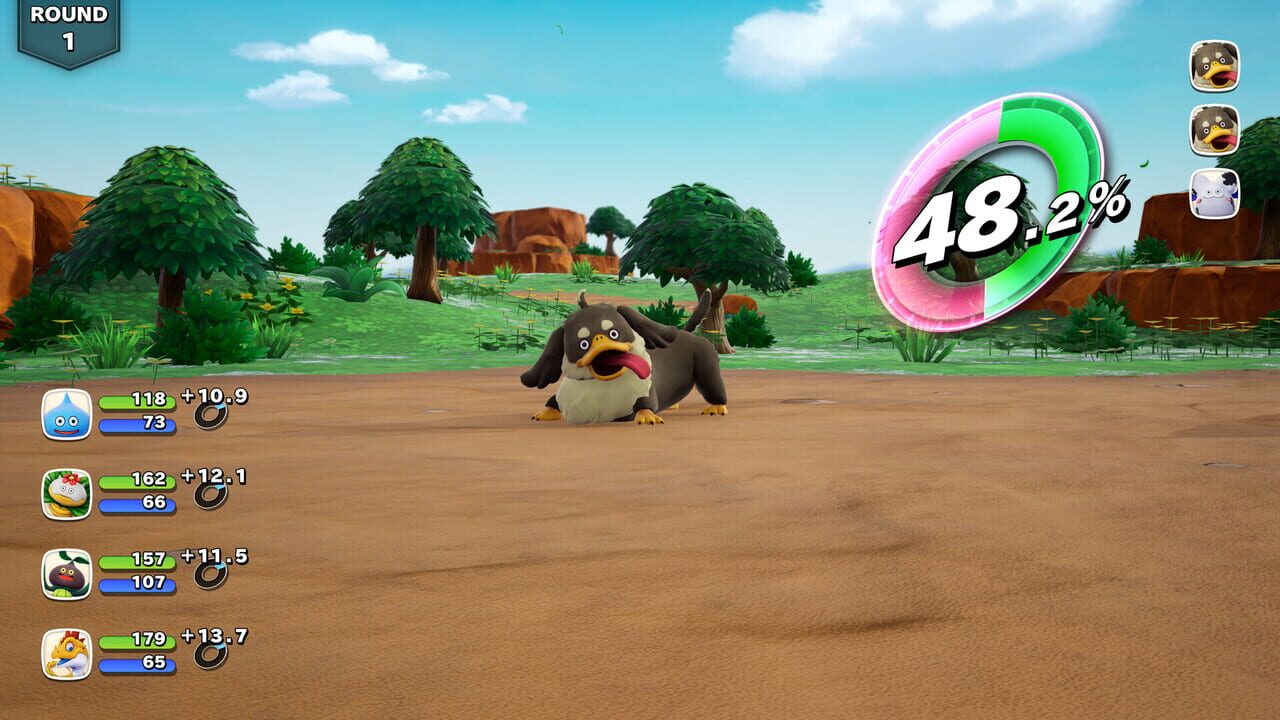
▲ Gameplay & Official Media (Source: IGDB)
Field Synthesis and Restoration via the Waterwing Can
Field traversal introduces interactive environmental recovery through a key magical artifact known as the Waterwing Can. As players discover shrivelled Roots of Creation drained by meteocite corruption, sprinkling them with restorative water reactivates the land life force. Once restored, these roots function as permanent Zoom teleportation anchors, field healing stations, and on-the-go monster synthesis nodes, drastically reducing downtime between breeding cycles.
The artifact also drives world progression by reviving parched Lifebuds scattered across the map, granting cumulative passive perks upon reaching specific milestones. Furthermore, interacting with suspicious foliage or environmental anomalies using the watering mechanic uncovers hidden items and triggers rare wild encounters. Challenging wandering rival wranglers stationed near restored roots yields exclusive battle rewards, cementing the artifact role as a core pillar of field gameplay on Steam and console platforms.
Field-based monster synthesis via the Waterwing Can redefines the exploration loop for Dragon Quest Monsters: The Withered World.
Integrating instant synthesis stations and Zoom waypoints directly into field progression eliminates tedious backtracking to town hubs. This design choice accelerates monster experimentation while rewarding thorough environmental exploration. The inclusion of high-threat aura encounters ensures that team optimization remains relevant across every distinct biome.
Final Pulse Score: 8.8 / 10