
Grand Theft Auto V remains a cornerstone of modern game design not just for its scale but for the underlying philosophy of its creators regarding player agency and systemic freedom. During a deep-dive panel at the Tribeca Festival in New York City on June 13, 2026, Rockstar co-founder Dan Houser shared rare insights into the development mindset that shaped the most successful entertainment product in history. Houser, who has since transitioned to leading his new multimedia studio, Absurd Ventures, emphasized that the true magic of an open-world experience lies in the player’s ability to ignore the script and interact with the world on their own terms.
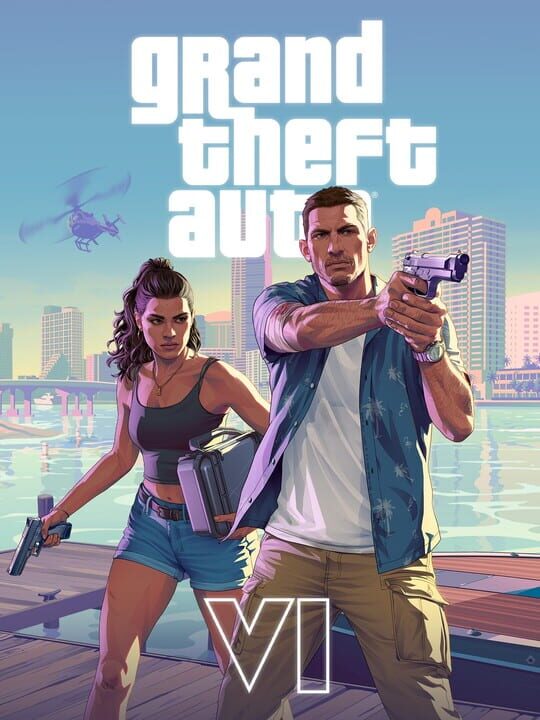
▲ Official Cover Art (Source: IGDB)
| Primary Reference Title | Grand Theft Auto V |
| Key Panel Speaker | Dan Houser (Co-Founder, Absurd Ventures) |
| Creative Philosophy | Player Agency Over Linear Progression |
| Current Project Status | AAA Sci-Fi Open World (In Development) |
| Multimedia Expansion | American Caper and A Better Paradise |
The Grand Theft Auto V Philosophy of Systemic Magic
For Houser, the narrative of Grand Theft Auto V is merely the icing on a much larger, more complex cake. He noted that while the team spent years crafting the story of Michael, Franklin, and Trevor, the ultimate goal was never to force players through a linear path. Instead, the focus was on the systems—the driving mechanics, the physics of jumping off buildings, and the chaotic unpredictability of NPC interactions. This systemic approach is what Houser believes provides the magical quality of an open world, where the most fun often comes from mucking around and testing the boundaries of the digital sandbox.
Since the release of GTA 3, the design trajectory has aimed to encourage more players to reach the story credits, and while completion rates have steadily climbed, Houser remains indifferent to whether a player actually finishes the game. If a user finds joy in simply existing within the world or experimenting with its mechanics, that is considered a victory. This lack of preciousness regarding the written word highlights a mature shift in game direction, where the developer provides the tools and guides but allows the player to dictate the pace and focus of their journey.
Hidden Depth and the Art of the Long Game
A significant part of the legacy of Grand Theft Auto V and its successor, Red Dead Redemption 2, is the inclusion of incredibly deep secrets that often take years to uncover. Lazlow, Houser’s longtime creative partner who also joined the panel, spoke about the thrill of burying Easter eggs so deep that they remain hidden for nearly a decade. A prime example discussed was the spiderweb mystery in Red Dead Redemption 2, which players only fully unraveled seven years after the game launched. This dedication to depth ensures that the community remains engaged long after the primary content has been consumed.

▲ Official Artwork (Source: IGDB)
This philosophy of depth extends into the satirical nature of the worlds Houser and Lazlow create. Crafting a world like the one seen in Grand Theft Auto V requires a hyper-ridiculous approach to satire that often predicts real-world shifts. Lazlow recalled the creation of characters like Jock Cranley, a stuntman-turned-politician whose absurd campaign platform seemed impossible at the time of development. As reality continues to mirror these satirical projections, the challenge for future titles at Absurd Ventures becomes staying ahead of a world that is increasingly catching up to fiction.
Absurd Ventures and the Next Frontier
Looking forward, the lessons learned from Grand Theft Auto V are being applied to a new, unnamed AAA open-world sci-fi action-adventure game. This project is being developed in partnership with Smilegate and is set within the A Better Paradise universe. Unlike the urban satire of Los Santos, this new venture promises a shift into science fiction while maintaining the core tenets of Houser’s design: deep systems, rich world-building, and total player agency. Absurd Ventures has already begun laying the groundwork for this universe through the American Caper comic series and the A Better Paradise novel, signaling a multi-platform approach to storytelling.
The legacy of Grand Theft Auto V proves that systems trump scripts in the open-world meta.
Houser’s admission that narrative is secondary to systemic interaction confirms why his games remain relevant for decades. By prioritizing the player’s ability to break the game or ignore the plot, developers create a sense of ownership that linear titles cannot match. The move toward a sci-fi AAA project suggests that these systemic philosophies are about to be tested against a more imaginative, less grounded backdrop, which could redefine the genre once again.
Final Pulse Score: 9.5 / 10