
Indiana Jones and the Great Circle represents a pivotal moment in modern action-adventure gaming, tasking its creators with the monumental challenge of translating a cinematic icon into a fully interactive experience. At the heart of this ambitious project is the creative synergy between lead actor Troy Baker and acclaimed composer Austin Wintory. Their professional relationship, built on a foundation of mutual trust and a willingness to embrace unconventional ideas, has become a defining characteristic of the game’s development cycle. By prioritizing artistic risk-taking over safe, formulaic design, the duo has managed to breathe new life into a franchise that spans decades.
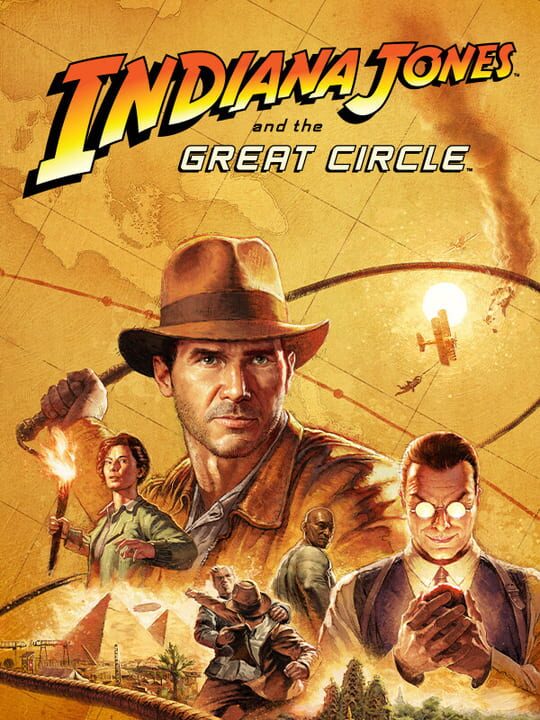
▲ Official Cover Art (Source: IGDB)
| Feature | Details |
|---|---|
| Lead Performer | Troy Baker (Indiana Jones) |
| Key Composer | Austin Wintory |
| Major Project | Indiana Jones and the Great Circle |
| Additional Works | Counter-Strike Music Packs, Journey, The Last of Us |
The Weight of the Fedora in Indiana Jones and the Great Circle
Stepping into the role of a character immortalized by Harrison Ford is no small feat, yet Baker has approached the task with a blend of reverence and personal flair. In Indiana Jones and the Great Circle, the performance is not merely an imitation of Ford’s gravelly delivery but a grounded interpretation that fits the mechanical demands of a first-person adventure. Baker has spoken extensively about the pressure inherent in such a role, noting that the expectations of a global fanbase require a level of precision rarely seen in voice acting. This pressure served as a catalyst for excellence, pushing the performance to capture the vulnerability and wit that makes the character so enduring.
The collaboration extends beyond the recording booth and into the very fabric of the game’s atmosphere. Wintory, known for his emotive scores in titles like Journey and Abzu, provides the sonic backbone that allows Baker’s performance to resonate. In Indiana Jones and the Great Circle, the music acts as a narrative guide, swelling during high-stakes set pieces and receding during moments of quiet archeological discovery. This dynamic relationship ensures that the player feels the weight of every decision, anchoring the fantastical elements of the plot in a recognizable emotional reality.
Sonic Experimentation and Technical Mastery
Beyond their work on Indiana Jones and the Great Circle, the duo has consistently pushed the boundaries of what is expected in game audio and performance. Wintory’s penchant for the avant-garde is perhaps best exemplified by his work on Counter-Strike music packs, where he experimented with “death metal polkas.” Tracks like “Mocha Petal” and “The Devil Went Clubbing in Georgia” demonstrate a fearless approach to genre-blending that mirrors the creative philosophy applied to larger narrative projects. This willingness to say “yes” to wild ideas is what differentiates a standard licensed game from a standout title like Indiana Jones and the Great Circle.
▲ Official Artwork (Source: IGDB)
The Philosophy of Collaborative Risk
The core of the Baker-Wintory partnership lies in a shared belief that the best art comes from pushing one another into uncomfortable territory. Whether it is Baker adopting a British persona in a bunny suit for an orchestral performance or Wintory crafting dissonant genre-mashes for tactical shooters, the goal is always to surprise the audience. This philosophy has directly benefited Indiana Jones and the Great Circle, allowing the team to move past the tropes of the genre and deliver something that feels genuinely fresh. The game thrives on this unpredictability, mirroring the improvisational nature of Indy himself.
For players, this translates to a more immersive experience where the world feels reactive and alive. When the lead actor and the composer are in such tight alignment, the distance between the player and the character disappears. Indiana Jones and the Great Circle succeeds because it understands that Indy is as much a feeling as he is a man with a whip and a hat. By focusing on the emotional core of the character, Baker and Wintory have ensured that this digital incarnation is a worthy successor to the cinematic legacy.
As the gaming landscape continues to evolve, the importance of these deep creative partnerships cannot be overstated. The success of Indiana Jones and the Great Circle serves as a blueprint for how developers can handle legendary IPs with care while still asserting a unique creative voice. It is a testament to the power of collaboration and the enduring appeal of one of fiction’s greatest adventurers. For more insights into high-level game performances, check out the official creator interviews regarding these recent industry milestones.
Indiana Jones and the Great Circle Proves that Character Authenticity Trumps Pure Mimicry
The decision to cast Troy Baker wasn’t just about finding a voice that could match Harrison Ford; it was about finding an actor capable of navigating the complex emotional beats of a modern AAA title. By pairing him with Austin Wintory, the developers have created a feedback loop where the audio and performance elevate each other beyond the sum of their parts. This synergy is exactly what was needed to make the whip-cracking action feel impactful in 2026, proving that even the oldest franchises can feel new with the right creative risks.
Final Pulse Score: 9.0 / 10