
Marvel Snap is set to overhaul its signature competitive loop with the long-awaited introduction of an official Draft mode on August 24. Since its initial debut, the card battler has thrived on tight twelve-card deck construction and rapid six-turn tactical decisions. However, the introduction of a dynamic drafting structure forces competitive card slingers out of their comfort zones, disrupting established deck archetypes and introducing volatile new deckbuilding variables on Android, iOS, and Windows PC platforms.

▲ Official Cover Art (Source: IGDB)
| Feature | Details |
|---|---|
| Event Launch Date | August 24, 2026 |
| Format Type | Limited-Time Game Mode (LTGM) |
| Draft Structure | 3-Card Starter Set plus 7 Drafted Cards |
| Deck Augmentation | Mode-Specific Stat and Ability Modifiers |
| Victory Condition | 5 Round Wins per Run |
| Supported Platforms | Android, iOS, Windows PC |
Radical Mechanics Reshaping the Marvel Snap Experience
The standard metagame of Marvel Snap revolves around tightly tuned synergies where every card slot is fiercely contested. The upcoming Draft mode shifts this paradigm by forcing players to select an initial three-card foundation aligned with core playstyles such as Destroy, Ramp, Move, or Ongoing. Following this starter set, competitors select seven additional cards to forge a unique ten-card roster. These selections feature mode-exclusive stat modifications, adjusted energy costs, and distinct gameplay augments designed to test fundamental tactical adaptability.
Progression through a single Draft run demands consistent performance across five full round victories. As players advance through successive matches, they continuously adapt their lineup by drafting two additional augmented cards between rounds. This evolving deck mechanic introduces a roguelike progression layer rarely seen in mobile digital card games, where piloting an imperfect, emergent deck proves far more important than memorizing predictable ladder lines.
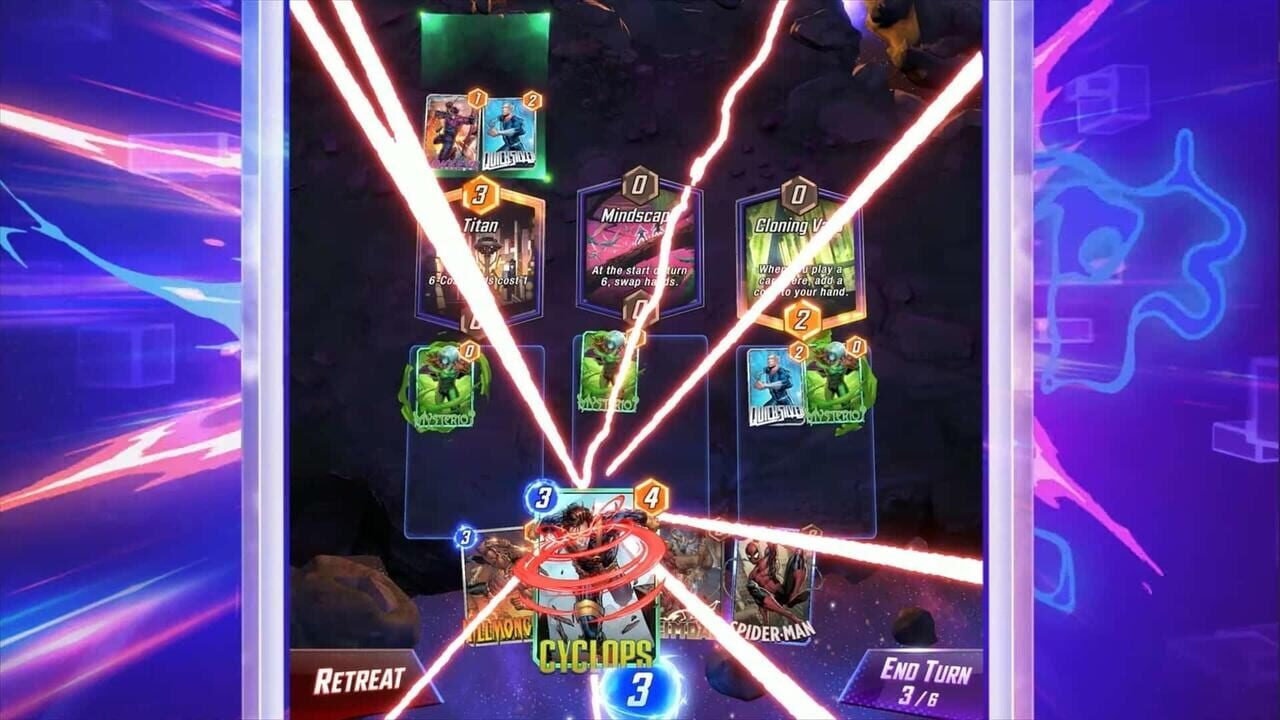
▲ Gameplay & Official Media (Source: IGDB)
Solving the Low Variance Dilemma in Marvel Snap
Second Dinner developer Sam Stoddard revealed that balancing a draft environment for Marvel Snap presented immense structural challenges. Because standard decks consist of merely twelve cards with minimal inherent variance, raw synergy traditionally dominates match outcomes. Translating that framework into a draft environment risked creating non-functional hands or overwhelmingly dominant archetype combos that could ruin format health in just a few turns.
To mitigate these structural hurdles, the development team implemented custom stat tweaks and powerful card augments tailored exclusively to the Draft ecosystem. Launching the system as a limited-time game mode allows the team to gather valuable balance telemetry and stress-test card pools under high-volume player traffic. This data-driven rollout ensures necessary balance adjustments can be executed before the mode potentially returns as a recurring competitive staple.
Community Reception and the Future of Competitive Formats
For dedicated ladder veterans, Draft represents an essential escape from repetitive meta environments and stale netdecking trends. With the title receiving a new card release every single week, balancing standard ranked play while maintaining accessible alternative modes is vital for long-term health. The limited-time format tests player skill in drafting on the fly, rewarding mastery of core game mechanics over sheer collection size.
As player metrics flow in during this inaugural run, the feedback will guide future iterations of event-driven play. If the augment system succeeds in preventing broken combos while preserving the fast-paced essence of Marvel Snap, it could easily become the blueprint for future tournament formats and seasonal challenges across competitive card gaming.
Draft mode challenges the core deckbuilding philosophy of Marvel Snap with emergent mechanics.
By altering base power stats and offering tailored augments, Second Dinner successfully bypasses the low-variance limitation of small decks. This format heavily rewards in-the-moment decision making over algorithmic netdecking, providing an essential breath of fresh air for high-level ladder players.
Final Pulse Score: 8.8 / 10
Related Article: Marvel Snap Layoffs and Their Gameplay Impact