
Masters Of Albion represents a high-stakes return for Peter Molyneux and his studio, 22 Cans, attempting to fuse decades of legendary design philosophies into a single cohesive experience. By blending the third-person exploration of Fable with the deistic manipulation seen in Black & White, the title seeks to recapture a specific brand of British game design magic that has been absent from the market for years. However, as the game enters its current phase of development, the sheer ambition of these overlapping systems creates a unique set of challenges for players navigating the misty forests of Albion.
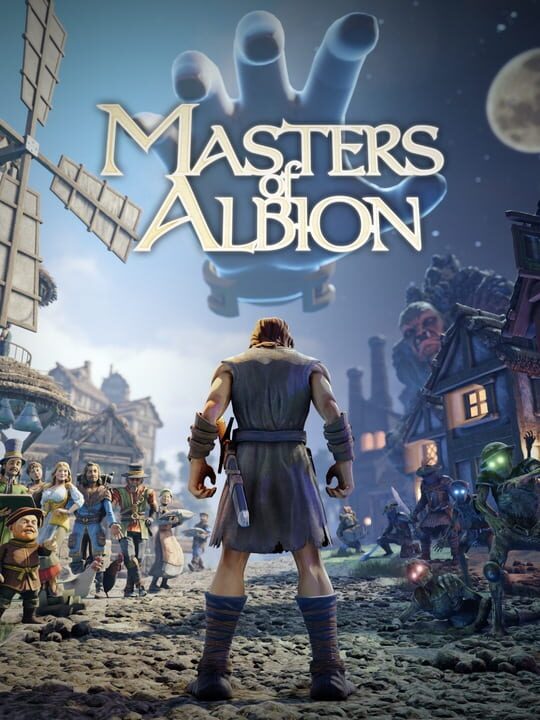
▲ Official Cover Art (Source: IGDB)
At its core, the game functions as a hybrid of city-building and tower defense, divided by a strict day-and-night cycle. During the day, players focus on restoring ruined villages by cobbling together modular building components. This system is remarkably tactile, allowing you to snap together bedrooms, workshops, and defensive structures like a digital Lego set. The focus here is on production and fulfilling trade orders, such as creating specific food items or equipment for local lords. While the crafting system currently relies heavily on wheat as a primary resource, the creative freedom to design custom recipes—like rat and lettuce pies—adds a layer of charm and humor characteristic of Albion.
| Feature | Data Detail |
|---|---|
| Game Title | Masters Of Albion |
| Developer | 22 Cans |
| Genre | God Game / City Builder / Tower Defense |
| Key Mechanic | Godhand Interaction / Hero Possession |
Masters Of Albion Gameplay Deep Dive: From Building to Battle
The transition from a peaceful city-builder to a frantic tower defense game occurs the moment night falls. Undead hordes rise from local graveyards, forcing you to utilize your god powers and your recruited heroes, affectionately known as Beefcakes. Masters Of Albion allows you to possess these heroes, dropping the camera into a third-person perspective to engage in direct combat. While the combat feels somewhat weightless compared to modern action-RPGs, it provides a necessary break from the bird’s-eye management and allows for a more personal connection to the village you are protecting.
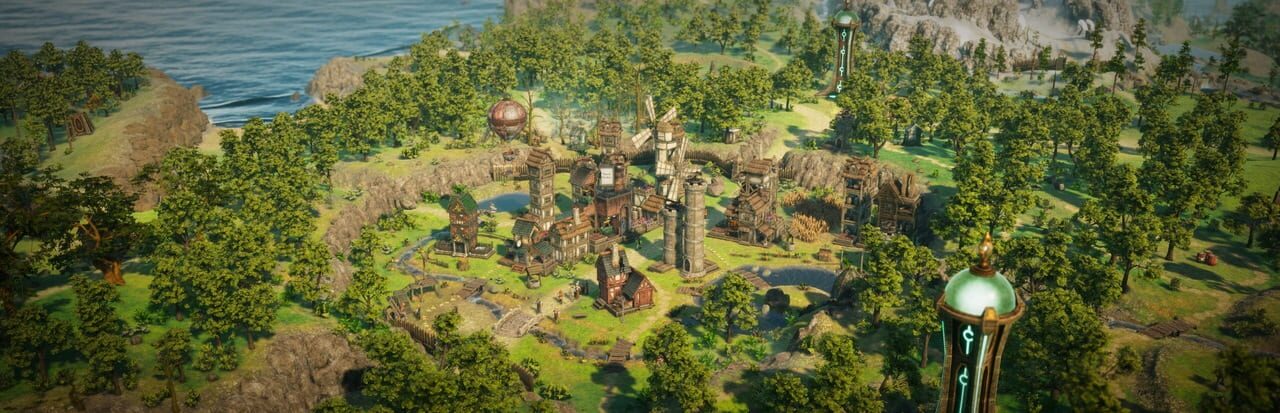
▲ Official Artwork (Source: IGDB)
However, the current early access build reveals significant friction in the AI logic and user interface. For instance, heroes often struggle with target prioritization, frequently ignoring high-threat enemies attacking the player’s central crypt to focus on lesser minions. Similarly, the defensive ballistae can be temperamental, sometimes failing to fire despite having a clear line of sight. These technical hurdles are compounded by a control scheme that requires toggling between god powers and the ability to interact with units, which can lead to frustrating moments during high-intensity sieges. For more information on the development roadmap, you can visit the official Masters Of Albion Steam Page.
The Economic and Strategic Loop
The economic side of Masters Of Albion is currently more focused on time management than resource complexity. Because most recipes utilize a single base resource like wheat, the challenge lies in optimizing the layout of your village to minimize the time villagers spend transporting goods. You can use your godhand to physically drag items or chivvy workers along to speed up production, but this lacks a long-term consequence like a happiness or exhaustion stat. The shifting market and reputation systems suggest a deeper meta-game, yet in the current state, players are often forced into a linear progression dictated by whatever single order is currently available.
Pulse Gaming Perspective: Masters Of Albion balances nostalgia against mechanical depth
While the game captures the whimsical soul of Lionhead’s classics, the current iteration is a collection of brilliant ideas that haven’t quite learned to communicate with each other. The potential for a masterpiece is visible, but the path forward requires 22 Cans to tighten the AI and deepen the resource economy significantly.
Despite the clunkiness, there is an undeniable satisfaction in the tactile nature of the world. Shaking the overgrowth off ruins to find building parts and using a generous auto-aim to hurl boulders at ghouls provides a sense of power that few modern games attempt. If the developer can iron out the UI inconsistencies and give the city-building more strategic stakes, this could be the definitive god game of the decade. For those looking for the latest updates on hero units and building tactics, for our upcoming guides.
As we look toward future patches, the success of Masters Of Albion will depend entirely on how the community feedback is integrated during this early access period. There is a lot of work to do, but the foundation is undeniably charming.
Final Pulse Score: 6.8 / 10