
When visionary writer and Rockstar co-founder Dan Houser candidly admitted that he considered his contribution to Max Payne 3 an outright creative failure, the declaration sent ripples across the gaming community. Houser reasoned that his deviation from the surreal Nordic noir formula created by Remedy visionary Sam Lake alienating purists who craved comic book panels and snowbound Manhattan alleys. Yet, viewing this audacious cinematic shooter through the lens of history reveals that Houser could not be more mistaken about his own work. Rather than misstepping, the development team managed to deliver one of the most mechanically fluid and emotionally uncompromising third-person shooters ever conceived.

▲ Official Cover Art (Source: IGDB)
The Shadow of Sam Lake and the Brazilian Metamorphosis
Stepping into the shoes of Sam Lake was inherently perilous, given how tightly bound the franchise identity was to Scandinavian melancholy and graphic novel storyboards. Houser recognized this friction immediately, noting that while he aimed to construct an authentic digital noir experience, initial player sentiment felt harshly split. Transplanting a pill-popping, alcohol-soaked ex-cop from the familiar freezing gutters of New York City into the sun-scorched favelas of São Paulo initially shocked traditionalists. However, this radical environmental shift served the thematic core of the character far better than a safe repetition of past tropes ever could have achieved.
By stripping Max of his home turf and plunging him into an unfamiliar socio-political meat grinder, the narrative transformed him into the ultimate tragic outsider. Dressed in an obnoxious Hawaiian shirt and sweating through delirium tremens, he became an abrasive anomaly whose internal monologue sounded sharper and more self-loathing than ever. The stellar vocal delivery of the late James McCaffrey grounded this transition, anchoring Houser hardboiled dialogue with devastating emotional gravity. McCaffrey brought weary humanity to an antihero who had long stopped caring about tomorrow, giving players an unfiltered glimpse into a soul running entirely on adrenaline and painkillers.
- Iconic Cynicism: McCaffrey delivered lines that defined modern hardboiled writing, lamenting that he would not know right from wrong if one were helping the poor and the other were seducing his sister.
- Unflinching Atmosphere: The sweltering, strobe-lit nightclubs and claustrophobic favela alleys forced players to confront an unrelenting, hostile world with zero romanticized illusions.
- Perpetual Momentum: Innovative seamless cutscenes eliminated traditional loading pauses, preserving intense dramatic immersion from opening firefight to climatic terminal standoff.
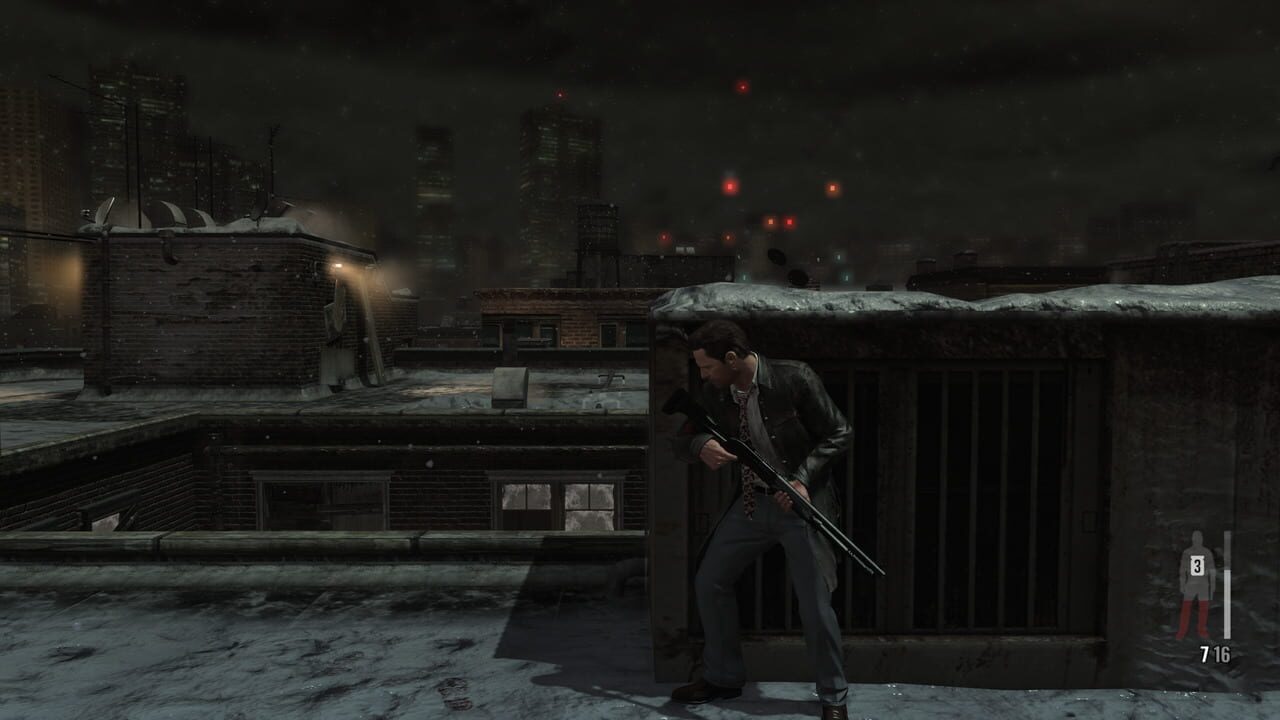
▲ Gameplay & Official Media (Source: IGDB)
Gunplay Perfection and the Unrivaled Euphoria Engine
Where many contemporary shooters settled for static chest-high wall hugging, Max Payne 3 elevated tactical gunplay to a violent art form. Powered by the Euphoria physics system, every shootout felt terrifyingly organic rather than pre-baked. Firing while executing a desperate horizontal leap carried genuine physical weight; Max would collide awkwardly with stairs, slide down concrete ramps, and physically pivot his torso from the floor to eliminate flanking cartel hitmen. The gunplay demanded spatial awareness and constant spatial improvisation, rewarding players who treated bullet time as an offensive weapon rather than a defensive safety net.
Complementing this kinetic ferocity was the blistering industrial soundscape composed by noise rock outfit Health. The pounding percussion and distorted synthesizers amplified the panic of every encounter, turning standard corridor encounters into frantic, pulse-pounding survival tests. Far from the commercial disappointment often cited in retrospective conversations, the mechanical depth of Max Payne 3 laid down a benchmark for combat fluidity that remarkably few modern action titles have managed to match. Its combat loop remains intoxicatingly dangerous, where every spent cartridge and chipped pillar tells the story of survival by a razor-thin margin.
Why Time Has Vindicated Rockstar Bold Linear Ambition
Houser self-deprecating assessment stems from comparing the game linear reception against the historic, all-consuming cultural footprints of his sprawling open-world epics. Transitioning from massive open sandboxes to a tightly scripted twelve-hour playable action movie was undoubtedly a departure for his studio, but that creative vulnerability is precisely why the experience resonates so powerfully decades later. In an industry increasingly saturated with bloated progression trees and endless live-service checklists, the focused narrative economy on display here feels rare and intensely deliberate.
The initial resistance from purists has long since given way to widespread reverence for how boldly Rockstar reimagined the franchise mythos. By refusing to deliver a lazy carbon copy of past successes, the creative team crafted an enduring masterpiece of action cinema that honors the past while aggressively pushing mechanics forward. Dan Houser may believe his script fell short of Sam Lake shadow, but gamers know the truth: Max Payne 3 stands as an unvarnished triumph of technical gunplay and narrative grit.
📌 Frequently Asked Questions (FAQ)
Q. Why did Dan Houser consider Max Payne 3 a failure?
A. Dan Houser felt he failed because he believed he could not replicate the specific Nordic noir writing style of original creator Sam Lake, leading to divided fan reception at release.
Q. What made the gameplay of Max Payne 3 stand out?
A. The game combined signature slow-motion bullet time with Rockstar Euphoria physics engine, producing heavy, dynamic gunplay where diving, momentum, and physical impacts felt completely organic.
Q. Who provided the iconic voice and performance for the protagonist?
A. The beloved character was voiced and performed by the late James McCaffrey, who delivered some of the most celebrated and cynical lines in hardboiled gaming history.
The Enduring Power of Linear Conviction
Dan Houser harsh self-critique demonstrates the burden of following an auteur like Sam Lake, yet the legacy of this title proves that radical reinvention often outlasts safe nostalgia. By marrying unmatched Euphoria ragdoll gunplay with a searing deconstruction of an aging antihero, the project achieved a timeless mechanical precision. Far from being a creative failure, it represents the absolute zenith of cinematic third-person action.
Final Pulse Score: ⭐⭐⭐⭐⭐