
Pathfinder: Wrath of the Righteous stands as a monument to mechanical complexity in an era where many RPGs are moving toward streamlined accessibility. While titles like Baldur’s Gate 3 have found massive success by simplifying the tabletop experience for a broader audience, Owlcat Games’ magnum opus doubles down on the crunch. With a staggering 232 subclasses to choose from, the game offers a level of buildcrafting depth that is arguably unmatched in the modern gaming landscape.
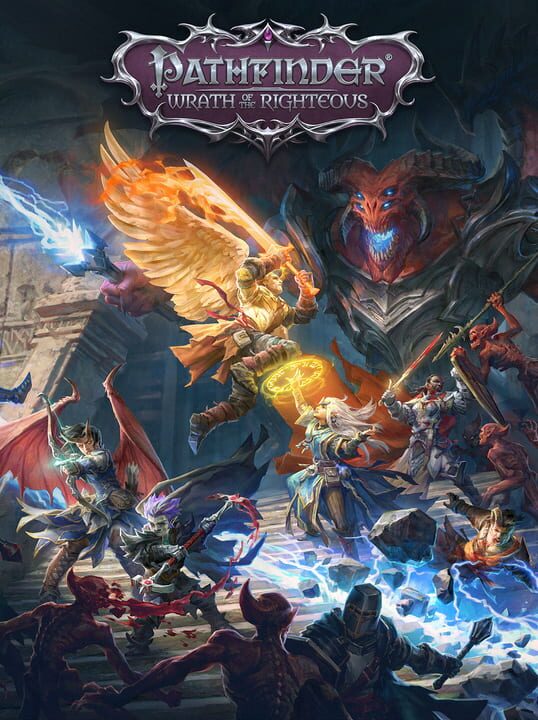
▲ Official Cover Art (Source: IGDB)
The Mathematical Mastery of Character Progression
The sheer volume of choices within Pathfinder: Wrath of the Righteous is enough to intimidate any casual player, but for enthusiasts, it is a playground of endless possibilities. The breakdown is exhaustive: 26 base classes serve as the foundation, branching into 193 specialized subclasses, and further supplemented by 13 prestige classes. This architectural complexity allows for highly specific roleplaying, though it creates a significant gap between optimized and non-optimized builds.
Context is everything in a campaign of this scale, and not all subclasses are created equal. For instance, the ‘Demon Slayer’ Ranger thrives because a vast majority of the game’s antagonists are demonic entities, effectively providing passive bonuses that remain relevant from start to finish. Conversely, specialized classes like the ‘Defender of the True World’ Druid, which focuses on fighting fey creatures, find themselves at a disadvantage due to the lack of relevant enemies in the Worldwound setting. This disparity highlights the importance of metagame knowledge in mastering the system.
The culture of the ‘serial reroller’ has become a defining trait of the community surrounding Pathfinder: Wrath of the Righteous. Players frequently report restarting their journeys after dozens of hours simply to experiment with a new mechanical synergy found in the deep menus. This phenomenon isn’t a failure of design but rather a testament to the compelling nature of its systems; the journey of crafting the ‘perfect’ character is often as engaging as the narrative itself.
| Feature Category | Pathfinder: Wrath of the Righteous Statistics |
|---|---|
| Base Classes | 26 |
| Total Subclasses | 193 |
| Prestige Classes | 13 |
| Total Unique Build Paths | 232 |
The Strategic Meta of Pathfinder: Wrath of the Righteous
As players ascend to higher difficulty tiers, particularly the ‘Core’ rules and above, the meta-game shifts heavily toward mounted combat. Mounts in this engine act as both a movement tool and a secondary tank, absorbing hits that would otherwise eliminate a ‘glass cannon’ protagonist. This mechanical shift has transformed how veterans approach the game’s most challenging encounters, turning the once-niche cavalier archetypes into top-tier contenders.
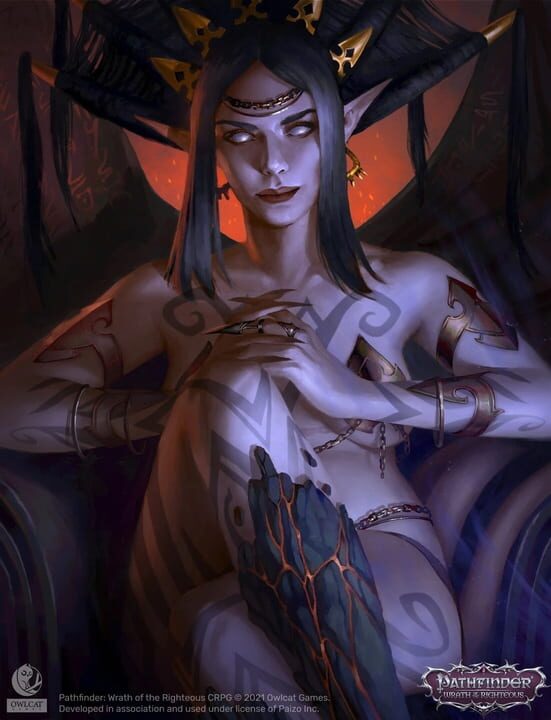
▲ Official Artwork (Source: IGDB)
The introduction of the Sable Company Marine through the final expansion, ‘A Dance of Masks,’ has further disrupted the established power rankings. By providing a rideable griffon (technically a hippogriff) from level one, this Ranger subclass bypasses many of the traditional limitations of early-game combat. The griffon’s unique ‘flying dive bomb’ ability allows for extreme mobility, ignoring terrain restrictions that typically hinder standard charge attacks.
When combined with specific gear like spears—which double damage on charges—the Sable Company Marine becomes a tactical nuclear option on the battlefield. Reports of players dealing over 230 damage in a single strike during the game’s first act demonstrate how specific subclass synergies can trivialize even the most notorious difficulty spikes. This level of power fantasy is exactly what keeps the community invested years after the initial launch.
Legacy and Longevity in the CRPG Space
The longevity of the title is bolstered by its post-launch support and the sheer variety of its Mythic Path system, which overlaps with the 232 subclasses to create billions of potential combinations. Even in 2026, the game remains a primary recommendation for those who find the modern trend of ‘streamlined’ RPGs lacking in nutritional value. It is a game that respects the player’s intelligence and their willingness to study complex spreadsheets.
For those looking to dive into this deep mechanical well, the game is frequently featured on major storefronts. You can explore the official Owlcat Games website for detailed patch notes and lore updates regarding the various expansions. The depth found here ensures that no two playthroughs are ever truly identical, cementing its place in the RPG hall of fame.
Pulse Gaming Perspective: Pathfinder: Wrath of the Righteous is the Final Boss of CRPG Mechanics
By embracing 232 subclasses, Owlcat Games has created a self-sustaining ecosystem of theorycrafting that outlasts the narrative itself. The Sable Company Marine isn’t just a power trip; it’s a reward for players who have spent years learning the intricate dance of the Pathfinder ruleset.
Ultimately, the appeal of this title lies in its refusal to compromise. It offers a brutal, beautiful, and bafflingly deep experience that rewards patience and penalizes lack of preparation. Whether you are riding a griffon into the heart of the Worldwound or meticulously planning a multiclass monk/sorcerer, the game provides the tools for total player agency. for the latest build guides and strategy breakdowns.
Pathfinder: Wrath of the Righteous offers a masterclass in how to sustain a single-player RPG through mechanical diversity and thoughtful expansion. While the barrier to entry remains high, the view from the top—atop a griffon, naturally—is well worth the climb for any serious genre fan.
Final Pulse Score: 9.4 / 10