
Pragmata on the Nintendo Switch 2 is currently the center of a technical discovery that is turning the traditional understanding of system overhead on its head. While system-level features like the newly integrated Game Chat typically sap hardware resources, Capcom’s upcoming sci-fi epic actually sees a significant frame rate boost when this social overlay is active. This phenomenon, recently uncovered by technical analysts, highlights a unique and unexpected interaction between Nintendo’s next-generation OS and Capcom’s highly versatile RE Engine.
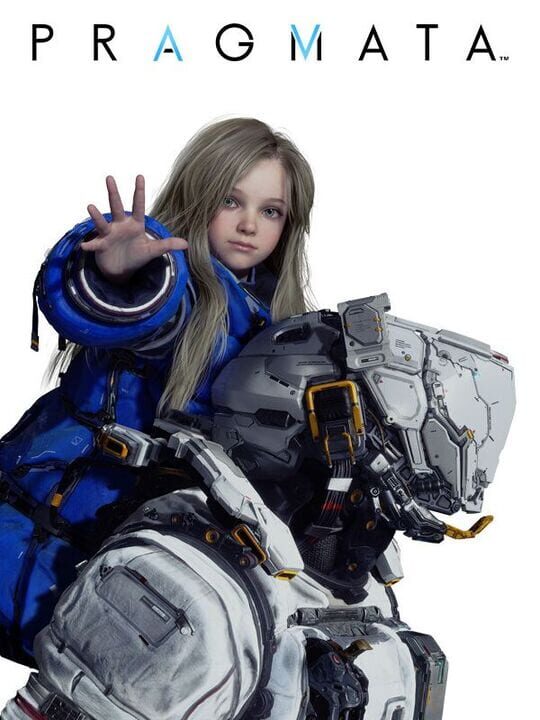
▲ Official Cover Art (Source: IGDB)
| Software Title | Baseline Performance | Game Chat Active (Standard) | Performance Delta |
|---|---|---|---|
| Layers of Fear: Masterpiece Ed. | 53 FPS | 49 FPS | -7.5% (Expected) |
| Pragmata (Demo) | 53 FPS | 60 FPS | +13.2% (Anomaly) |
| Kunitsu-Gami: Path of the Goddess | Variable | Increased FPS | Positive Scaling |
The Nintendo Switch 2 Game Chat Performance Paradox
The Game Chat feature is a cornerstone of the Nintendo Switch 2 experience for Nintendo Switch Online subscribers, allowing for seamless voice and video calls, screen sharing, and even remote co-op play. Under normal circumstances, Nintendo has warned developers that engaging these social features requires a portion of the system’s CPU and GPU resources, which usually results in a performance dip for the game currently running. Testing on titles like Layers of Fear: The Final Masterpiece Edition confirmed this, showing a drop from 53fps down to 49fps when the chat functionality was initiated.
However, the narrative changes entirely when examining Capcom’s lineup. In a series of technical stress tests, the Pragmata demo showcased an unbelievable jump from 53fps to a locked 60fps simply by opening the Game Chat window. This flies in the face of standard optimization logic, where background tasks are expected to throttle the primary application. The secret, it appears, lies not in the hardware itself, but in how the RE Engine interprets the display window provided by the Nintendo Switch 2 operating system.
How Pragmata Utilizes the RE Engine Window Scaling
According to technical investigations from Digital Foundry, the RE Engine displays a rare behavior on the Nintendo Switch 2 by dynamically adjusting its internal rendering resolution based on the size of the active game window. When the Game Chat interface is toggled, the main gameplay window for Pragmata is resized to accommodate the chat members. While most engines would simply let the OS scale the image, the RE Engine actively downscales its internal rendering to match the smaller viewport.

▲ Official Artwork (Source: IGDB)
Specifically, in the case of Pragmata, the game typically renders at a native 540p during standard play. When the Game Chat is activated in its standard setting, the engine drops the internal resolution to as low as 360p. Because the GPU is now pushing significantly fewer pixels, the frame rate headroom increases dramatically, allowing the game to hit the 60fps ceiling. This trend was also observed in Kunitsu-Gami: Path of the Goddess, suggesting that this is a fundamental characteristic of how Capcom has ported its internal engine to Nintendo’s new silicon.
Breaking Down the Numbers: Resolution vs. Frame Rate
The performance gains are highly dependent on the layout of the Game Chat interface. When the Pragmata chat window is set to its standard size, the game hits 60fps, but if the user switches to a smaller chat overlay, the frame rate hovers around 58fps. Paradoxically, if the user forces the chat to run while keeping the game in full-screen mode, the performance tanks to 46fps. This confirms that the engine only benefits when it is allowed to reduce its rendering footprint.
While this could be considered a performance “hack” for those who prioritize fluid motion over visual clarity, the practical applications are limited. Playing a high-fidelity action game like Pragmata at 360p on a portion of the screen is hardly the ideal way to experience Capcom’s artistic vision. Nonetheless, for hardcore enthusiasts interested in the technical minutiae of the Switch 2, this quirk offers a fascinating look at the flexibility of modern game engines in a multitasking environment.
Pragmata and the Future of Dynamic Rendering Efficiency
Final insight from the senior journalist: This anomaly proves that the RE Engine remains one of the most adaptable pieces of software in the industry. While the 360p trade-off is too steep for general play, the fact that the engine can switch rendering profiles on the fly to maintain 60fps is a testament to Capcom’s engineering. As the Nintendo Switch 2 lifecycle continues, we may see developers officially utilize these “reduced window” modes to offer high-performance sub-menus or tactical overlays without sacrificing system stability.
Final Pulse Score: 8.0 / 10