
Sandustry is poised to redefine the automation genre by blending the rigid structures of factory simulation with the volatile, pixel-perfect physics of modern action-roguelikes. Developed by Lantto Games and published by Hooded Horse, this upcoming 2D sandbox title challenges players to establish massive, automated production chains on a volatile planet where every grain of sand and droplet of water behaves with realistic physical properties. Expected to land in early access on August 13, 2026, the game promises a deep, challenging experience for players who enjoy managing complex logistical webs under unstable environmental conditions. The anticipation surrounding this launch highlights a growing player demand for survival-focused industrial games that reject passive factory building in favor of active, unpredictable environments.
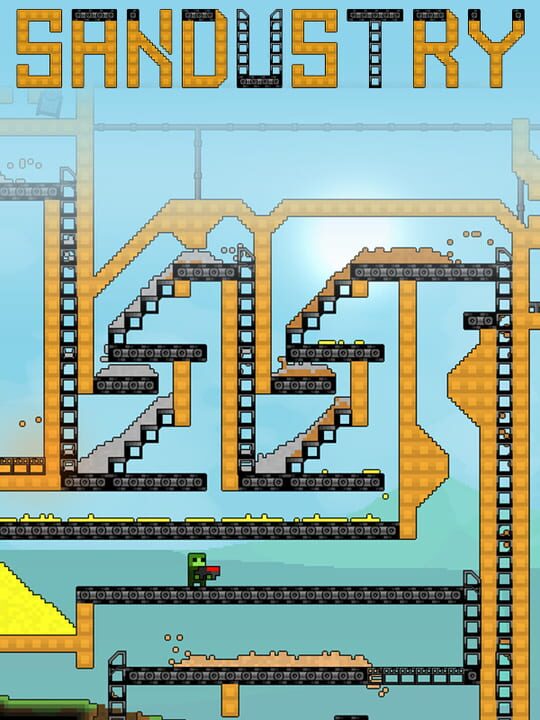
▲ Official Cover Art (Source: IGDB)
| Developer | Lantto Games |
| Publisher | Hooded Horse |
| Early Access Release Date | August 13, 2026 |
| Platforms | Steam, GOG, Microsoft Store |
| Key Mechanic | Pixel-Perfect Thermodynamic Physics |
| Demo Availability | Playable Demo on Steam |
Unearthing the Untamed Sandbox Planet
At its core, the gameplay of Sandustry revolves around prospecting across a procedurally generated planet that hides massive mineral wealth and ancient secrets deep beneath its surface. Players must dig deep into the earth to harvest resources, utilizing an ever-growing arsenal of weapons, chemical reactions, and specialized technologies to survive. The subterranean environment is far from welcoming, as pockets of hazardous elements and volatile physics engines mean that every excavation could lead to a cascading logistical disaster. Navigating these underground networks requires both survival instincts and highly efficient planning to keep the factory humming.
The Volatile Mechanics and Physics of Sandustry
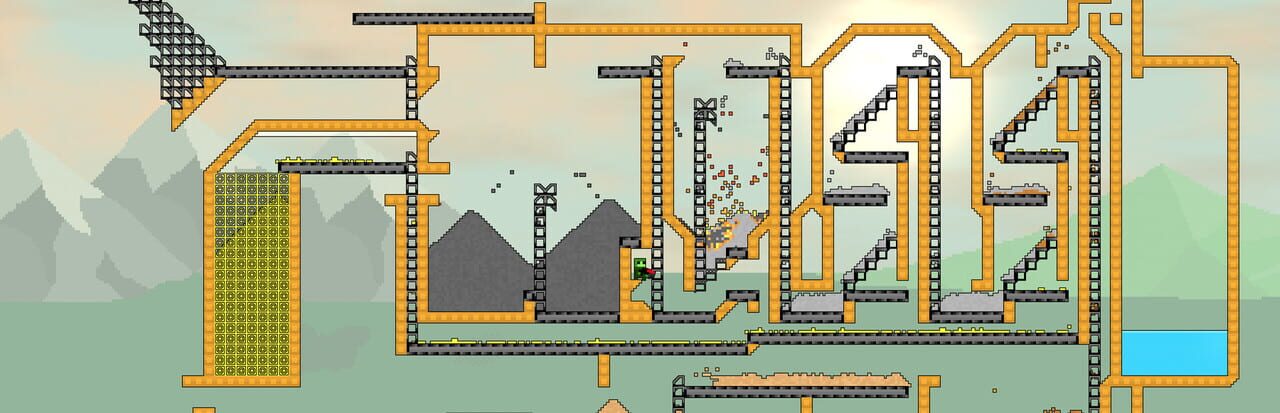
What sets Sandustry apart from traditional industrial simulators is its granular pixel physics engine, reminiscent of high-stakes sandbox games where every single pixel reacts to gravity, temperature, and pressure. Resources break down into individual pixels with physical weight, creating a highly volatile environment where a single structural collapse can clog your conveyor belts or trigger a chain reaction. This unique design choice forces players to build their factories with structural integrity and material properties in mind, transforming logistics from a simple flow chart into a physical puzzle. Players must carefully route conveyor belts through tight caverns while avoiding pockets of volatile gases and unstable ceilings that could collapse at any moment.
In Sandustry, thermodynamics play a massive role in how players manage their production lines, adding a layer of realism and complexity rarely seen in the genre. Fluids inside the game can be heated and evaporated into steam, which can then rise to the sky and condense into rain clouds to restart the water cycle. This environmental simulation means that heat dissipation and liquid transport are not just abstract numbers on a UI, but physical processes that players must actively control. Failing to manage your factory thermal output could result in localized environmental crises, flooding your deep excavations or drying up vital water supplies.
▲ Official Artwork (Source: IGDB)
Surviving the Depths and Mastering Automation
To conquer this untamed world, players must design and secure complex production chains that convert raw geological materials into high-tech advancements. The gameplay loop demands constant refinement as you unlock newer, better resources to fortify your operations against the harsh subsurface elements. Furthermore, the game features a free playable demo available directly via Steam, allowing eager managers to test their logistical designs and experience the unique physical interactions ahead of the official release.
Why Sandustry represents the next logical step for hardcore automation enthusiasts
By merging the granular physical threat of a fluid simulation with the rigid logistical demands of traditional factory games, this title bridges the gap between chaotic survival and meticulous planning. Players cannot rely on static templates because the world itself reacts dynamically to industrial expansion. This introduction of environmental consequences to automation ensures that resource management remains deeply challenging, unpredictable, and highly rewarding from the surface down to the deepest cavern.
Final Pulse Score: 8.5 / 10