
Splinter Cell fans awaiting the return of Sam Fisher might finally have an explanation for why modern stealth has become so difficult to develop. The transition from simplistic lighting to hyper-realistic physics has fundamentally altered how players perceive safe zones in tactical environments. Veteran designer Clint Hocking, famous for his work on the series, recently highlighted how advanced rendering engines actually hinder the readability of stealth gameplay. As developers chase graphical realism, they risk destroying the core mechanics that once defined the entire genre.
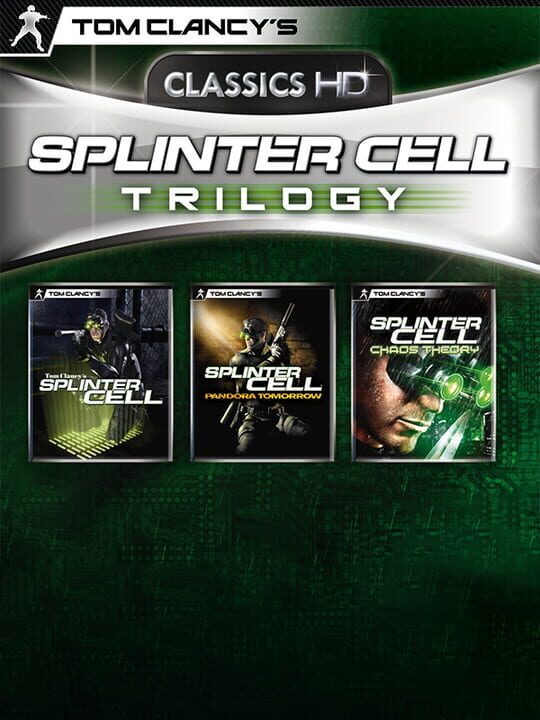
▲ Official Cover Art (Source: IGDB)
| Development Aspect | Historical Approach | Modern Approach / Challenge |
|---|---|---|
| Lighting Technology | Predictable baked lighting | Dynamic ray-tracing & ambient occlusion |
| Visual Clarity | High readability (clear dark/light boundaries) | Realistic light diffusion (muddy gray areas) |
| UI & Player Feedback | Abstract UI elements (light gems, glowing goggles) | Diegetic realism (hard to read safety states) |
The Physics of Light vs. Gameplay Readability
Classic stealth games succeeded because their environments relied on clean, predictable, baked lighting. In those older titles, players knew exactly where light ended and shadow began, allowing for absolute tactical precision in their movements. However, modern engines simulate advanced diffusion, ray-tracing, and ambient occlusion, which scatters light dynamically across all physical surfaces. This simulation creates realistic but muddy gradients of grey that confuse the player’s spatial awareness. When the boundary between safety and danger becomes visually ambiguous, tactical gameplay devolves into a frustrating cycle of trial-and-error.
Why the Splinter Cell Remake Faces a Lighting Crisis
The highly anticipated Splinter Cell remake is currently navigating this exact technical and artistic minefield. If the developers at Ubisoft Toronto rely too heavily on realistic global illumination, the pure stealth loop of the original trilogy could suffer. Traditional Splinter Cell relied on absolute binary states where you were either completely hidden in pitch-black darkness or fully exposed in bright light. Recreating that sharp readability in a modern engine requires developers to deliberately restrict realistic lighting in favor of functional design. Without this aesthetic discipline, players will struggle to navigate the high-stakes shadows that Sam Fisher calls home.
▲ Official Artwork (Source: IGDB)
Abstract Design Solutions and the Pivot to Social Stealth
Historically, developers used creative abstraction to bypass rendering limitations while maintaining high gameplay readability. Games like Thief introduced the abstract light gem, while the classic Splinter Cell games used Sam Fisher’s glowing green goggles to signal visibility to the player. In recent years, many studios have pivoted toward social stealth mechanics, as seen in Assassin’s Creed and Hitman, likely to avoid the headache of balancing complex physical lighting.
According to comments shared in a recent industry interview, mastering modern ray-tracing for pure stealth will require deep design thinking rather than just throwing raw graphics power at the screen. Clint Hocking, who departed the Assassin’s Creed Codename Hexe team this past February to found Build Machine Games, remains a vocal advocate for mechanical clarity over pure technological simulation. With recent layoffs at Ubisoft Toronto affecting the remake’s development team, finding these creative design solutions has become an even steeper uphill battle for the franchise’s future.
Redefining Splinter Cell for the Ray-Tracing Era
The path forward for modern stealth isn’t to abandon advanced ray-tracing, but to treat light as an active gameplay mechanic rather than just a visual flex. Developers must engineer smart visual UI compromises, like dynamic light gems or stylistically heightened contrast, to restore player confidence. If the genre is to survive, technology must serve the player’s agency first and cinematic realism second.
Final Pulse Score: 8.5 / 10