
Star Wars: The Old Republic remains one of the most ambitious projects in the history of the genre, yet new revelations from former director James Ohlen suggest the game almost underwent a massive identity shift. In a detailed reflection on his 2018 departure from BioWare, Ohlen described a meticulously planned reboot titled “Star Wars: The New Republic.” This project was designed to move the timeline and mechanics forward, offering a fresh start for players who felt the original framework was becoming stagnant. Unfortunately, corporate hesitation stifled what could have been a revolutionary era for the franchise.
| Key Detail | Information |
|---|---|
| Project Architect | James Ohlen (Former BioWare Director) |
| Proposed Title | Star Wars: The New Republic |
| Internal Timeline | Set hundreds of years before the fall of the Republic |
| Release Status | Cancelled by EA Board of Directors |
| Spiritual Successor | Exodus (Expected 2027) |
The Canceled Vision for Star Wars: The Old Republic
Ohlen’s vision for Star Wars: The Old Republic was not merely a cosmetic update or a standard expansion. He spent over half a year developing a blueprint that would have repositioned the game centuries before the events of the films, a period that bears a striking resemblance to the current “High Republic” initiative seen in other media. This would have allowed for greater creative freedom, untethering the gameplay from established movie tropes and allowing for more experimental narrative arcs. The goal was to solve the long-standing issue of power creep and narrative bloat that often plagues long-running MMOs.
The proposed transition to “The New Republic” had significant backing from the gatekeepers of the galaxy. Ohlen confirmed that he received a greenlight from Lucasfilm president Kathleen Kennedy and creative lead Dave Filoni. Filoni even suggested specific timeline placements to ensure the game could eventually tie into broader lore. For the players, this would have meant a complete overhaul of the questing system and perhaps a more refined engine to handle modern combat mechanics, moving away from the tab-target fatigue that defined the early 2010s.
Why EA Blocked the Star Wars: The Old Republic Evolution
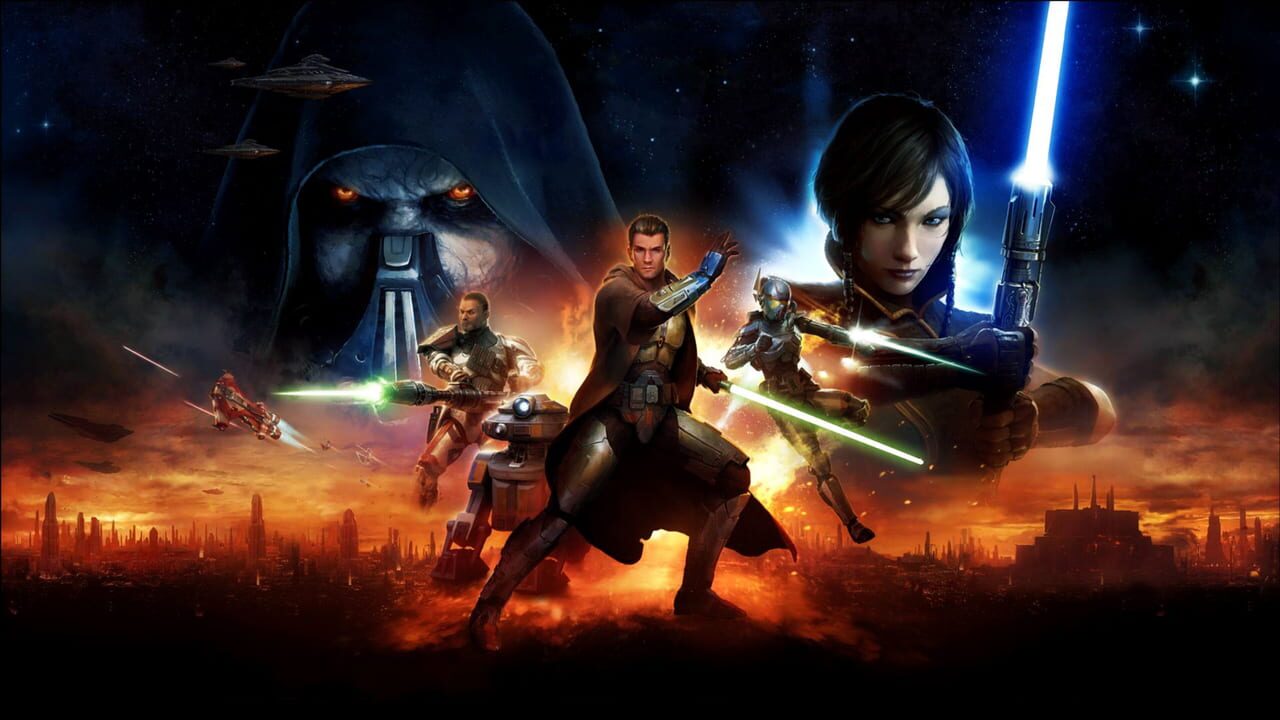
▲ Official Artwork (Source: IGDB)
Despite the creative alignment between BioWare and Lucasfilm, the Star Wars: The Old Republic reboot met its end in the boardroom. While former EA chief design officer Patrick Söderlund was reportedly convinced by the pitch, the EA board of directors remained haunted by the original game’s $300 million development cost. Their refusal to reinvest in a massive overhaul highlights a recurring theme in the industry: the clash between long-term creative health and short-term financial safety. For fans of deep RPG systems, this rejection meant the loss of a modernized Star Wars sandbox that could have competed with contemporary giants.
This decision had a profound impact on the development team and the game’s meta-trajectory. Ohlen described himself as feeling “completely useless” during this period, as his creative drive was curtailed by the need to manage corporate politics rather than game mechanics. When a lead designer feels they can no longer innovate within their own engine, the user experience inevitably suffers. The burnout Ohlen faced eventually led to his departure, marking the end of an era where BioWare’s primary focus was pushing the boundaries of what an online RPG could be.
The Aftermath: Burnout and the Path to Exodus
The narrative surrounding Star Wars: The Old Republic often focuses on its survival, but the human cost of maintaining such a massive service is rarely discussed. Ohlen’s recent comments shed light on the intense pressure of managing hundreds of developers while trying to prevent the game from becoming a “World of Warcraft in space” clone. This struggle for identity is something that many veteran players felt during the game’s middle years, as the balance between unique storytelling and MMO conventions often felt precarious.
Currently, Ohlen is focusing his creative energy on Exodus, a project at Archetype Entertainment that many see as the spiritual successor to the Mass Effect and Star Wars: The Old Republic lineage. With a release scheduled for 2027, Exodus represents a chance for Ohlen to return to his roots without the baggage of a decade-old engine or corporate mandates that prioritize safety over spectacle. For the loyal community still playing in the Old Republic, the story of the “New Republic” reboot serves as a bittersweet reminder of a galaxy that might have been.
The cancellation of the New Republic reboot proves that even with Lucasfilm’s blessing, the shadow of initial development costs can kill a game’s future evolution. James Ohlen’s departure wasn’t just a career move; it was a response to a system that prioritizes maintaining a service over innovating on the gameplay experience. This lost reboot represents the exact moment the industry shifted away from bold MMO experiments toward the safer, iterative live-service models we see today.
Final Pulse Score: 7.5 / 10