
The Blood of Dawnwalker represents a significant pivot in the landscape of high-budget role-playing games, moving away from the safe, profit-first formulas that have dominated the industry for the last decade. As the brainchild of Konrad Tomaszkiewicz, the creative force behind the legendary The Witcher 3, this title is being built with a philosophy that prioritizes artistic evolution over mere financial scalability. By looking back at the experimental spirit of ’90s PC gaming, the development team at Rebel Wolves is attempting to craft an experience where the player’s emotional connection to the world takes precedence over standardized engagement metrics.
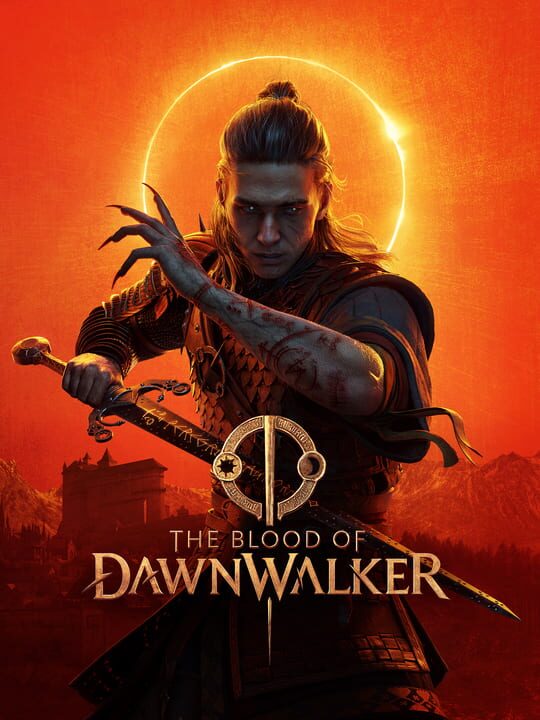
▲ Official Cover Art (Source: IGDB)
| Key Information | Details |
|---|---|
| Game Title | The Blood of Dawnwalker |
| Director | Konrad Tomaszkiewicz |
| Genre | AAA Dark Fantasy RPG |
| Core Theme | Vampiric Immersion & Choice |
| Design Philosophy | Risky, Non-Linear Artistry |
Breaking the Corporate Cycle with The Blood of Dawnwalker
For many veteran players, the modern AAA market has become a sea of clones, where every open-world game follows a predictable pattern of map markers and checklist activities. Tomaszkiewicz has publicly criticized this “cold approach” to game development, arguing that you cannot create true art when the primary focus is the bottom line. Instead of repeating the exact design choices that made his previous work successful, the director is pushing for a studio culture that values growth and creative risk. This means The Blood of Dawnwalker is being designed to offer a different feel from the ground up, focusing on immersion and raw emotion rather than just polished but hollow mechanics.
One of the most radical shifts discussed is the rejection of the “standard” quest structure. While most RPGs rely on a rigid main questline to guide the player, the rumors surrounding this project suggest a far more fluid approach to narrative. This aligns with the director’s desire to capture the feeling of the 1990s Atari and 286 PC era, where every game felt like an unknown frontier. By removing the safety net of traditional quest markers and linear progression, players are forced to engage with the world organically, making every discovery feel earned rather than scripted.
The Blood of Dawnwalker and the Return to Experimental Game Design

▲ Official Artwork (Source: IGDB)
The director has pointed to other recent titles like Clair Obscur as evidence that there is a growing appetite for games that don’t just mimic established AAA hits. The goal for The Blood of Dawnwalker is to deliver that sense of “freshness” that has been missing from major releases. In a world where every mechanic is usually tested to the point of blandness by corporate focus groups, the promise of “risky stuff” is music to a hardcore gamer’s ears. Whether this involves complex branching narratives that can actually be failed or survival mechanics that don’t hold the player’s hand, the intent is clear: immersion is the priority.
Looking at the early gameplay visuals, the atmosphere leans heavily into a dark, gothic aesthetic where the player assumes the role of a vampire. This isn’t just a cosmetic choice; the vampiric theme likely serves as the mechanical backbone for how players interact with the world and its inhabitants. If the team stays true to their “art-first” mission, we can expect the social and physical costs of being a vampire to have real weight in the gameplay loop, potentially locking off certain paths while opening others in a way that feels consequential.
Pulse Gaming Perspective: The Blood of Dawnwalker is the Antidote to AAA Fatigue
By stripping away the safety net of traditional quest structures and focusing on the raw ’90s experimental spirit, Tomaszkiewicz is betting on player intelligence over mindless engagement metrics. This is the kind of design risk that defined the golden age of RPGs and could finally break the cycle of stale open-world clones.
As we approach the final stages of development heading toward the latter half of 2026, the industry is watching closely to see if a studio can truly thrive by putting artistic evolution before guaranteed profit. The confidence shown by the development team suggests that they aren’t afraid of the inevitable comparisons to The Witcher. In fact, they seem to welcome the challenge of surpassing their own legacy by doing something entirely unpredictable. about upcoming RPG mechanics.
Ultimately, The Blood of Dawnwalker represents a high-stakes gamble on the maturity of the gaming audience. It assumes that we are tired of being treated like consumers and are ready to be treated like explorers again. If the execution matches the ambition, this title could set a new standard for what a AAA RPG can be when it isn’t afraid to take a few risks.
Final Pulse Score: 9.2 / 10