
The Expanse Osiris Reborn marks a bold evolution for developer Owlcat Games as the studio pivots from isometric CRPGs toward a fully cinematic third-person action RPG. Our hands-on session at Gamescom demonstrated an ambitious fusion of cover-based squad shooting, intricate dialogue opportunities, and active crew participation. Stepping into the shoes of an infiltrator on Ganymede, the demo showcased a combat loop and narrative momentum that deliberately builds upon classic sci-fi tactical shooters while refining team synergy into a core gameplay pillar.

▲ Official Cover Art (Source: IGDB)
| Developer | Owlcat Games |
| Genre | Cinematic Sci-Fi Action RPG |
| Target Release Window | Q2 2027 |
| Key Systems | Exploits, Infiltration, Squad Tech |
| Setting | Ganymede Colony and Protogen Facilities |
Tactical Firefights and Environmental Exploits in The Expanse Osiris Reborn
Combat in The Expanse Osiris Reborn delivers responsive shooting backed by layered squad commands. Playing through the demo as an Engineer class provided access to deployable automated turrets and shock drones, which proved essential against shielded targets and aggressive flamethrower units that bypass player cover. Gunplay feels tight and tactical, requiring players to constantly reposition while coordinating squad abilities to control the tempo of each battle.
The standout combat mechanic is the Exploit system, which highlights specific environmental vulnerabilities based on active party members. When deploying alongside J, the protagonist identical twin, players can order explosive demolitions to shatter enemy fortifications, destroy connecting walkways, or crush hostile squads beneath collapsing structures. Swapping in technical specialists opens alternate routes, such as electrifying floor conduits to incapacitate entire groups of Protogen operatives instantly.
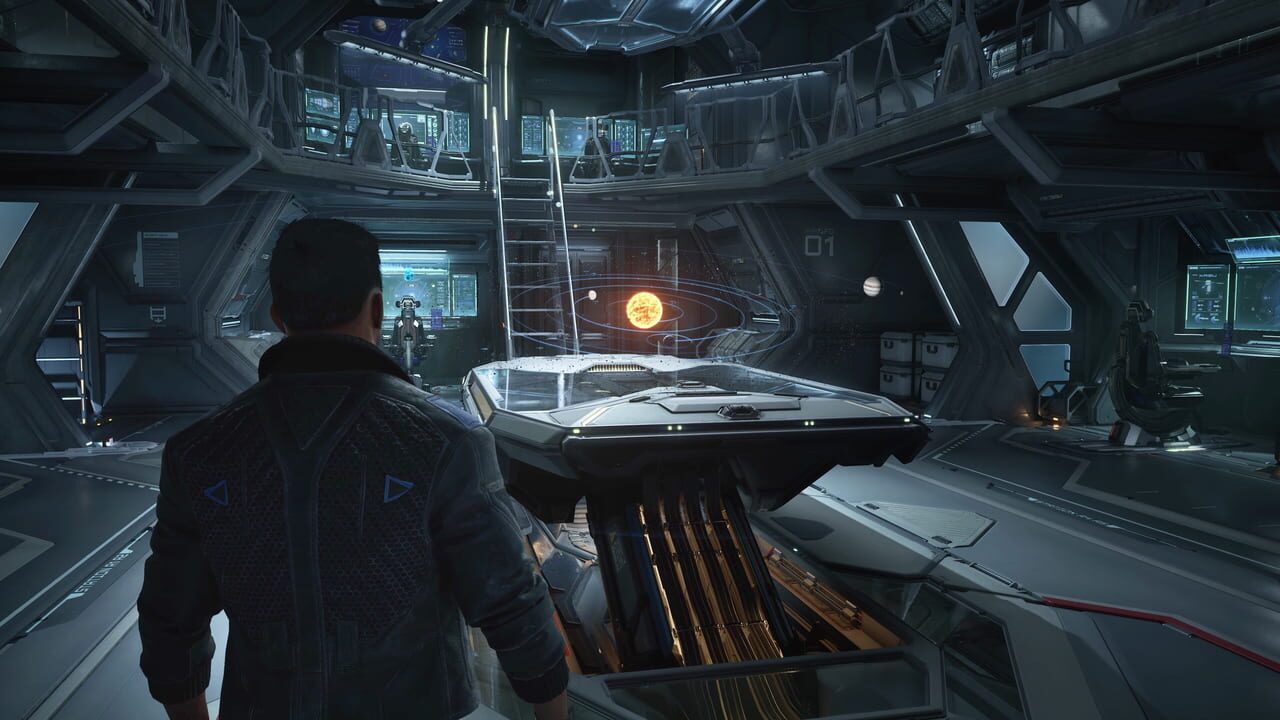
▲ Gameplay & Official Media (Source: IGDB)
Crew Connectivity and Dynamic Heist Mechanics
Beyond direct combat encounters, The Expanse Osiris Reborn places heavy emphasis on mission prep, disguise, and social problem-solving. Infiltrating a secured Protogen complex disguised as Osiris personnel provided opportunities to talk through security checkpoints or bypass locked infrastructure. When social persuasion checks fail due to insufficient stats, the game avoids hard dead ends by dynamically pulling in off-site specialists stationed aboard your ship.
During one key infiltration segment, failing a direct documentation check triggered an alternative pathway where the shipboard hacker quickly forged access credentials from downloaded terminal files. Shipmates constantly monitor player body cams, chiming in with tactical hints, contextual lore, and spontaneous banter. This design gives the entire crew an active presence during field operations, making every infiltration feel like a coordinated heist rather than an isolated expedition.
Atmospheric Worldbuilding Across Ganymede Ruins
The pacing shifts smoothly between tension-filled corporate espionage and atmospheric survival horror. Exploring the dilapidated, dark tunnels of Ganymede pre-dome ruins introduces a chilling tone punctuated by mutated protomolecule threats. Rich environmental storytelling, terminal data logs, and incidental NPC conversations ground the experience firmly in the established lore, rewarding veteran fans while remaining entirely welcoming to newcomers.
The Expanse Osiris Reborn successfully elevates squad-driven tactical roleplaying through proactive companion mechanics.
Owlcat Games demonstrates a confident transition into cinematic action by replacing passive companion rosters with active off-site support and reactive combat exploits. The synergy between social problem-solving, environmental destruction, and hard sci-fi infiltration establishes a distinctive mechanical identity ahead of its 2027 launch window.
Final Pulse Score: 8.8 / 10
Related Article: The Expanse Osiris Reborn Gameplay Preview Analysis
Related Article: Exodus Gameplay Reveal and Narrative Breakdown