
Apex Legends has long been a benchmark for fluid movement and tight gunplay, but the secrets behind such polished experiences often remain hidden within the developer’s toolkit. Recently, a rare moment of transparency on social media allowed industry veterans from Bungie, Respawn, and Firaxis to pull back the curtain on the “invisible” mechanics that define modern gaming. From the timing of UI animations to the frequency of NPC conversations, these insights provide a masterclass in the craft of game development.

▲ Official Cover Art (Source: IGDB)
The discussion, sparked by Firaxis narrative director Cat Manning, highlights that the difference between a clunky experience and a masterpiece often comes down to millisecond adjustments. For players of high-stakes shooters like Apex Legends, these technical nuances are the foundation of what we colloquially call “game feel.” Whether it is the way a menu fades or the rhythm of a tactical ability, there is a mathematical logic governing every interaction.
| Game / Studio | Expert Insight | Key Metric |
|---|---|---|
| Apex Legends (Respawn) | Utility of navmeshes in multiplayer environments without NPCs. | Navmesh Architecture |
| Bungie (Destiny) | Human perception limit for gameplay interactions. | 0.1s per interaction |
| Firaxis / Legacy of Orsinium | Minimum dialogue variety to prevent repetition fatigue. | 8 Conversations min. |
| Become the Moon | The “Golden Ratio” for UI delays and animation tweens. | 0.63s Delay |
The Psychology of Perception in Apex Legends and Beyond
One of the most striking revelations came from Jay Stevens, an engineer on Apex Legends, who noted the importance of navigation meshes (navmeshes) even in multiplayer games devoid of traditional NPCs. While navmeshes are typically associated with AI pathfinding, their implementation in a title like Apex Legends ensures that physics-based objects and movement abilities interact predictably with the environment. This underlying structure is what allows the fast-paced combat to remain coherent during chaotic 60-player matches.
Furthering this exploration of technical craft, Bungie sandbox designer Viv detailed how human perception limits influence combat design. According to Viv, players can only truly “feel” one meaningful interaction every 0.1 seconds. This is why scatter grenades in games like Destiny utilize staggered detonation times of roughly +/- 0.06 seconds. By splitting a single explosion into submunitions that trigger milliseconds apart, the game feels significantly more powerful and tactile than a single simultaneous blast.
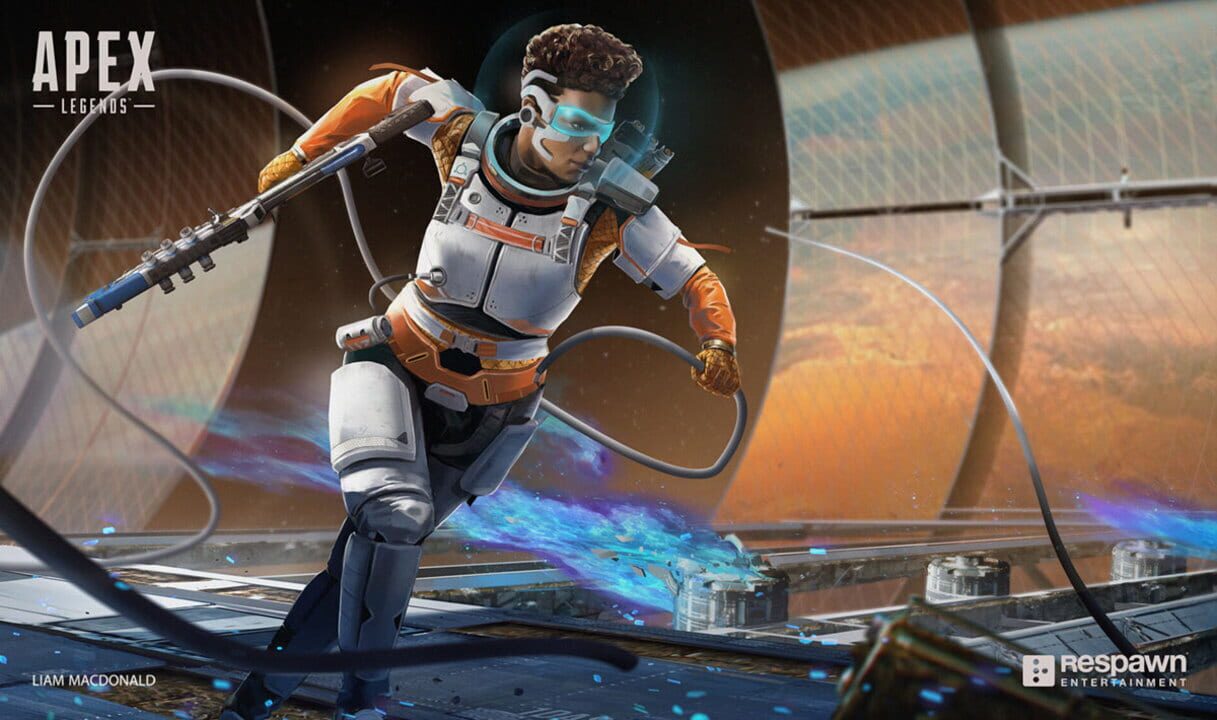
▲ Official Artwork (Source: IGDB)
The 0.63 Rule: Why Timing is Everything
In the realm of User Interface (UI) and experience design, Kara Ling of Become the Moon proposed a specific numerical standard for animation delays. She argues that 0.63 is the “perfect default delay” for UI element fades and tweens. For faster interactions, a value of 0.23 is recommended, while 2.3 seconds serves as the ideal long delay. This granular focus on timing explains why certain games feel “snappy” while others feel sluggish, even when running at high frame rates.
Narrative immersion also relies on strict technical rules. Keano Raubun, a developer currently working on Legacy of Orsinium, emphasized that ambient NPC conversations are the most cost-effective way to build a living world. To avoid the immersion-breaking repetition often found in open-world RPGs, Raubun suggests a minimum of eight distinct conversations between any pair of characters. This ensures that players, much like those in Dragon Age: Inquisition, remain engaged with the world-building rather than being pulled out by looping voice lines.
Pulse Gaming Perspective: The invisible engineering of Apex Legends is its greatest strength.
The success of modern live-service titles isn’t just about content updates; it is about the mastery of sensory feedback. By manipulating detonation timings and UI delays down to the second decimal point, developers are essentially hacking human psychology to create a more satisfying loop. These ‘tiny’ details are what separate a cult hit from a global phenomenon.
As we look toward the future of game design in 2026, these insights from the original developer discussion serve as a reminder that great games are built on a foundation of math and psychology. Whether it is the tank-centric design philosophies of Damion Schubert or the satisfying card staging in Balatro, the industry is increasingly focused on the “micro-feel” of every button press. For fans of Apex Legends, understanding these mechanics only deepens the appreciation for the technical wizardry required to keep the Outlands running smoothly.
The transparency provided by these veterans is a gift to the community, proving that social media, when used correctly, can be a vital hub for professional discourse. As hardware capabilities continue to evolve, the “0.63 rule” and the 0.1-second interaction limit will likely remain the gold standards for developers aiming to achieve perfection in their craft.
Final Pulse Score: 9.2 / 10