
In the modern video game industry, narrative is often injected into players in the explicit form of flashy cutscenes and lengthy dialogues. However, Elden Ring entirely rejects this traditional method of narrative delivery. It takes the massive mythological framework built by George R.R. Martin, author of ‘A Song of Ice and Fire,’ shatters it through Hidetaka Miyazaki’s unique post-apocalyptic lens, and scatters the pieces throughout the Lands Between. This served as a catalyst that transformed players from mere listeners of a story into active archaeologists reassembling the secrets of a ruined world.
Fragmented text and environmental storytelling are advanced level designs that force active deduction from the player.
Elden Ring does not provide quest destinations or character relationship charts through a friendly UI. Instead, it conceals the truth of the world in fragmented forms such as item tooltips, enemy placements, and architectural styles. For instance, why enemies using gravity magic are stationed in a specific area, or why a catacomb boss bears the crest of a certain family, must be deduced through environmental clues rather than cutscenes. This environmental storytelling integrates the intellectual play of ‘interpretation’ into the core gameplay loop of exploration and combat, creating a multi-dimensional experience that goes beyond a simple action RPG.
A few lines of text inscribed on weapons, armor, or even discarded junk serve as the only historical records testifying to the once-glorious era of the Erdtree. Players read these and cross-reference them with the topographical context of the map to construct their own narrative. This proves that the ‘aesthetics of unkindness,’ which FromSoftware has adhered to since the days of Demon’s Souls, actually acts as a catalyst to maximize the density of exploration when combined with the massive scale of an open world.
The tragedy of bloodlines designed by George R.R. Martin combined with FromSoftware’s blind hostility to birth multi-dimensional boss characters.
The complex divine family tree stretching from Marika and Radagon to Godfrey, along with the political strife among them, is an area where George R.R. Martin’s expertise is fully utilized. He designed the glorious history prior to the Shattering and the complex desires of the characters, while Hidetaka Miyazaki corrupted these heroes into maddened Demigods and placed them as in-game bosses. This perfect division of labor grants boss battles a profound narrative justification that goes beyond simply overcoming mechanical gimmicks.
Figures like Radahn, who wanders his homeland while being consumed by the Scarlet Rot, or Rykard, who rebelled against the order of the Erdtree, are portrayed not as simple villains but as multi-dimensional individuals adhering to their own tragic beliefs. This background knowledge, combined with the choral BGM that plays upon entering a boss room or the transition animations between phases, delivers an overwhelming catharsis.
| Narrative Design Phase | Core Creator | Structural Features and Player Experience |
|---|---|---|
| Construction of Myth (Past) | George R.R. Martin | Grand bloodline narratives, political strife, and the establishment of the world’s fundamental order |
| Ruin of the World (Present) | Hidetaka Miyazaki | Visualization of the ruined Lands Between and the maddened Demigods post-Shattering |
| Reconstruction of Truth (Future) | Player (Tarnished) | Collecting and interpreting shattered fragments of history by combining environmental clues and texts |
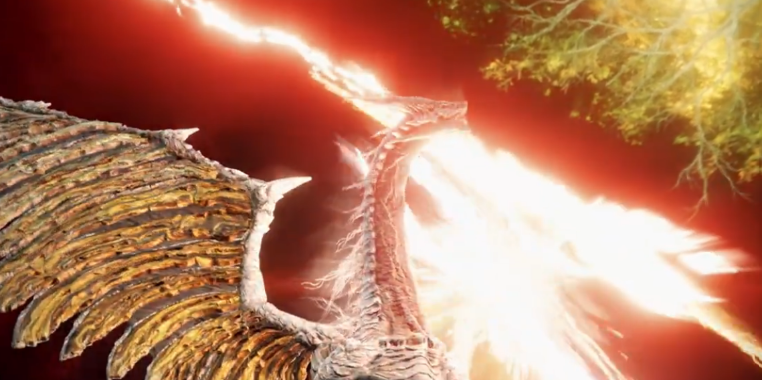
From the Night of the Black Knives to the Shattering, hidden causalities serve as narrative devices that encourage multiple playthroughs.
The most terrifying aspect of Elden Ring’s storytelling is that the mysteries of the world are not fully resolved even after clearing the game. The truth about who the true mastermind behind the ‘Night of the Black Knives’ was when the first Demigod, Godwyn, was assassinated, or why Marika had to shatter the Elden Ring, is left to the player’s realm of deduction. Such narrative voids become the driving force that compels users to voluntarily start second or third playthroughs to find missed NPC dialogues or hidden frescoes in dungeons.
Ultimately, Elden Ring elevated the act of observing the world and uncovering secrets into a grand game mechanism itself, moving beyond a passive story of reading and understanding text. This ingenious structure, where the player themselves becomes the completer of the myth on a stage set by the developers, is precisely one of the core reasons why Elden Ring is evaluated as the greatest artistic achievement of our time.
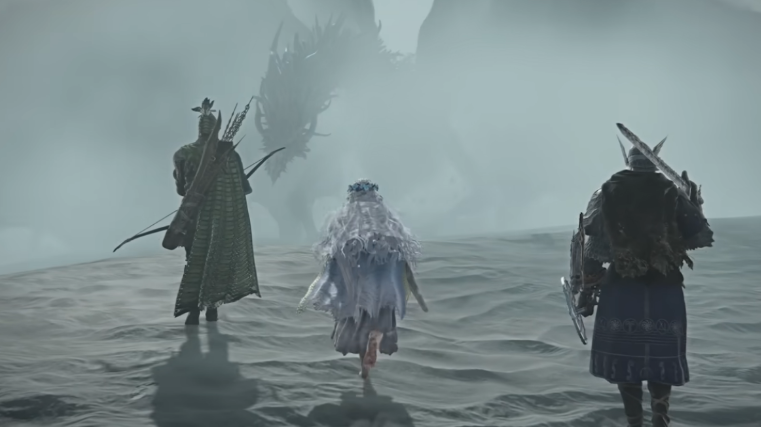
Related analysis can be found in the Full Series Analysis.
Conclusion: The Infinite Vitality of Narrative Created by Deficiency
Many modern AAA games pour astronomical amounts of capital into cutscenes and narration to increase the intuitiveness of their stories. However, Elden Ring chose the exact opposite path. Instead of presenting the fascinating myth written by master George R.R. Martin in its raw form, it made the bold decision to brutally shatter it and bury it in the mud. This audacious ‘design of deficiency’ dragged players down from the seat of passive spectators and turned them into archaeologists exploring the secrets of the world. The reason we become Tarnished and wander the Lands Between is not simply to beat boss patterns. It is a noble journey to gather the forgotten fragments of myth from scattered text pieces and the rubble of ruins, forging our very own complete Elden Ring.
View Full Series List