
Cinder City has officially entered the PC gaming spotlight with a set of system requirements that are sending shockwaves through the hardware community. This upcoming open-world co-operative PvE shooter, set in a dystopian future Seoul, is pushing technical boundaries to an unprecedented degree. As developers attempt to realize highly detailed urban environments filled with complex AI and mutated hordes, players are left staring at specifications that could redefine what we consider standard gaming hardware. The game has officially debuted its storefront presence, revealing memory requirements that make it one of the very first PC games to recommend a massive RAM configuration.

▲ Official Cover Art (Source: IGDB)
| Developer and Publisher | NC |
| Target Platform | PC via Steam |
| Setting and Genre | Dystopian Seoul PvE MMO Shooter |
| Minimum Memory Requirement | 32 GB RAM |
| Recommended Memory Requirement | 64 GB RAM |
Dystopian Seoul and the Technical Ambition of NCs Newest Shooter
The core premise of Cinder City places players in a near-future, post-apocalyptic version of Seoul, South Korea. Operating as a co-operative PvE experience, the title demands continuous rendering of dense urban landscapes, complex physics, and highly unpredictable mutated creatures. Rendering a metropolitan environment of this scale requires substantial system memory to handle asset streaming without stuttering. While other major contemporary releases like Forza Horizon 6, Death Stranding 2, Resident Evil Requiem, and Crimson Desert comfortably recommend 16 GB of RAM, this title marks a stark departure from the industry standard.
The implications of this hardware baseline stretch far beyond simple texture resolutions. High-capacity memory allows the game engine to keep massive amounts of environmental assets, physics data, and enemy AI routines pre-loaded in the system memory. This minimizes hard drive access delays, aiming to eliminate micro-stuttering. By establishing 32 GB as the bare minimum, the development team ensures that low-spec rigs have enough memory overhead to handle complex server-side and client-side interactions in real-time.
The Cost of Cinder City and the Surging Memory Crisis
Meeting the recommended specifications for Cinder City is an incredibly expensive prospect due to current hardware market trends. Upgrading to 64 GB of system memory currently commands a heavy premium, with high-quality DDR5 and even older DDR4 configurations ranging from 500 dollars to upwards of 1,000 dollars. This pricing surge coincides with major supply shifts, as leading memory manufacturers face litigation over alleged supply manipulations of older DDR3 and DDR4 lines to focus on high-bandwidth memory for enterprise artificial intelligence datacenters. The immediate result is a severe hardware bottleneck that directly impacts the consumer wallet.
This hardware inflation is already reflecting across the wider gaming ecosystem. Console manufacturers recently raised retail prices, and prominent portable hardware devices are launching well above their original target thresholds due to component costs. For PC players looking to experience Cinder City at maximum settings with an Nvidia GeForce RTX 4060 and an Intel Core i7-12700 or AMD Ryzen 7800X3D, the additional cost of upgrading system RAM represents a significant investment hurdle. The era of budget-friendly high-end PC builds faces an unprecedented roadblock.
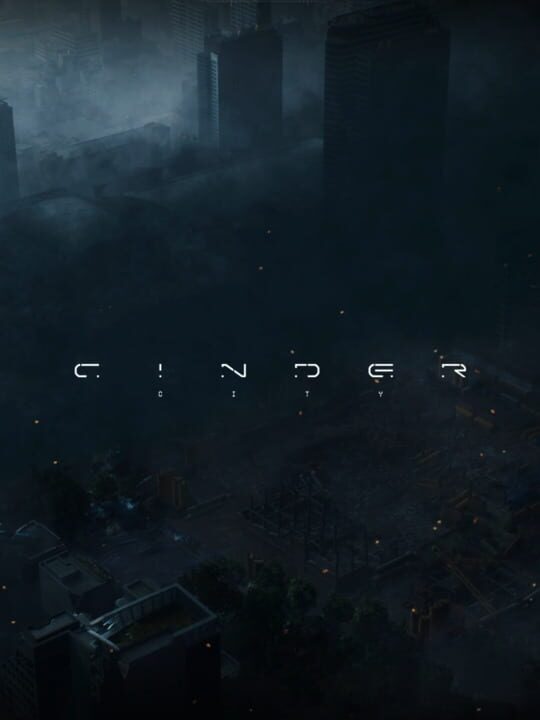
▲ Official Artwork (Source: IGDB)
Future Proofing and Optimization Expectations
The massive technical barrier raises serious questions about optimization versus future-proofing in modern PC game development. Many players are questioning whether such high memory requirements are a sign of groundbreaking game systems or simply a lack of optimization in this title. If other visual powerhouses can achieve incredible fidelity on 16 GB of RAM, the pressure is on the developers to prove that utilization of up to 64 GB actually translates into a visibly superior and mechanically deeper gameplay experience. Whether this becomes the new normal or remains an isolated anomaly depends entirely on how the community responds at launch.
Cinder City Sets a Demanding Technical Standard
As hardware prices continue to rise due to global manufacturing shifts toward enterprise AI, game developers must balance their technical ambitions with consumer accessibility. The unprecedented 64 GB recommendation represents a major paradigm shift that may force PC players to choose between expensive upgrades or missing out on top-tier performance.
Final Pulse Score: 7.5 / 10