
Fallout creator and veteran role-playing game developer Tim Cain has sparked a fascinating industry-wide debate regarding the severity of the modern gaming crisis compared to the historic video game crash of 1983. As players navigate an era defined by sudden studio closures and beloved development teams dispersing, many are questioning if we are living through the worst downturn in gaming history. Drawing on decades of experience building immersive worlds and shaping legendary RPG systems like the original Fallout, Cain argues that while the current landscape is undeniably challenging for creators, it does not yet mirror the absolute collapse that once threatened to extinguish the entire North American console market. This historical perspective provides crucial context for players who are seeing their favorite titles disappear or go offline without warning.
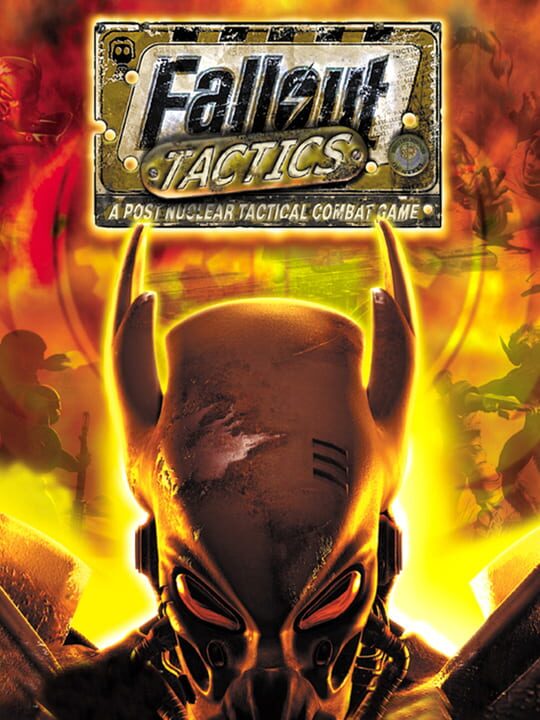
▲ Official Cover Art (Source: IGDB)
| Topic of Comparison | The 1983 Industry Crash | The Modern Gaming Crisis |
|---|---|---|
| Primary Catalyst | Oversaturation of low-quality console software | Hyper-saturation, subscription models, and discovery issues |
| Impact on Developers | Complete collapse of the US console market; total job loss | Targeted studio closures affecting roughly 10% of developers |
| Consumer Pivot | Transitioned to home computers (Apple II, IBM PC, Commodore) | Transitioned to consolidated free-to-play or major live-service games |
| Recovery Timeline | Nearly a decade for US-based developers to bounce back | Ongoing market adjustments with high player-side fragmentation |
Structural Comparison: The 1983 Collapse vs. Modern Industry Shifts
To understand the weight of this comparison, one must look at how the 1983 crash fundamentally altered the player experience. Back then, the market was flooded with what many considered unplayable shovelware, causing consumers to completely lose faith in home consoles. Cain recalls that this massive consumer disillusionment pushed an entire generation of gamers toward early home computers like the Atari 800 and the IBM PC. Today, the crisis is vastly different; we are not suffering from a lack of quality games, but rather from a hyper-saturated ecosystem where even exceptional games struggle to find an audience. For players, this means that while the quality of available titles remains incredibly high, the lifespan of these games is shorter than ever as publishers quickly pull the plug on projects that fail to meet immediate financial targets.
How the Fallout Legacy Shapes Our View of Game Longevity
The Fallout series itself was born out of a post-crash PC gaming renaissance where developers had to reinvent how players interacted with virtual worlds. In the early 1990s, when the PC market finally matured, it paved the way for deep, narrative-driven experiences that prioritized player choice over arcade-style coin-sinking mechanics. Cain points out that the 1983 crash essentially wiped out an entire generation of console developers in the United States, forcing a decade-long recovery period before domestic console development could match its previous heights. Today’s gamers are feeling a different kind of burn: subscription services and deep digital discounts have conditioned players to adopt an “I will wait for a sale” mindset, devaluing individual games and placing immense pressure on developers to monetize through aggressive microtransactions or battle passes.

▲ Official Artwork (Source: IGDB)
Cultural and UX Value Analysis: Are We in a Crashier Era?
Not everyone in the industry shares Cain’s relatively tempered outlook on our current predicament. Industry peers have publicly disagreed, arguing that the modern landscape is actually far more volatile and destructive to creative talent than what they witnessed in the 1980s. From a user experience standpoint, the modern player is caught in a paradox of choice, surrounded by thousands of free-to-play options and massive subscription catalogs, yet constantly facing the sudden death of their favorite virtual spaces. When a live-service game ceases content updates or shuts down its servers entirely, players lose not just a product, but their personal progress, social networks, and community history. While the 1983 crash was a sudden system-wide shutdown, the modern crisis is a slow, agonizing transformation that reshapes how we purchase, play, and preserve video games.
The legacy of Fallout warns us that modern industry shifts force a fundamental rethink of digital ownership.
As veteran developers debate the historical scale of today’s crisis, players bear the brunt of a shifting market where digital libraries are temporary and live-service games can vanish overnight. The true danger of the modern era isn’t a total market collapse, but the erosion of game preservation and player agency under the weight of unsustainable subscription models and premature studio closures.
Final Pulse Score: 8.5 / 10