
Joy Malignant is shaping up to be one of the most mechanically daring indie RPGs of the year, blending tabletop-inspired systems with an unsettling, surrealist aesthetic. Developed as a distinct narrative journey, the game immediately captures attention with its dark, experimental premise. Players wake up as a completely blank, faceless entity in an unfamiliar world, tasked with building themselves from the ground up. This narrative blank canvas serves as both a philosophical core and a literal gameplay system, driving every subsequent interaction in a world that is as beautiful as it is deeply disturbing.
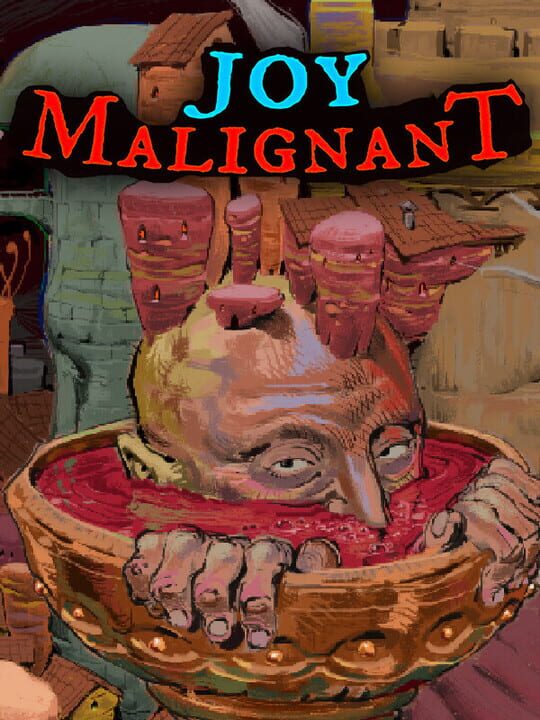
▲ Official Cover Art (Source: IGDB)
| Developer | Petros Anastasiadis |
| Release Date | July 29th |
| Core Gameplay | Dice-based RPG with Visual Evolution |
| Store Platform | Steam Store Page |
The Surreal Worldview of a Photobashed Reality
The first element that commands attention surrounding Joy Malignant is its striking, photobashed art style. Every character and environment is composed of collaged, textured elements that feel tactile and bizarrely alive. For instance, meeting an entity that possesses a violin body and a mouse head creates an immediate sense of uncanny wonder. This is not merely an artistic gimmick, but a direct extension of the narrative. Unlike traditional roleplaying titles where player designs are finalized in a character creator menu, the protagonist here is an ephemeral, fuzzy body waiting to be shaped.
As players navigate this strange world, their choices directly alter their physical form. Actions do not simply adjust an invisible alignment meter; they apply tangible visual layers to your character. This design philosophy bridges the gap between mechanical choice and visual storytelling. It forces players to consider how their decisions are physically molding their character, turning the protagonist into a living testament of their journey. The photobashed layers build up over time, ensuring that no two players will finish the game with the exact same visual identity.
How Joy Malignant Reinvents the Tabletop Dice Loop
The structural layout of the game will feel instantly familiar to fans of modern digital tabletop RPGs. In Joy Malignant, the core game loop centers around managing resources to execute various narrative actions. Instead of traditional numeric dice, however, the system utilizes what the game calls masks. These masks possess varying degrees of happiness, which directly dictate the likelihood of success or failure on any given action. Taking actions consumes these masks and progresses time, pushing the story forward through structured cycles.
What truly sets Joy Malignant apart is the absence of pre-established character classes. Instead of picking a warrior or a rogue at the beginning, you build your skillset organically through raw decisions. Because there are no rigid class structures, every single choice carries immense weight. The game invites players to wonder if seemingly minor, early-game actions might permanently lock out certain character development paths. This organic approach to roleplaying places complete agency in the player’s hands, making every run feel highly personal and unpredictable.

▲ Official Artwork (Source: IGDB)
Player Expectations and Genre Implications
By removing traditional stat blocks and replacing them with a visual-evolution mechanic, the title challenges the conventional boundaries of RPG design. Enthusiasts of narrative-heavy games will find plenty of depth to dissect here. The demo already showcases a high level of polish, proving that the developer is committed to delivering a cohesive, thought-provoking mechanical experience. As the release date approaches, players are eager to see just how reactive the full narrative is to these visual mutations.
The combination of a tense resource management system with such a visceral sense of identity progression is highly promising. Joy Malignant looks to offer a masterclass in how to translate tabletop roleplay freedom into a video game. It successfully moves away from simple spreadsheet optimization, choosing instead to focus on how choices shape both your mind and your physical form in a deeply atmospheric setting.
The visual evolution in Joy Malignant offers a fresh narrative tool
By tying player decisions directly to physical mutations, the game bypasses the standard, invisible alignment charts of older RPGs. The mask-based dice system keeps gameplay tense and tactical, while the photobashed aesthetic provides a hauntingly beautiful backdrop. It is a highly creative approach that demonstrates how indie developers can push the boundaries of digital tabletop mechanics without relying on massive budgets.
Final Pulse Score: 8.5 / 10