
Stars Reach is poised to completely redefine how we experience persistent online environments by stripping away the rigid modern mechanics that have dominated the genre for over two decades. Designed by industry veteran Raph Koster, who previously shaped pioneering titles like Ultima Online and Star Wars Galaxies, this ambitious project represents a return to true sandbox design. Rather than funneling players through highly structured progression tracks, the game focuses on creating a living, breathing virtual playground. Players will have the opportunity to experience this grand simulation firsthand when the game enters early access on Steam this summer. This launch represents a major turning point for players seeking depth over endless gear treadmills.
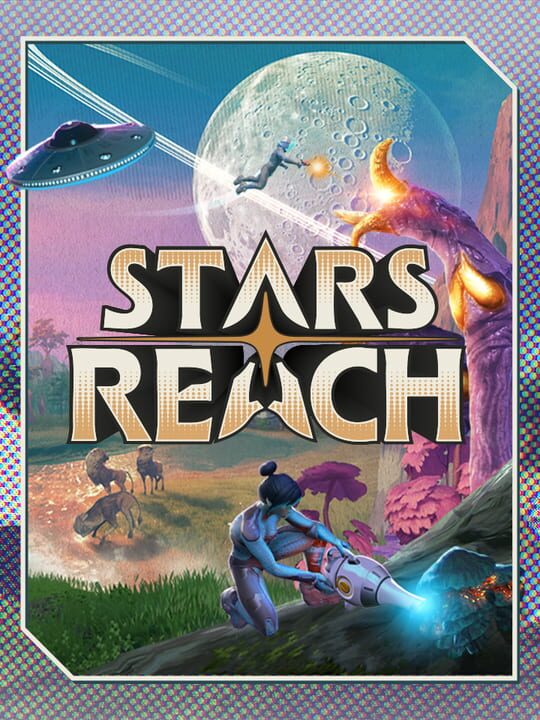
▲ Official Cover Art (Source: IGDB)
| Developer | Playable Worlds |
| Lead Designer | Raph Koster |
| Release Window | Early Access Summer 2026 |
| Target Platform | PC (Steam) |
A Living Universe of Infinite Scaling Worlds
The core philosophy driving the gameplay of Stars Reach is a highly complex physical simulation that governs every planetary system. Every single cubic meter of terrain possesses unique physical attributes including temperature, humidity, and geology. Weather is not merely a visual effect here; rain pools into flowing rivers, lakes freeze during winter cycles, and forests propagate naturally over time. Players can actively alter these environments, whether by melting glaciers to reveal hidden structures or by overmining cave systems until the ceilings collapse. This deep ecological simulation means players must carefully manage their resource gathering, as unsustainable industrial expansion can theoretically drive native alien species to extinction. This level of environmental reactivity forces players to think about the long-term consequences of their industrial output, turning resource collection into a delicate balancing act.
Re-engineering the Sandbox in Stars Reach
Unlike traditional online roleplaying games that prioritize linear endgame raiding, Stars Reach introduces a fully emergent system driven by player collaboration. The game launches with a strict player-versus-environment focus, avoiding chaotic player-versus-player combat in favor of cooperative, pro-social mechanics. Players can band together to establish intricate settlements, develop transit infrastructure, and form functional local governments. In-game societies can elect their own mayors, zone land for public parks, and establish conservation laws. This player-driven structure turns the management of resources and planetary preservation into a highly complex, collaborative endgame challenge. Communities can choose to embrace raw industrialism or implement strict environmental policies to prevent ecological ruin.
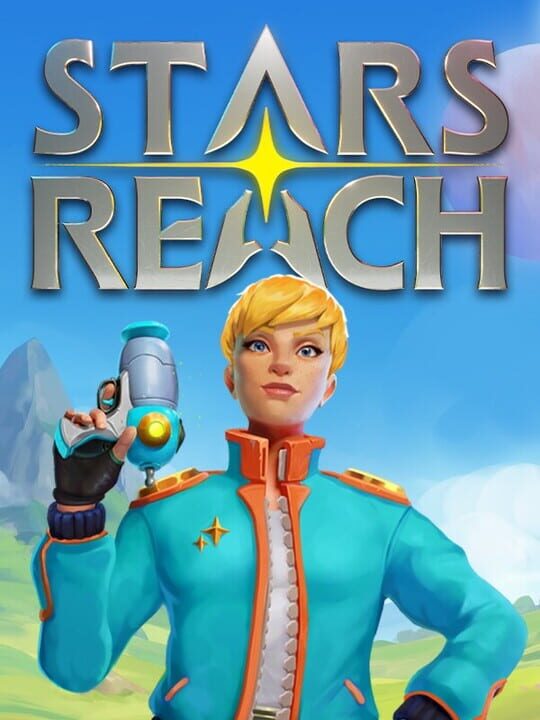
▲ Official Artwork (Source: IGDB)
The Modern Departure from Theme Park Design
By moving away from prescribed quest paths, Stars Reach aims to recapture the initial magic of early online worlds where player choices had permanent, tangible consequences. The massive universe features thousands of distinct planets connected by volatile wormholes that shift and disappear over time, making galactic exploration a continuously evolving journey. Crafting, terraforming, running business empires, and establishing civic infrastructure are treated as core gameplay activities rather than secondary hobbies. By offering tools for deep emergence rather than structured tasks, the game seeks to offer a true alternate reality where communities can form, govern, and shape their own destiny. Players are given the keys to the universe, allowing them to define their own roles without the pressure of typical level grinding.
Stars Reach rejects the modern theme park design to resurrect the true magic of virtual worlds
By shifting the focus from repetitive grind loops to emergent simulated ecosystems Playable Worlds is attempting to solve the long-standing problem of player agency. If the player-driven governance and complex environmental systems function as promised during the upcoming testing phase this project could successfully establish a new blueprint for the next generation of sandbox gaming.
Final Pulse Score: 9.0 / 10
Related Article: World of Warcraft TurtleWoW Moonwhisper Games Launch