
Capcom has long mastered the satisfying loop of the hunt, cultivating a dedicated community built on grinding for parts, mastering weapon timings, and toppling towering leviathans. With Monster Hunter Outlanders, the franchise attempts its most audacious mobile transition yet by recreating the sprawling environmental freedom of modern mainline entries directly on handheld screens. Set on the uncharted island of Aesolan, players join the Adventurer Guild to investigate a mysterious mineral known as Radiantate, uncovering mutated monster behaviors across expansive, seamless biomes. The early hours showcase a remarkably authentic hunting loop, but players must quickly learn to navigate an intricate network of live service currencies that continually competes with the core action.
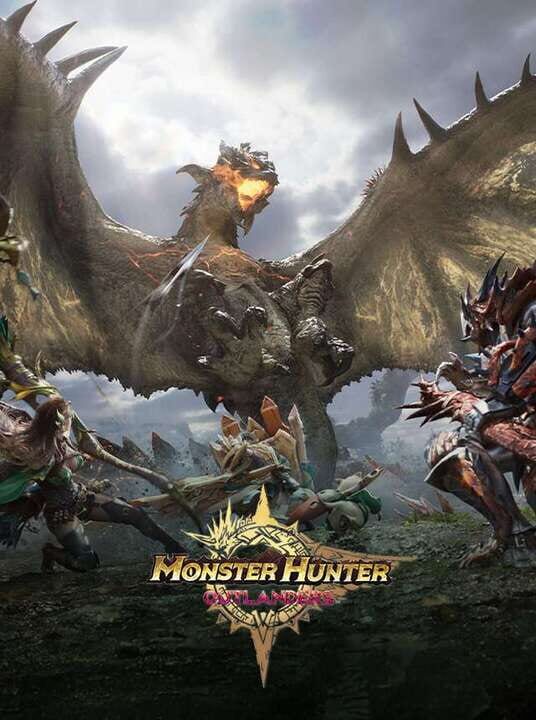
▲ Official Cover Art (Source: IGDB)
Streamlined Combat on the Island of Aesolan
The core combat experience in Monster Hunter Outlanders captures the deliberate weight and kinetic push-and-pull rhythm that defines the series. Rather than restricting players to static battle arenas, hunts occur naturally across massive zones that mirror the open hunting grounds of modern releases. Traversal feels fluid thanks to camp building, glider catapults, and automated resource collectors that streamline gathering while tracking elusive targets across treacherous terrain. Encountering giant beasts out in the wild carries genuine tension, particularly when rival predators collide in chaotic turf battles that force immediate tactical adjustments.
To accommodate mobile inputs, the combat system introduces two distinct control philosophies: Adventure and Classic. The Adventure layout distills the entire arsenal down to three intuitive, dynamic buttons labeled Attack, React, and Burst, automatically shifting weapon behavior such as swapping Bowgun ammo or switching between guarding and dodging depending on proximity. Classic mode reinstates traditional multi-button inputs, offering granular weapon mastery that feels exceptionally tight when paired with an external gamepad. However, the ground-focused combat eliminates dedicated jumping actions, while the available weapon roster is trimmed down to eight distinct types, leaving series staples like the Hunting Horn and Insect Glaive on the sidelines.

▲ Gameplay & Official Media (Source: IGDB)
Squad Mechanics and Weapon Variety
Unlike the solitary hunter format of past releases, Monster Hunter Outlanders adopts a character-driven squad architecture. Players control their custom guild hunter alongside recruit partners pulled through the game gacha systems. These characters possess bespoke weapon styles and explosive ultimate abilities, such as Keres wielding claw-like Dual Blades with high-speed drilling strikes, or Luxheart charging a colossal Great Sword to unleash fiery spectacle slashes. Swapping between these heroes mid-hunt injects fresh combo variety into prolonged skirmishes and softens the repetition of farming materials.
Monsters themselves receive significant upgrades through Radiant variants, featuring altered attack patterns and heightened aggression that push player reflexes to their limits. The streamlined button interactions make micro-hunting sessions on a daily commute completely viable, providing bite-sized encounters without sacrificing visual punch. On high-end mobile hardware, the visual fidelity remains stunning, maintaining stable 45 frames per second even during particle-heavy squad ultimates and unpredictable environmental weather transitions.
The Weight of Endless Menus and Live Service Roadblocks
While the physical act of hunting remains deeply engaging, the surrounding meta-progression is suffocated by an overwhelming web of interdependent upgrade mechanics. Enhancing an operative requires managing Charms, ascending items through strict Ecological Rank thresholds, distributing Insight skill points, and leveling independent partner creatures. In addition, hunters must collect and rank monster Visage cards while juggling Adventurer Ranks, Proof of Mastery ratings, and seasonal battle passes. Sifting through this labyrinth of reward tabs consumes nearly a fifth of total playtime, halting the adrenaline rush of back-to-back hunts.
The first thirty hours provide generous resources, but inevitable progression walls emerge during mid-game expeditions. Main narrative milestones frequently lock behind steep Ecological requirements or daily stamina allowances, nudging players toward microtransactions to expedite character ascensions. While entirely playable without mandatory monetary investment, the sheer volume of mobile fluff dilutes the pristine purity of Capcom signature gameplay cycle.
- Pros: Impressive visual fidelity with stable performance on mobile devices, responsive Adventure control scheme tailored for touchscreens, exciting squad swap mechanics featuring flashy tokusatsu inspired heroes, authentic open-zone monster tracking.
- Cons: Stifling progression gates that stall late game narrative progression, overwhelming clutter of menus and fragmented currencies, noticeable absence of iconic weapon classes like Hunting Horn and Insect Glaive.
📌 Frequently Asked Questions (FAQ)
Q. What control schemes are available in Monster Hunter Outlanders?
A. Monster Hunter Outlanders features two control schemes: Adventure mode, which condenses actions into three dynamic contextual touch buttons, and Classic mode, which provides full traditional inputs and functions best when using an external controller.
Q. How many weapon classes are featured in Monster Hunter Outlanders?
A. The game features eight distinct weapon types at launch, streamlining the roster and omitting certain complex series weapons like the Hunting Horn and Insect Glaive.
Q. Can you play Monster Hunter Outlanders completely for free?
A. Yes, Monster Hunter Outlanders is free to download and initial story progression is generous with materials, though late-game advancement encounters gacha progression walls and daily stamina limitations that can tempt players toward optional microtransactions.
Mobile Scale Meets Gacha Friction
Monster Hunter Outlanders proves that full scale ecosystem hunting can flourish technically on portable operating systems. However, the friction between Capcom methodical combat design and modern mobile monetization creates unavoidable pacing issues. Hardcore purists will appreciate the mechanical integrity on display with a physical controller, but they must brace for the heavy administrative burden of live service housekeeping.
Final Pulse Score: ⭐⭐⭐½☆
Related Article: Monster Hunter Wilds Switch 2 Prologue Demo Dates
Related Article: Monster Hunter Stories 3 Twisted Reflection Sales